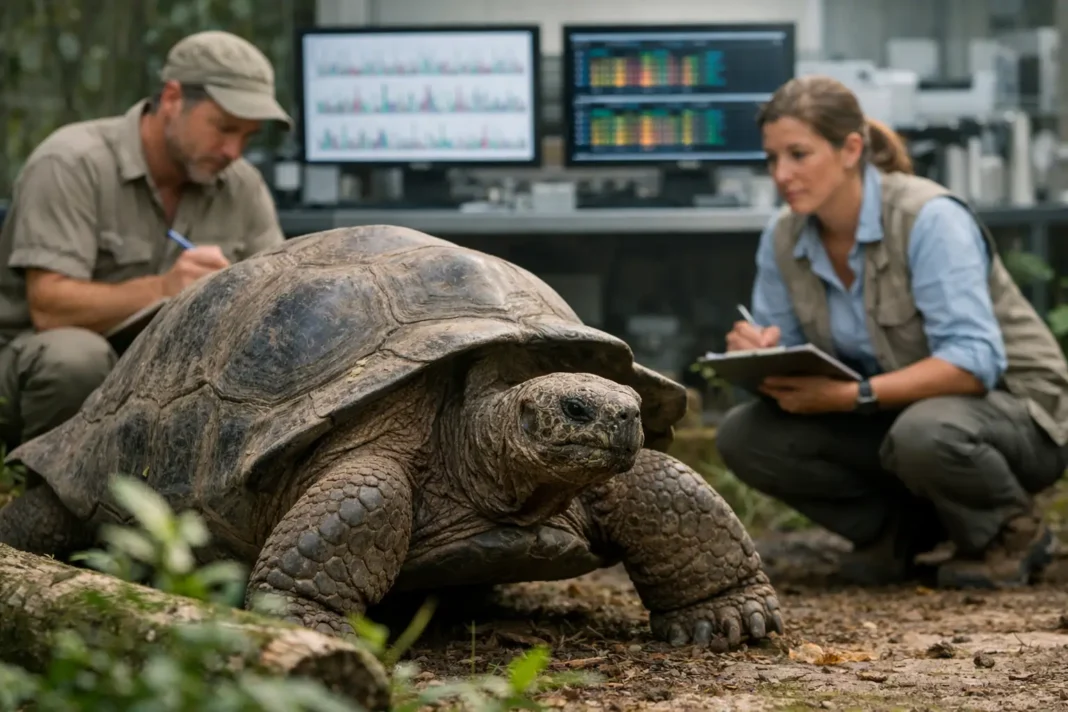

At 194 years old, Jonathan the giant tortoise stands as the world’s oldest living land animal, a biological outlier whose age has made him an exceptional subject for science. Researchers studying his DNA have identified 287 unique genetic variants associated with mechanisms that help maintain the body over time. The findings point to a complex network of biological defenses rather than a single explanation for his remarkable survival.
The variants identified by scientists are linked to processes central to long-term cellular stability: repairing damaged DNA, regulating inflammation, controlling insulin activity and suppressing cancer. Each of these functions is closely connected to aging, because the gradual failure of repair and regulation systems is one of the defining features of decline in many living organisms. In Jonathan’s case, the genetic signals suggest that his body may be especially well equipped to limit or manage forms of damage that accumulate over decades.
The study of an animal with such an extreme lifespan carries significance beyond curiosity. Giant tortoises have long interested biologists because their longevity challenges assumptions about how large animals age and how cancer risk develops over time. Jonathan’s genetic profile adds another piece to that puzzle by highlighting pathways that may contribute to resilience. The results do not mean that human anti-aging treatments are imminent, but they provide scientists with measurable biological targets for further research in genetics and comparative biology.
Jonathan’s status as the oldest living land animal has also made him a rare public symbol of longevity, recognized by Guinness World Records. His DNA now gives researchers a more detailed way to examine why some species, and some individuals within them, can remain alive for periods far beyond normal expectations. The discovery underscores a central lesson of aging research: long life appears to depend on multiple protective systems working together, from genome maintenance to inflammation control and cancer suppression.