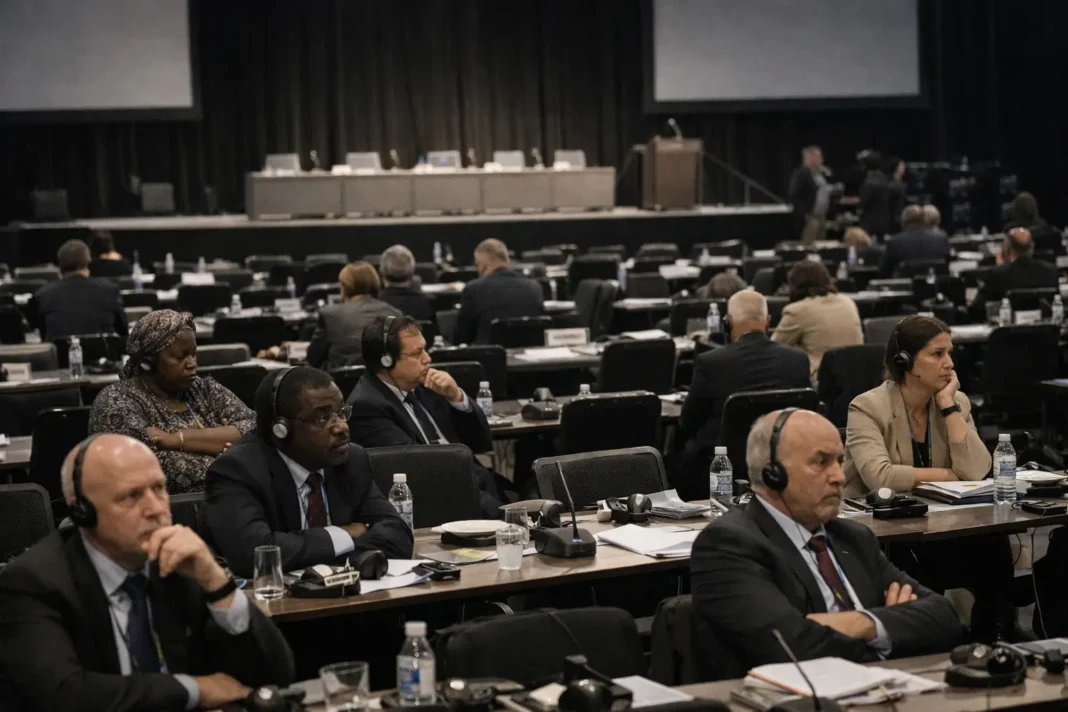

The longest UN climate negotiations on record ended without an agreement, leaving governments without a shared outcome from COP31 and exposing the depth of political divisions around global climate action. The summit, co-hosted by Australia, had been expected to deliver a negotiated text under the framework of UN Climate Change, the United Nations process that brings countries together to coordinate responses to the climate crisis.
The failure to reach consensus underscores the strain now affecting climate change diplomacy. UN climate conferences depend on agreement among participating states, a requirement that gives every government a role in shaping the final result but also makes progress vulnerable when priorities diverge. The end of COP31 without a deal leaves unresolved the political work usually carried by these summits: setting signals for national policy, international climate finance and cooperation on adaptation and emissions reduction.
The prime minister of Australia, speaking as leader of one of the host countries, attributed the outcome to “difficult geopolitical times”. The remark points to the wider international context in which climate negotiations now take place, with governments balancing domestic pressures, economic concerns and competing diplomatic priorities. While the summit’s failure does not end the UN climate process, it weakens the immediate momentum that host countries typically seek to build during a COP presidency.
For countries most exposed to rising temperatures, extreme weather and sea-level rise, the absence of an agreement is especially consequential because the annual COP process remains one of the few global venues where adaptation needs and financing demands are negotiated alongside emissions commitments. For major economies, the breakdown highlights the challenge of aligning national interests with collective targets in a process designed to produce shared responsibility rather than unilateral pledges.
COP31’s collapse will now shift attention to what governments do next through national measures and future rounds of multilateral negotiations. The result also places added pressure on the UN climate system to restore trust after a summit defined less by new commitments than by the inability to bridge differences. In practical terms, the climate agenda continues, but the political message from the summit is clear: consensus on the pace and terms of action remains fragile.