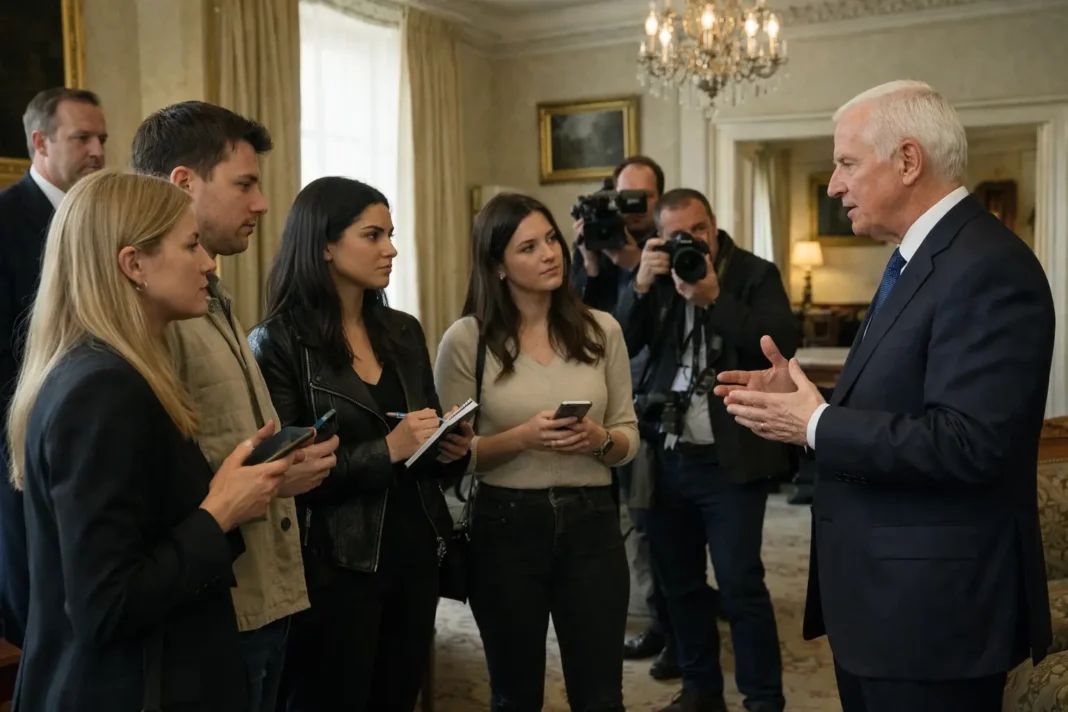

Downing Street’s latest attempt to engage younger audiences has drawn political attention after footage from a reception involving social media influencers circulated online. The event, hosted by Prime Minister Andy Burnham earlier this month, brought creators into No 10 Downing Street, the official office and residence of the British prime minister. The clips have revived a familiar debate in United Kingdom politics: how far elected leaders should go in adopting the language and formats of online culture.
The episode centred on videos recorded by influencers during or around the reception. Luke Hamnett filmed himself performing the dance associated with Hugh Grant’s character in the film Love Actually before sitting down to interview Burnham. Another creator, Max Balegde, recorded himself outside the door of No 10 miming to a viral meme song containing explicit slang. The material spread quickly beyond its original audience, turning a communications event designed for social media into a wider political talking point.
The reaction highlights the difficult balance facing governments that want to reach people who do not follow traditional political coverage. Platforms such as TikTok, Instagram and YouTube have become central to how younger users encounter public figures, policy messages and news clips. Inviting creators into official settings can give political leaders access to large audiences, but it also exposes them to the informal tone, humour and unpredictability that define much of internet culture. In this case, the setting of Downing Street made the contrast especially visible.
There has been no indication in the available facts that the reception involved a policy announcement or formal government decision. Its significance lies instead in political communication. A prime minister’s media strategy now extends beyond broadcasters, newspapers and press conferences to include creators whose formats are built around personality and speed. That shift can widen access to politics, but it also makes message control more fragile once clips leave their intended platform and are interpreted by opponents, newspapers and the public.
For Andy Burnham, who is four months into his premiership, the incident arrives early in his tenure and tests the boundaries of modern voter outreach. The controversy is less about the existence of influencer engagement than about the rules that should apply when online performance enters one of the most symbolic spaces in British public life. As political parties continue to compete for attention across digital platforms, the Downing Street reception shows that the medium can become the story as quickly as the message itself.