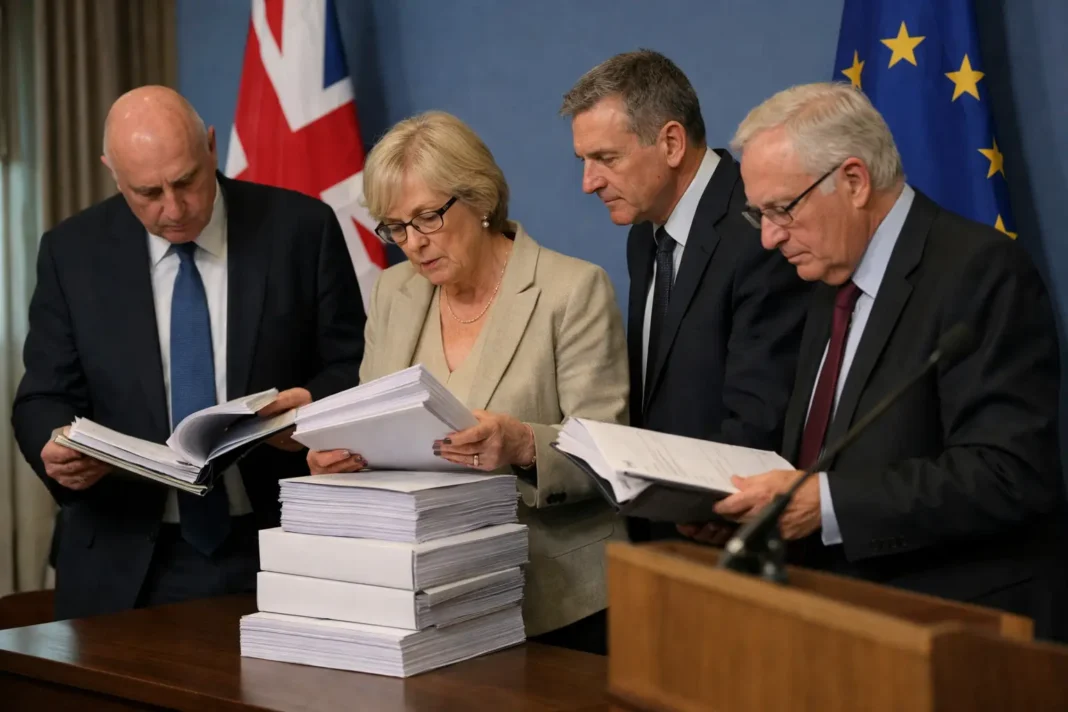

The UK government is preparing to publish new treaties agreed with the European Union, placing fresh attention on the practical architecture of the post-Brexit relationship. The documents are expected to clarify how the latest arrangements between London and Brussels will be framed in law, after a period in which trade, border management and regulatory cooperation have remained among the most closely watched areas of UK-EU relations.
The most notable element disclosed so far is a reported termination provision. The BBC has reported that the treaties contain a 10-year clause linked to reimbursement for costs if border-check infrastructure had to be rebuilt. Such a mechanism would be significant because border facilities, staffing systems and inspection capacity require long-term public investment. Any treaty language dealing with those costs would therefore matter not only to negotiators, but also to ports, logistics operators and businesses that depend on predictable procedures at the border.
Publication by the UK government will give Parliament, devolved administrations, businesses and legal specialists the opportunity to examine the exact wording. Until the texts are released, the scope of the commitments and the conditions attached to the termination clause cannot be assessed in detail. In treaty practice, precise language is central: a single clause can determine when obligations apply, how costs are calculated and what happens if either side changes course.
The agreements arrive against the wider backdrop of efforts to stabilise relations between the United Kingdom and the European Union after years of adjustments following Brexit. Border checks have been one of the most visible consequences of the UK’s departure from the EU single market and customs union. For companies moving goods across the Channel, the issue is not only political: delays, inspection requirements and infrastructure changes can affect costs, delivery schedules and supply-chain planning.
The release of the treaty texts will mark the point at which political agreement becomes a matter of legal and parliamentary scrutiny. The key questions will concern the durability of the arrangements, the financial exposure created by the reported infrastructure clause and the practical consequences for border operations. For both London and Brussels, the wording will help define how far the latest agreements provide stability in a relationship still shaped by the management of Brexit consequences.