

As a correspondent in Washington in the 1980s I vividly recall taking a call from a source at the British Embassy asking me to come over as they had something urgent to share. The UK government was alarmed by reports that the US Administration, in its battle with the Sandinista rebels in Nicaragua, was considering mining the country’s strategically important ports with access to both Caribbean waters and the Pacific Ocean.
The UK, home to the International Maritime Agency, has an immediate and historic obligation as a great trading nation, to support freedom of the high seas. Despite the excellent relations between Ronald Reagan in the White House and Mrs Thatcher in Downing Street I was informed Britain would look very dimly at any effort by the Americans to interfere with that principle. The dispute over Nicaragua’s ports made something of a splash.
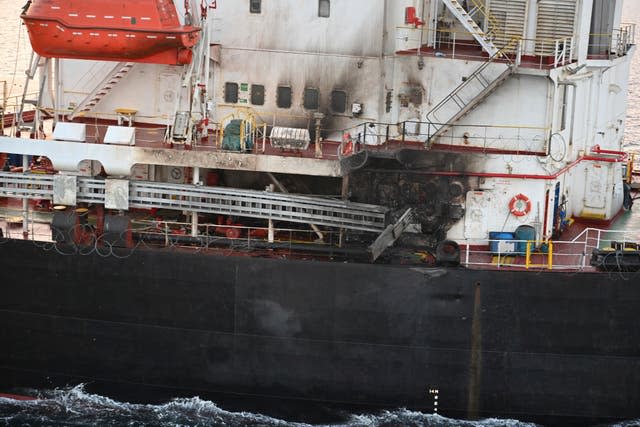
As Israel’s military response to the rape, pillage and killing of 1,195 Israeli citizens on October 7, 2023, and the seizure of 250 hostages by Hamas fighters unfolded, Iran-backed Houthi rebels in Yemen fired at Red Sea shipping and sent armed drones into Israel.
Get The Jewish News Daily Edition by email and never miss our top stories
Free Sign Up
The hostilities with the Houthis reached new intensity over the festive days when they lobbed missiles into Tel Aviv injuring a dozen or so citizens.
Alex Brummer
The attacks came after Israel targeted ports and energy infrastructure in the Yemeni capital of Sanaa. The Houthis have been threatening Western energy supplies for almost a decade by aiming at Saudi Arabian oil fields. In 2022 they temporarily interrupted refining by hitting a Jeddah oil terminal. The Saudi air force, armed with British made Tornado fighters and supported by British and US weaponry, has fought to suppress the Houthis with a ruthless bombing campaign.
Many shoppers in Europe may not have noticed. But the Houthi’s current threat to the Red Sea – in support of Hamas – had a significant impact on supply chain in this holiday season. Freight rates have climbed, adding pounds to shopping baskets, as some shipping from Asia has been diverted around the Cape of Good Hope. American and British naval vessels have been deployed to the region to help keep shipping lanes open.
Israel’s avowed promise to eliminate the Houthis and decapitate its leadership provides a reminder of how the much-disparaged Netanyahu government has been doing the West’s work
One would have to listen very carefully to the rhetoric of politicians in London to hear any commitment to maintaining the freedom of the seas. Indeed, because oil prices have remained subdued during the current geo-political tensions in the Middle East British and American politicians, diplomats and humanitarian groups have been largely silent on broader strategic issues. References in G7 communiques, from International Monetary Fund and central banks have been determinedly neutral archly referring to geo-political tensions without specifically spelling them out.
Israel’s merciless hounding of Hamas in Gaza has claimed 45,000 lives according to disputed Hamas/Palestinian data which fails to acknowledge the death of more than 10,000 Hamas fighters. The toll has attracted condemnation from all corners of the earth and has led to Israel’s war leaders, including Prime Minister Benjamin Netanyahu, being indicted for possible humanitarian crimes.
The consequences for Israel’s ‘start-up’ nation have been severe. The boycott organisation BDS has claimed some significant victories and propagated a new social media hashtag ‘#ShutDownNation.’ It claims some significant achievements including the cancellation of a $25bn investment by chipmaker Intel.
Israel’s avowed promise to eliminate the Houthis and decapitate its leadership provides a reminder of how the much-disparaged Netanyahu government – aided by American war material – has been doing the West’s work by eradicating Iran’s ‘arc of resistance’ in the Middle East. The defanging of Hezbollah in Lebanon and Syria and the fall of horrendous rule of the Assad dynasty is a devastating blow to the supporting powers of Iran and Russia. What comes next in Damascus is a known, unknown.
Whether Israel can repeat its military success in Yemen, given that Saudi aggression only served to strengthen the Houthi rebels, is uncertain. Yet if the country can help restore long-term security to oil supplies, helping to keep energy prices lower over the longer haul, that must help to economic stability. Similarly, by upholding the goal of freedom of passage on the high seas Israel could help provide a much-needed boost to a fragmented world trading system.
Alex Brummer is City Editor of the Daily Mail



