

NEWYou can now listen to Fox News articles!
NEW ORLEANS — It’s been 20 years since Hurricane Katrina slammed the Gulf Coast as a Category 3 storm. The disaster is remembered not just for its winds, but for the crushing surge of water that devastated rural Louisiana parishes and tore through the heart of New Orleans.
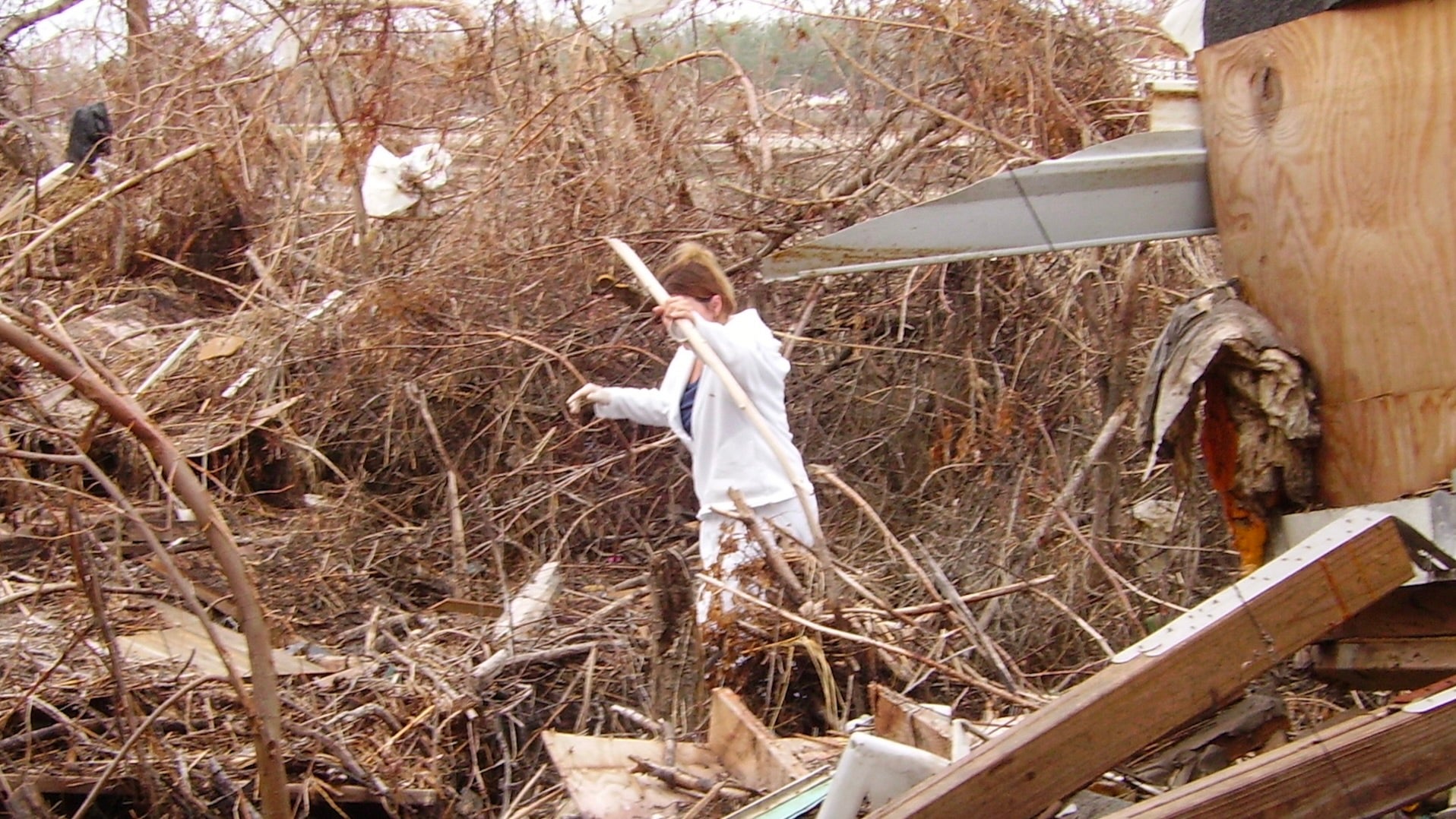
A woman searches through storm debris in Buras, LA, following Hurricane Katrina’s landfall on Aug. 29, 2005. The storm left widespread destruction across the Mississippi-Louisiana border. (Sarah Alegre)
Katrina weakened before making landfall on Aug. 29, 2005, but still struck the Louisiana-Mississippi border as a Category 3 storm. The storm surge flooded homes, took more than a thousand lives and turned reality into a nightmare along the Gulf Coast.
Memories from Louisiana
In Plaquemines Parish, seven-year-old Corrine English lost nearly everything when the small fishing town of Buras was swallowed by floodwaters.
HURRICANE KATRINA SURVIVORS SHARE STORIES OF PERSEVERANCE
“Part of me feels like it was just yesterday because of the feeling of thinking about everything being taken away from us,” English said. “It just feels really raw.”
English said she remembers the moment watching her mother’s reaction to the news as Katrina’s eye centered over Buras, Louisiana.
“I think that’s when I realized something was really wrong,” she said, recalling her mother’s emotion. “This isn’t going to be something where we can just pack our suitcases back up and go back home.”
Sixty miles north, in the Superdome in New Orleans, Corbett Reddoch, a Louisiana National Guard member from Buras, expected to ride out the storm in a drill-like scenario.
“You’d come in, the storm would pass, and then everybody would leave,” Reddoch recalled.
But when the levees failed, thousands of people were trapped inside as supplies dwindled and conditions deteriorated quickly.
SALVATION ARMY REVEALS HOW KATRINA CHANGED DISASTER RELIEF OPERATIONS
“It was basically a three-day fist fight…people didn’t know how to act,” Reddoch said.
For families in Buras, survival looked different. Entire neighborhoods disappeared underwater, leaving residents cut off and isolated.
“Not only were they going through this as parents who had watched on TV their entire world washed away,” English said, “they had to figure out how to make it normal for two 7-year-olds and a 10-year-old.”
Today, the only piece of English’s childhood that remains is a Build-A-Bear she carried through the storm, a small reminder of survival and resilience.
“Sometimes it feels like yesterday,” English said. “Other times it feels like it was 100 years ago, because my life has changed so…much. And it’s hard not to wonder what my life would have been like if that didn’t happen.”
Reflections from Mississippi
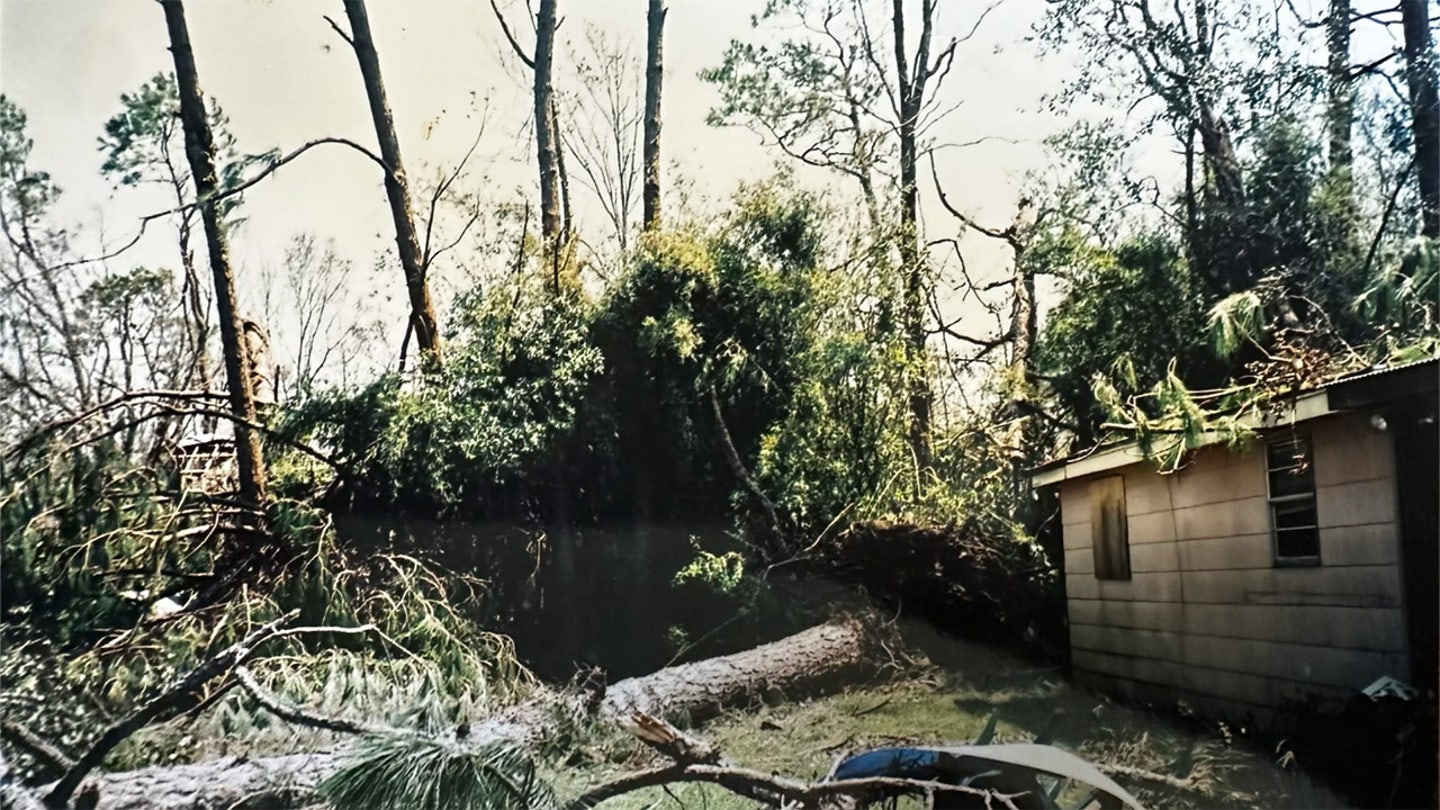
A fallen tree rests on a damaged home in Gulfport, Miss., in the aftermath of Hurricane Katrina, Aug. 2005. The storm’s winds and surge destroyed thousands of homes across the region
(Sarah Alegre)
In Mississippi, where Katrina’s storm surge leveled much of the Gulf Coast, communities are also reflecting on what has changed and what hasn’t.
“Everybody had a loss,” said Leonard Papania, former police chief of Gulfport. “In moments like these, you don’t build character, you demonstrate it,” he said.
Today, Gulfport is marked by blue skies, palm trees and a new look. But two decades ago, the scene was unrecognizable. Papania, then a young lieutenant, recalls walking through streets he could no longer recognize.
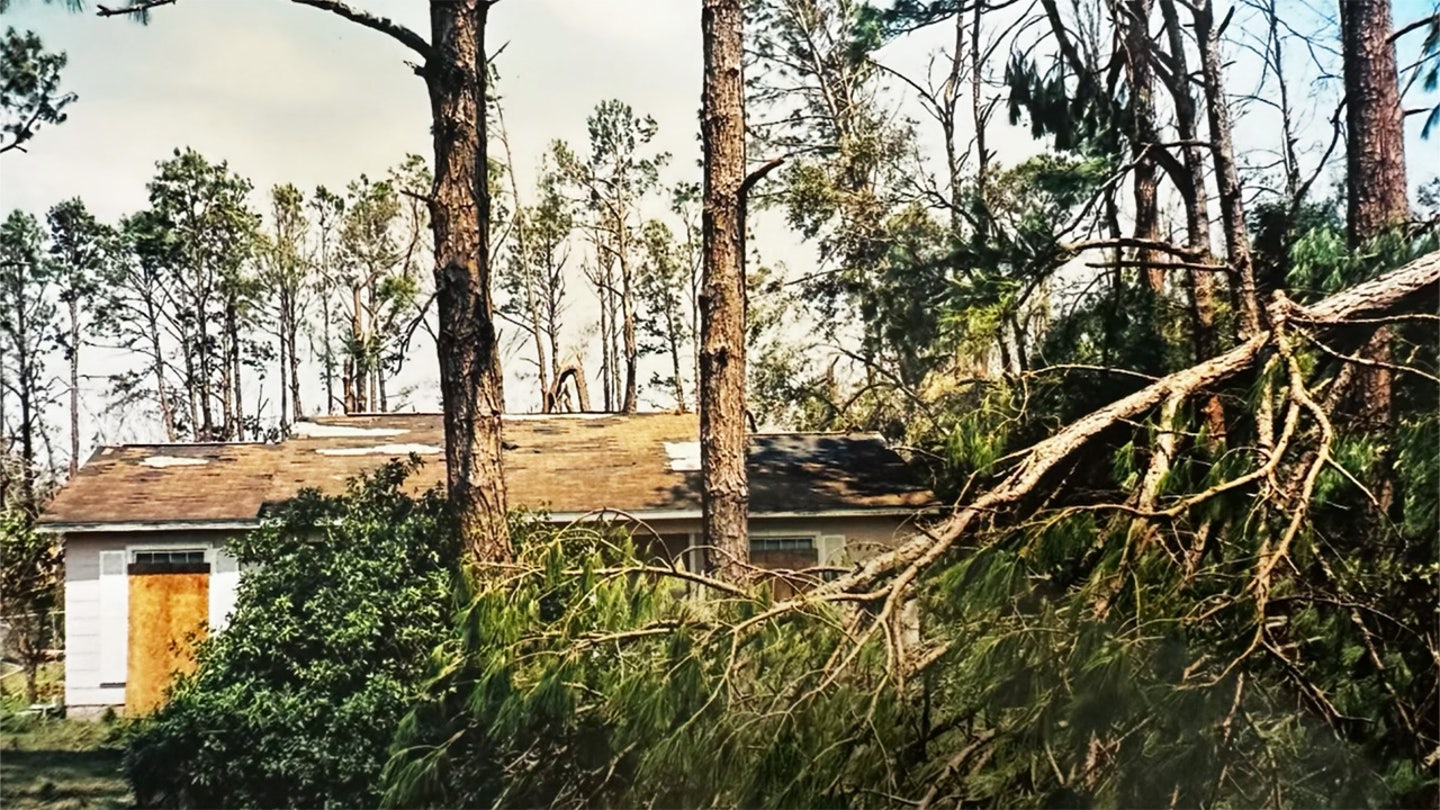
A collapsed home is seen in Gulfport, Miss., after Hurricane Katrina struck the Gulf Coast. Entire neighborhoods were leveled by the storm surge.
(Sarah Alegre)
KATRINA: LESSONS FROM THE MONSTER STORM I’LL NEVER FORGET
“It was just heart-stopping, the area I grew up in, I’ve lived here all my life,” Papania said. “You didn’t even know where you were.”
The husband and father of four also lost his home.
Rupert Lacy, who helped coordinate law enforcement and emergency management during the storm, remembers it vividly.
“For Katrina, I had that vision that this is what I’m going to see…I just didn’t realize it was going to be on steroids,” Lacy said.
It wasn’t the first monster storm he had seen. As a child in 1969, he lived through Hurricane Camille, whose surge flattened entire communities.
“You’ve got to understand the force of water,” Lacy said. “Buildings that survived Camille did not survive Katrina.”
CLICK HERE TO GET THE FOX NEWS APP
Today, emergency officials say lessons from Katrina continue to guide their response.
“We do plan for the potential failures of our systems,” said Matt, an emergency leader in Gulfport. “We do have paper backups, we have alternate forms of communication.”
Still, for Papania, the memories remain close.
“I always say I wouldn’t trade the experience I had in Katrina, but I absolutely don’t want to do it again,” he said.



