
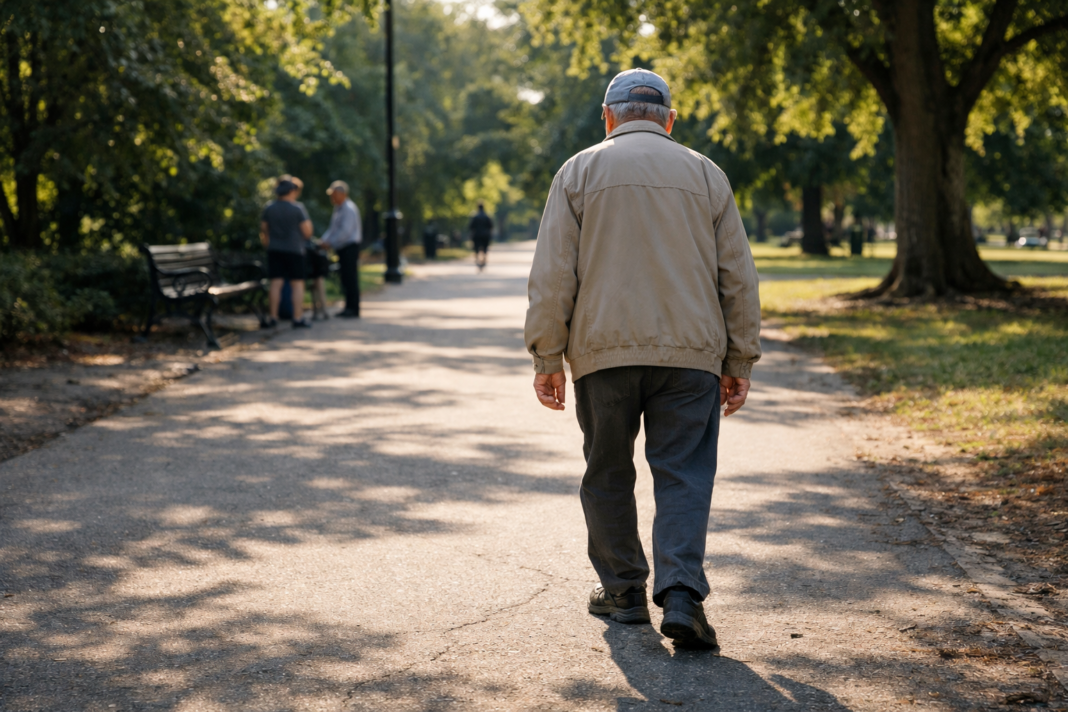

Researchers found that as people grow older the body adapts walking mechanics to prioritize stability over efficiency. Older adults tend to stiffen the ankle more with each step, a pattern that appears to reduce the risk of losing balance but also diminishes the forward propulsion generated during walking. The net effect is shorter strides, slower overall pace and a greater effort required from the muscles for each metre walked.
The observed ankle stiffening means the muscles surrounding the hip, knee and ankle must produce more force while contributing less to forward motion. This altered distribution of work increases metabolic and muscular demand for routine ambulation, making walking feel more tiring. The change in joint mechanics and muscle action arises step by step, producing cumulative effects on gait that manifest as reduced walking efficiency in everyday life.
The trade-off between stability and energy economy has practical consequences. Reduced stride length and slower speed can limit the distance older adults are comfortable walking, with implications for independence, community mobility and participation in physical and social activities. Because fatigue sets in more rapidly, people may avoid movement that would otherwise maintain fitness and functional capacity, potentially accelerating decline. The shift toward stiffer ankle dynamics can therefore influence fall risk management and rehabilitation priorities for aging populations.
Actions aimed at preserving mobility should address the underlying contributors to this pattern. Exercises that train balance, coordination and strength in the lower leg and ankle complex are highlighted as ways to help maintain walking function. Incorporating targeted balance and strength work into clinical and community programs may support more efficient gait mechanics, reduce effort per step and help older adults retain mobility for daily tasks. Ongoing evaluation of training approaches will be important to refine interventions that restore a better balance between stability and walking efficiency.





