
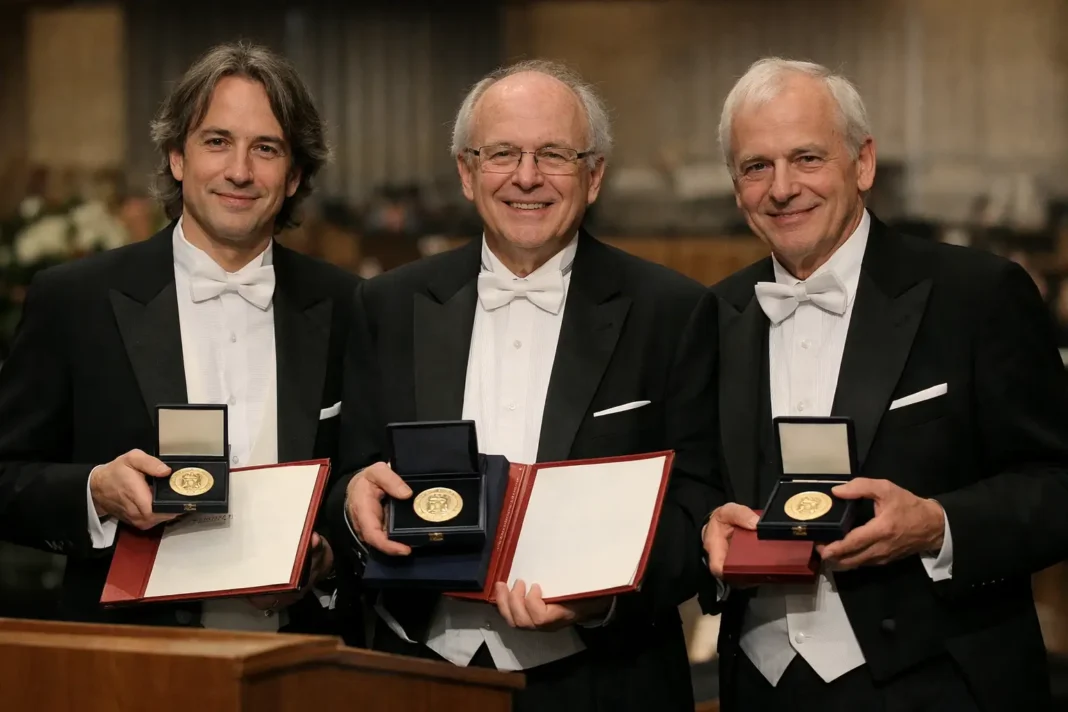

Three scientists have been awarded the Nobel Prize for research that has shed light on the inner workings of the brain. The laureates named are Karl Deisseroth, identified as a US psychiatrist and neurologist, and his German colleagues Peter Hegemann and Georg Nagel. The prize recognises a body of work that reviewers and peers describe as providing new understanding of how neuronal activity is organised and how brain circuits operate.
The award highlights advances that have influenced contemporary neuroscience research. Over the past decades, laboratories around the world have built on the methods and discoveries linked to these scientists to map interactions within neural networks and to examine how activity at the cellular level contributes to broader brain function. The recognition underlines the technical and conceptual progress that has enabled more direct study of neuronal processes.
The international dimension of the prize—bringing together a researcher based in the United States and two scientists from Germany—underscores the collaborative and cross-border nature of contemporary biomedical research. Institutions and research teams that focus on brain science have noted the award as a milestone for fields that combine clinical insight with laboratory investigation. The distinction also reflects the multidisciplinary character of work that spans clinical practice, molecular methods and systems-level analysis.
Further information about the laureates and the committee’s citation is available through the official Nobel channels. For readers seeking context on the scientific areas involved, the prize is likely to focus renewed attention on the techniques and concepts that enable direct probing of neural circuits and their role in behaviour and cognition.






