


There are moments like these, especially during tense periods, when all we want is to switch to Netflix and escape for an hour. Without news and talking heads – just food and a good story. If you are already choosing to escape, our recommendation is to stop at the episode about Jamie Oliver from the series Chef’s Table: Culinary Legends.
Not because of the recipes – but because of the question he raises without stating it explicitly: Why do children have such difficulty eating new food, even when it is tasty, colorful and prepared with love? The answer, it turns out, has much less to do with the food itself – and much more to do with habits, exposure and the way we present it.
Oliver did not arrive at this by chance. Already at the beginning of the 2000s, when he tried to change school menus in England, he discovered how much dietary change is not a story of recipes – but of habits, exposure and confidence. The first episode (out of four) in the documentary series available on Netflix Chef’s Table: Culinary Legends is dedicated to him.
Unlike most cooking shows of the period, he did not focus on complex recipes but on promoting a simple idea: To cook at home, without fear. It is fun, it is possible, and it does not have to be complicated. He identified the everyday barriers that keep people away from the kitchen: Time, a long shopping list, too many dishes in the sink, and a feeling that “proper” cooking requires expertise.
From here began the path to a national campaign in schools. At that time in Britain there was discussion about the poor quality of meals in the education system. In 2004, Oliver entered a school in Greenwich, southeast London. The system he found there was built on industrial food, and he changed the menu from the ground up: Less ultra-processed food, less frying, more vegetables and fruits, and higher-quality meat.
At the beginning of the process, Oliver describes a long and difficult period: The bins filled with the food he prepared, the children complained at home, the school staff was exhausted. Dietary change among children almost never begins on the plate – but in what happens around it. One of the central insights that emerges both from the program and from research is that children do not “refuse” food – they simply do not yet know it well enough.
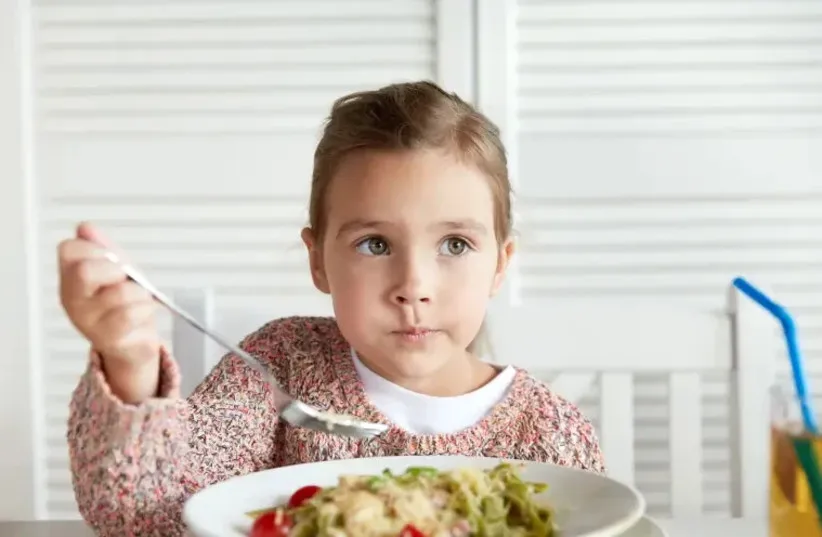
Studies show that sometimes between 8 to 15 exposures are required before a new food moves from “strange” to “acceptable”. This is not stubbornness but a natural developmental mechanism that protects children from unfamiliar foods. The good news: Just as it is built – so it can also be worked with.
Oliver suggested stopping the attempt to “win” and instead building a process: To serve again and again, with love, with a lot of encouragement and proper “marketing”, in quantities suitable for experimentation, day after day. And indeed gradually less food was thrown in the bin, more children tasted and ate, and over time the change was defined as a success.
The next stage was turning school meals in London into a national story. The success of the program created significant public pressure. A broad petition was circulated, collecting hundreds of thousands of signatures, and the campaign reached then Prime Minister Tony Blair, who committed to an additional government investment of £280 million to improve school meals.
How do you get children to try new food without struggles and in your own home? Here are a few simple ways to create familiarity with new food:
1. Reduce pressure and strengthen the act of experimentation: Phrasings like “Taste it if you want” are more effective than urging or deals. External pressure increases resistance and may reinforce pickiness. It is better to praise the act of trying new food itself, and not to reward eating with sweets, which may harm intrinsic motivation.
2. Pair new with familiar: In every meal it is recommended to include on the plate a food the child already knows and loves, and next to it to add the new food – not instead of it. Olives, for example, can be offered inside “pita pizza” or in toast.
3. Expose before tasting – and persist: The first time the child tastes a new food should not be the first time they see it. Early visual exposure reduces concern. It is important to offer again and again, in a calm and consistent way.
4. Start with small quantities: It is advisable to begin with very small portions, that do not threaten the child. For example two to three corn kernels only, or half a cherry tomato instead of tomato slices.

5. Choose the right time and environment:The beginning of the meal is usually the most suitable time for experimentation, when appetite is higher. In contrast, fatigue, sensory overload or excitement (such as birthdays) are not good conditions for tasting new food.
6. Use social eating: Children are very influenced by imitation. Meals with peers – such as in kindergarten or at school – or shared eating with family members, may encourage tasting new foods.
7. Vary the forms of serving: The same food can be perceived completely differently depending on how it is served: Slices, cubes, “sticks” or “coins”. A small change in form can make a big difference in willingness to taste.
8. Use a role model: If there is a significant figure for the child who likes a certain food, it can be mentioned gently and credibly. For example: “Like cousin Evyatar likes zucchini” or “Like Grandma Anat likes yogurt”.
9. Convey patience over time: Openness to new flavors develops gradually. A calm message like “Maybe when you grow up you will like it” reduces tension and allows the process to happen at a natural pace.
10. Involve children in preparation: Involvement in food preparation – washing, cutting, mixing – makes the food more familiar and increases curiosity, even if the child still does not taste it. Beyond that, working in the kitchen develops additional skills such as order, organization and independence.
Perhaps this is one of the most liberating insights for parents: It does not happen in one day, and it is not supposed to happen. Sometimes, all that is needed is another exposure and another opportunity – and another small moment in which the child is ready to approach what yesterday seemed impossible.
Source:
www.jpost.com



