

Israelis take justified pride in the country’s place in the Middle East. It is the region’s only democracy, a state that upholds freedom of religion, protects minority rights, respects people’s sexual orientation, and offers a standard of religious life for Christians unmatched anywhere else in the region. That is in obvious contrast to the persecution faced by Christian communities across much of the Middle East.
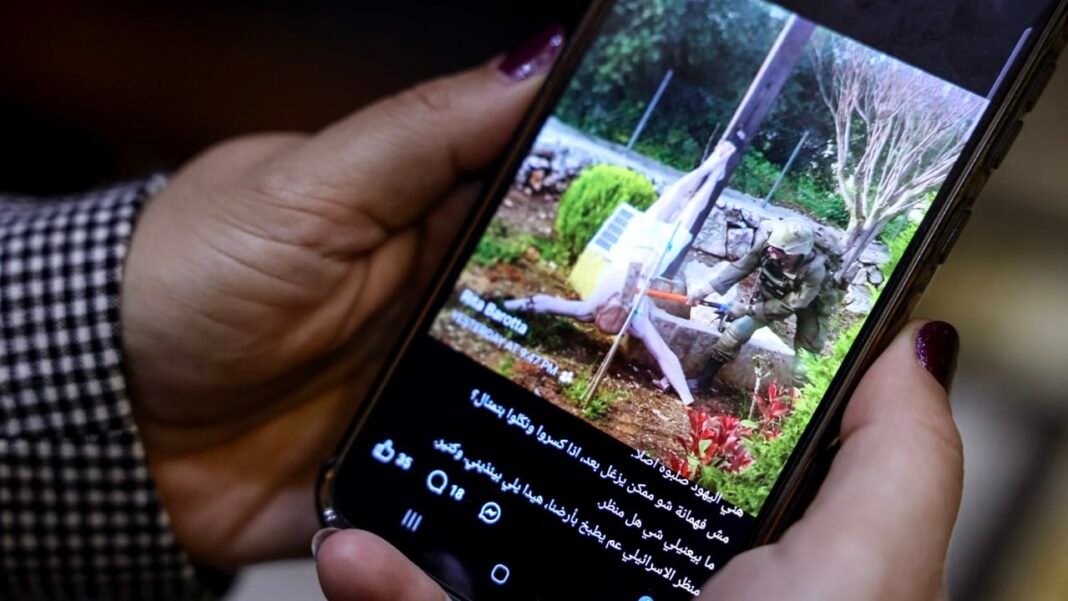
That reality, however, took a hit this week in the southern Lebanese village of Debel. Footage circulated widely on social media showed an IDF soldier smashing a statue of Jesus in the Christian village, an act that was as shocking as it was self-defeating.
In a single moment, one soldier handed Israel’s critics a ready-made image to distort the country’s values and intentions, and Israel’s critics need no encouragement.
Following an investigation, the soldier who carried out the act and the soldier who filmed it were removed from combat duty and sentenced to 30 days in military detention in a speedy response by the IDF. Six soldiers who were present but failed to intervene have been summoned, and further disciplinary measures are under consideration.
The military was unequivocal in its condemnation of the act. The conduct “completely deviated from IDF orders and values,” the IDF said. Chief of Staff Lt.-Gen. Eyal Zamir went further, calling it “a moral failure” that “far exceeds any acceptable standard.”
Political leaders were similarly swift in their condemnation. Foreign Minister Gideon Sa’ar described the act as “grave and disgraceful.”
Prime Minister Benjamin Netanyahu wrote on X/Twitter: “All religions flourish in our land, and we view members of all faiths as equals in building our society and region.
“Israel is the only country in the region where the Christian population and standard of living is growing. Israel is the only place in the Middle East that adheres to freedom of worship for all. We express regret for the incident, and for any hurt this has caused to believers in Lebanon and around the world.”
The damage is done
But for all the condemnations, the damage had already been done.
Debel is a Christian community in southern Lebanon that, unlike others, was not evacuated during the recent war between Israel and Hezbollah. Its residents have resisted Hezbollah’s presence, placing them closer to Israel’s strategic interests than its enemies – an idea among Lebanese-Israeli relations that has historical roots.
During the First Lebanon War, Israel’s alliance with Christian militias, including the Phalangists, was built on a shared opposition to a common, extremist threat.
That relationship has always been complicated, but it reminds us that Israel’s struggle is not against Christianity, nor against Lebanon’s civilians. It is against Hezbollah.
Israel would do well to remember that, as Debel’s indifference when the IDF later erected a replacement statue shows. Villagers, with assistance from an Italian UNIFIL battalion, chose to install their own replica instead.
Respect cannot be restored through symbolism alone.
Israel has long identified itself as a protector of religious freedom in a region where such freedoms are often absent. Its Christian population is growing, its churches are protected, and its holy sites are accessible to all (despite modern rhetoric accusing Israel of acting against all these points).
Netanyahu’s response, notably delivered in English, addressed the international audience that would inevitably see the footage. It reaffirmed Israel’s values, which is a positive, but it also raised an uncomfortable question. Why was there only a message in English rather than one in Hebrew? One that could educate certain Israelis and Israeli soldiers on the importance of religious respect.
Was Netanyahu’s message intended more for the world than for the Israeli public itself? If so, that is part of the problem. Releasing a message in English is commendable, but this message needed to be sent home to Israelis, not posted on social media for the wider world in a foreign language.
Israel’s enemies thrive on such debacles, and after the Israel-Hamas War – a PR war in itself – the IDF cannot afford even isolated acts that reflect intolerance.
In Debel, Israel’s enemies were handed such an image on a silver platter.
The soldier has been punished, and the statue has been replaced, but the Debel incident should remind us what Israel stands for, what our soldiers stand for, and the basic respect that comes with it.
Source:
www.jpost.com




