
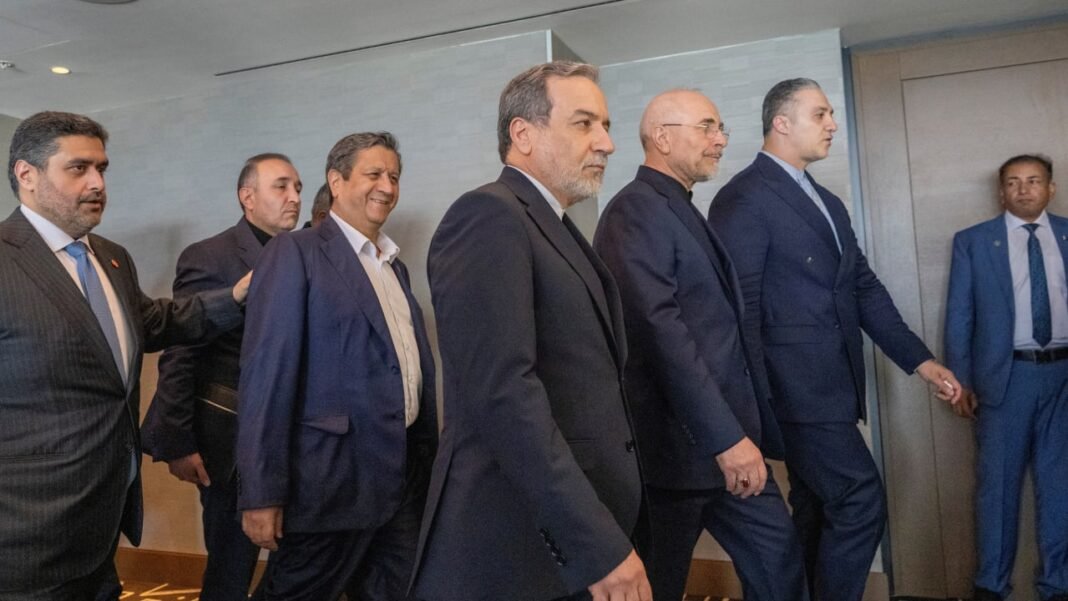

The United States and Iran concluded talks in Switzerland on Monday. Mediators Qatar and Pakistan described “encouraging progress” and announced a 60-day road map toward a final agreement.
The talks had created a “good foundation,” US Vice President JD Vance said, adding that Iran agreed to allow International Atomic Energy Agency (IAEA) inspectors back into the country. Washington also issued a temporary 60-day license that allows Iranian oil and petrochemical sales through August 21.
The talks included discussion of a Lebanon “deconfliction cell” aimed at preventing renewed escalation between Israel and Hezbollah. Israel was absent. Iran was present.
That fact should trouble every Israeli. Diplomacy with Iran can be useful when it weakens the regime, freezes a threat, or buys time under conditions that favor the West. The Switzerland talks risk giving Tehran time, money, legitimacy, and a role in managing the fires it helped set.
Over the past 24 hours, criticism has focused on one concern: Tehran appears to have gained a road map without publicly accepting the hard conditions that would make it meaningful. It appears to have secured breathing room on sanctions while its proxies remain armed. It appears to have turned the Strait of Hormuz into a bargaining chip and Lebanon into part of a broader US-Iran understanding.
Iran should not be rewarded for threatening global shipping. It should not receive economic relief after using regional chaos to force the world back to the table. It should not gain influence over arrangements involving Lebanon while Hezbollah remains its most important Arab proxy and the direct threat facing Israel’s border communities.
A Lebanon deconfliction mechanism may sound technical. In reality, it could become a diplomatic trap. Israel cannot allow its freedom of action against Hezbollah to be filtered through a process shaped by Iran. The residents of Metula, Kiryat Shmona, Moshav Margaliot, Kibbutz Manara, and other northern communities do not need another committee. They need Hezbollah pushed back, disarmed, and deterred.
Iran preserving pattern to maintain nuclear program
The same applies to the nuclear file. Vance said Iran had agreed to inspections. Tehran’s own messaging has been far less reassuring. If Iran’s return to cooperation with the IAEA depends on internal decisions, political timing, or future approvals, then this is a promise waiting to be diluted.
Israel has seen this pattern before. Iran agrees to language. The West celebrates movement. Inspectors receive partial access, delayed access, or access under dispute. Tehran keeps the core of the program alive, argues over definitions, and uses every month gained to improve its position.
The oil license is also a problem. The Trump administration may argue that the waiver is temporary, narrow, and tied to negotiations. Tehran will read it as pressure working. Hezbollah will read it as proof that its patron survived. Hamas and Palestinian Islamic Jihad will understand that Iran can absorb military blows and still receive economic oxygen.
Money given to the Iranian regime cannot be cleanly separated from its security priorities. Even when funds are formally directed toward civilian needs, they ease pressure elsewhere. A regime that spends billions on missiles, drones, militias, and terrorist networks should not be trusted to compartmentalize relief.
Israel, US want to prevent wider war
The White House may believe it is preventing a wider war. That goal is legitimate. Israel also wants to avoid wider war. Israeli families have no desire to send more sons and daughters into Lebanon, Gaza, Syria, Yemen, or Iran.
Avoiding war requires strength, clarity, and consequences. Iran must understand that escalation will cost it more than restraint. The emerging message from Switzerland is muddier: Threaten Hormuz, survive the fighting, keep Hezbollah intact, and Washington will search for a formula.
That formula cannot become policy. A serious agreement with Iran must include intrusive inspections, immediate penalties for violations, restrictions on missile and drone capabilities, limits on proxy financing, and a clear understanding that Israel retains the right to defend itself. Anything less will leave Iran stronger than it should be and Israel more exposed than it can accept.
The talks in Switzerland may have calmed markets and lowered the volume for a day. They have not answered the question that matters: Is Iran being forced to retreat or merely being paid to pause?
For Israel, that distinction is measured in missiles, border towns, and lives.
Source:
www.jpost.com



