
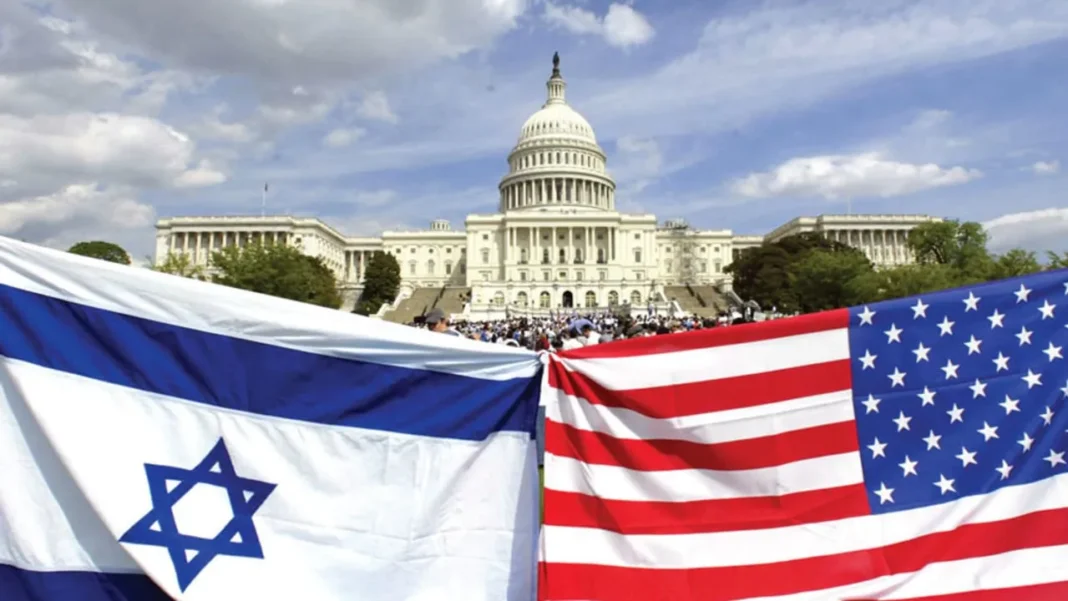

America reaches its 250th anniversary confronting one of the great paradoxes of modern democracy. No nation has accumulated greater economic, military, technological, and cultural power, yet few advanced democracies appear so dissatisfied with themselves. Partly this is because of a colossal political dysfunction, and it is harming Israel as well.
The United States remains the world’s indispensable power. Its companies dominate global markets, its universities lead scientific discovery, its financial system underpins the world economy, and its armed forces remain central to the international order.
Yet Americans increasingly express profound pessimism about their own political future, and many openly question the health of their democracy. A Reuters/Ipsos poll found that 38% don’t believe the US will still exist as a single country in another 250 years. Gallop found that fewer than half believe everyone has an equal shot at the American dream.
The conventional explanation is that America has become hopelessly polarized. There is truth in that observation, but it misses something fundamental: Not everyone is part of the polarization. The deeper problem is that the American political system is attempting to represent three broad political constituencies through only two parties.
The largest of those constituencies is neither progressive nor MAGA populist. It is a broad, pragmatic center that has steadily lost meaningful political representation – yet is, if defined loosely enough, about half the population.
On most of the country’s defining issues, Americans cluster far closer to the middle than political debate would suggest.
Large majorities favor abortion rights together with reasonable restrictions, secure borders together with an orderly immigration system, responsible gun ownership together with universal background checks, market economics together with a basic healthcare guarantee, and environmental protection pursued without needlessly sacrificing economic competitiveness.
On foreign policy, they continue to believe that American leadership matters and that longstanding alliances, including the one with Israel (certainly once the current government is gone), serve both American interests and global stability.
Yet the structure of the two-party system increasingly rewards ideological intensity rather than broad public appeal. Primaries empower activists, compromise becomes politically hazardous, and elected officials find themselves answering first to their party’s most committed factions rather than to the country as a whole. So you get MAGA on one side, and progressives on the other.
This has consequences well beyond Washington. For decades, Israel enjoyed one of the strongest bipartisan consensuses in American public life.
Support for Israel rested comfortably within the political mainstream of both parties, allowing the relationship to remain remarkably durable through changes of government. Today, that is falling apart.
Isolationist currents on the Republican right increasingly question America’s international commitments, while anti-Zionist activism has become far more influential within parts of the Democratic coalition.
Despite some terrible war-influenced polling, Americans will continue to support Israel – certainly a post-Netanyahu Israel – but the political center where that support resides is squeezed from both directions.
The importance of America for Israel
For Israel, therefore, America’s political health is not an abstract concern. Israel’s closest strategic relationship depends less on which party wins a given election than on the continued existence of a broad American center that sees the alliance as both morally justified and strategically valuable.
An America governed through permanent confrontation between ideological extremes is likely to prove less predictable abroad because it has become less governable at home.
The answer is not another third party that essentially dooms its own side by splitting its vote, then disappears.
A viable and truly centrist party would instead have to emerge through institutional realignment, bringing together moderate Republicans, moderate Democrats and independents who are already elected – under a single political structure capable of governing from its first day.
Such a party would need respected elected officials, serious financial backing and enough initial strength to persuade voters that it is for real.
We tend to forget this now, but American political history has repeatedly witnessed major realignments when existing party coalitions ceased to reflect the electorate.
The Republican Party itself emerged through precisely such a transformation. Today’s circumstances differ, but the underlying principle remains the same. Political institutions eventually adapt when they cease to represent political reality.
At 250, the United States hardly lacks a political center. It lacks a party to represent it. Rebuilding that center would not simply improve American governance. It would strengthen the democratic stability on which America’s allies depend – and few allies have a greater stake in that outcome than Israel.
The writer is the former Cairo-based Middle East editor and London-based Europe/Africa editor of the Associated Press, the former chairman of the Foreign Press Association in Jerusalem, and the author of two books.
Source:
www.jpost.com



