
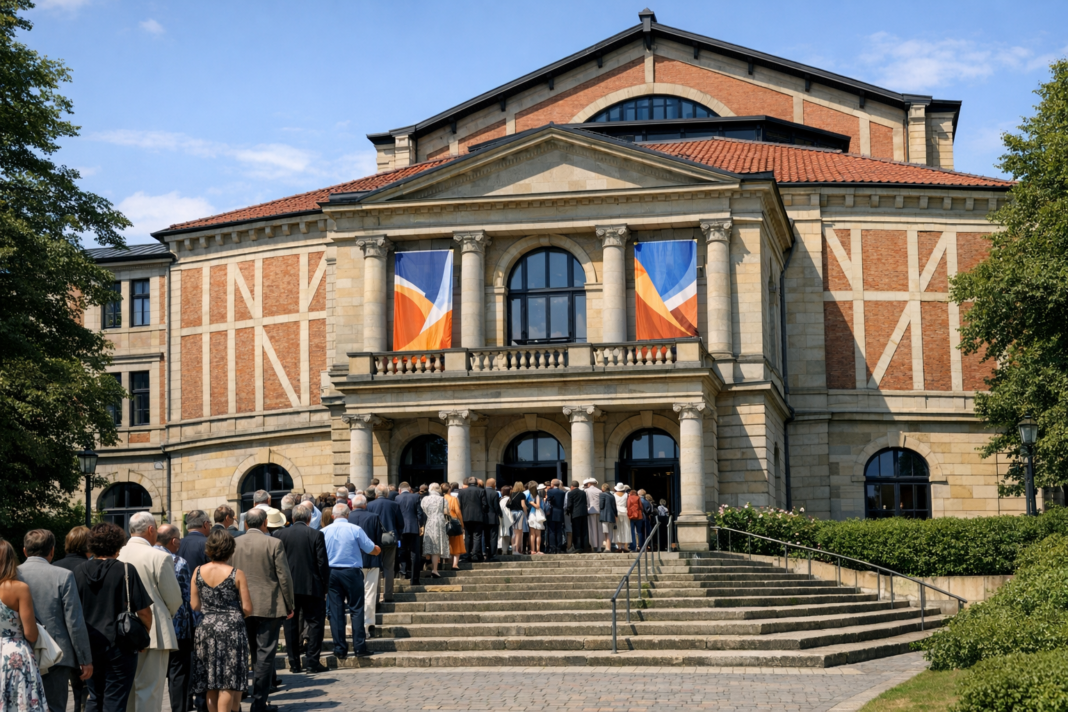

A 23-hour day at the 150th edition of the Bayreuth Festival has drawn renewed attention to the venue’s century-and-a-half heritage and its uncompromising physical conditions. The anniversary season, commemorating the establishment of the festival by Richard Wagner, featured performances of the composer’s central dramas and prompted rapid sales, with tickets for the summer run reported to have sold out within 90 minutes.
The festival has long attracted major artistic and intellectual figures across generations, with visitors historically including composers such as Liszt and Bruckner, later arrivals like Debussy and Mahler, and writers from Virginia Woolf and Thomas Mann to W.E.B. Du Bois. It has also drawn controversial political associations, with notable attendance by Adolf Hitler among others, a record that is part of the event’s complex historical profile.
The current anniversary programme concentrated on Wagner’s works, including the complete Ring cycle. A critic who attended the marathon reported consecutive performances spanning some 23 hours in total, seated on the festival’s original unpadded bench seating in the Bayreuth Festspielhaus. The building, designed to Wagner’s specifications, offers no air conditioning and limited breaks between long operatic works — the shortest piece on the bill runs approximately two and a half hours without interval. These factors, combined with a summer heatwave during the festival, formed the environment for the critic’s account.
Organisers and audiences continue to emphasise the festival’s specialised role in the operatic landscape as a site dedicated to Wagner’s repertory. The 150th anniversary reaffirmed intense public demand and the endurance of traditional staging and infrastructure at Bayreuth, while reports from attendees documented the practical challenges — extended seating times, limited comfort and extreme temperatures — associated with viewing lengthy opera cycles in the historic auditorium.






