
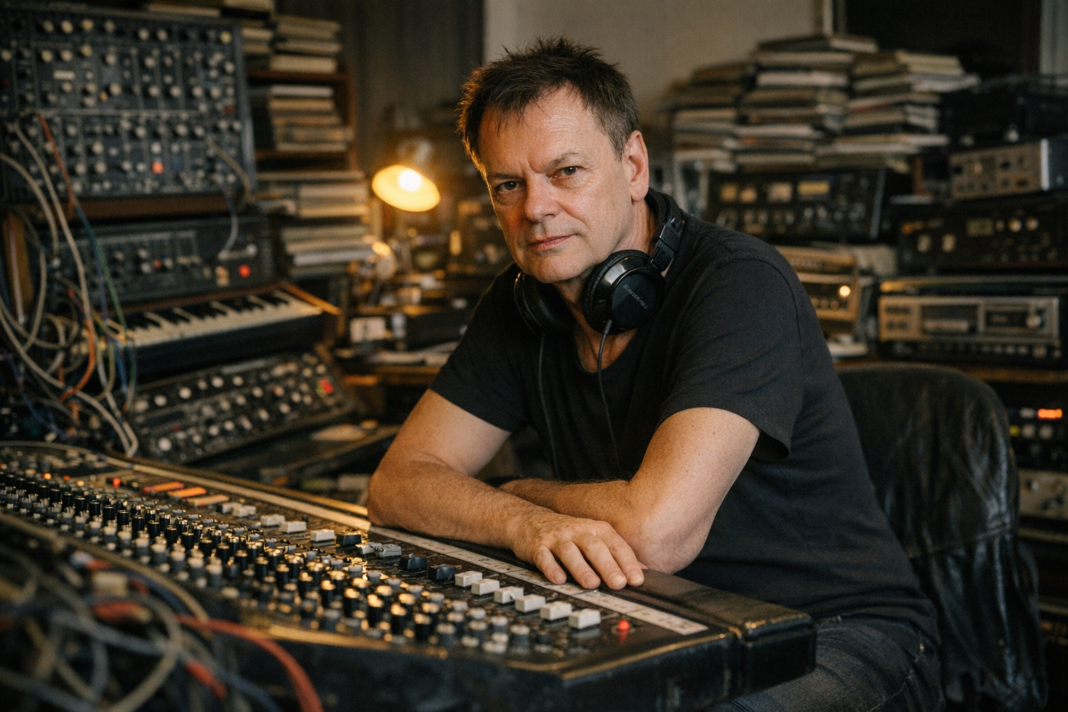

William Orbit’s production career combined underground electronic textures with mainstream pop sensibilities, a trajectory that saw the producer work with a wide range of artists and influence popular music across decades. Orbit, who died aged 69, was repeatedly noted for integrating dance-music elements into pop and rock recordings and for collaborations that brought these sounds to larger audiences.
Torch Song was Orbit’s first band and provides an early record of the approach he would refine in later work. The group achieved a degree of mainstream exposure when a track appeared on the soundtrack to the film Bachelor Party, while also recording at Centro Iberico, a London venue associated with the anarcho and experimental scenes. Early material such as the track Mothdoom Ecstasy combined stuttering samples, heavy drum programming, hazy synth textures and ethereal female vocals, elements that reappeared across Orbit’s subsequent productions.
Across his career Orbit collaborated with artists ranging from pop to alternative rock. He produced for Madonna and worked with acts including All Saints, Prince, Blur and Beth Orton, among others. In these projects his contributions typically involved reworking arrangements, introducing contemporary electronic textures and applying studio techniques drawn from dance and ambient electronica to reshape the sonic backdrop of each record.
Critical assessments and obituaries have highlighted Orbit’s facility for combining technical experimentation with commercial songwriting contexts. His use of sampling, layered synthesis and spatial production methods became a recognizable part of late 20th- and early 21st-century pop production practice, and his work is cited in discussions of how electronic music techniques were incorporated into mainstream releases.
Orbit’s recorded legacy spans collaborations, remixes and original projects that map a consistent interest in marrying experimental electronic methods with songcraft. From the early days of Torch Song and sessions at Centro Iberico to high-profile studio work with Madonna, Prince, Blur and Beth Orton, his career documents a persistent throughline: the translation of underground electronic ideas into widely heard popular recordings.






