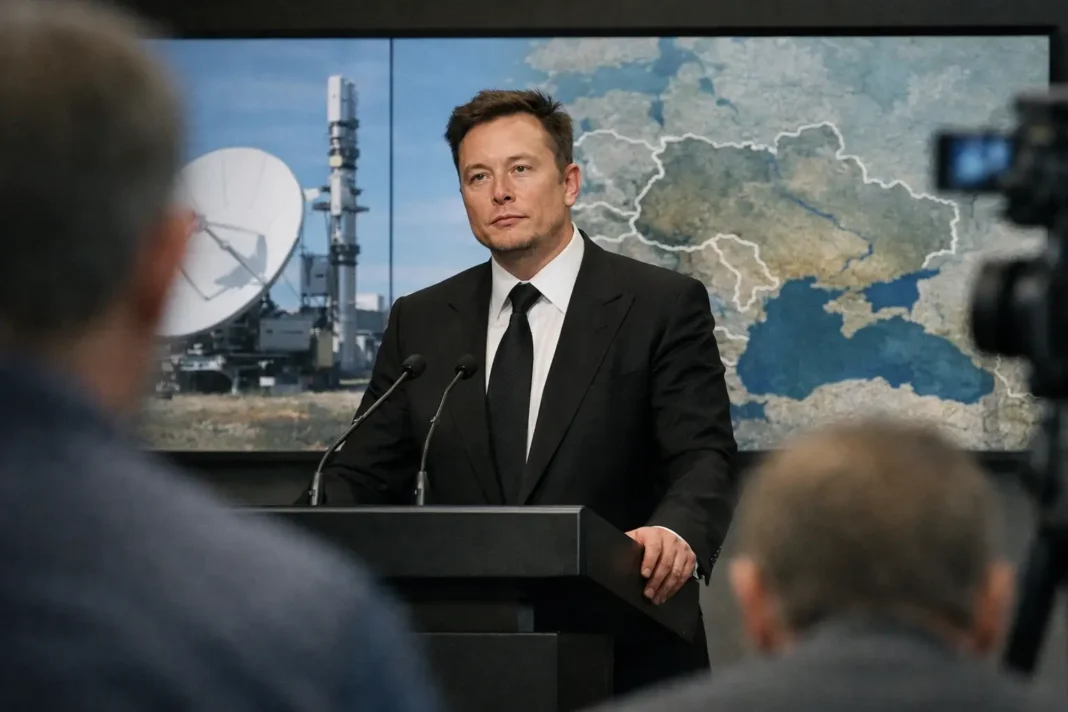

Elon Musk suggested that the US government may be responsible for a recent reduction in data speeds affecting Ukrainian drone operations. The claim, made publicly by Musk, has added a new layer to concerns over connectivity on the battlefield as Kyiv continues to deploy remotely piloted systems that depend on stable, high-bandwidth links.
Ukraine officials have acknowledged an improvement in access to Starlink terminals but say that persistent speed limits are still disrupting some battlefield missions. Ukrainian authorities describe the constraints as interruptions to real-time video feeds and command-and-control links that are essential for surveillance and strike coordination, even as terminal availability has increased compared with earlier phases of the conflict.
Starlink, the satellite internet service operated by SpaceX, provides low-latency connectivity through a constellation of satellites and has been widely used by Kyiv for military and civil communications. Reduced throughput on such links can degrade the quality of live imagery and latency-sensitive controls used by drones, complicating operators’ ability to conduct sustained remote missions.
The situation underscores the strategic importance of resilient communications for modern operations and raises questions about the interplay between commercial satellite services, national security interests and traffic management policies. While the technical specifics behind the reported slowdowns have not been independently confirmed in public detail, the disruption to data rates has already prompted scrutiny from both users in the field and observers tracking the conflict’s logistics and technology supply chains. How providers and governments address the limits will affect immediate operational capabilities and longer-term planning for secure, high-capacity links supporting unmanned systems.