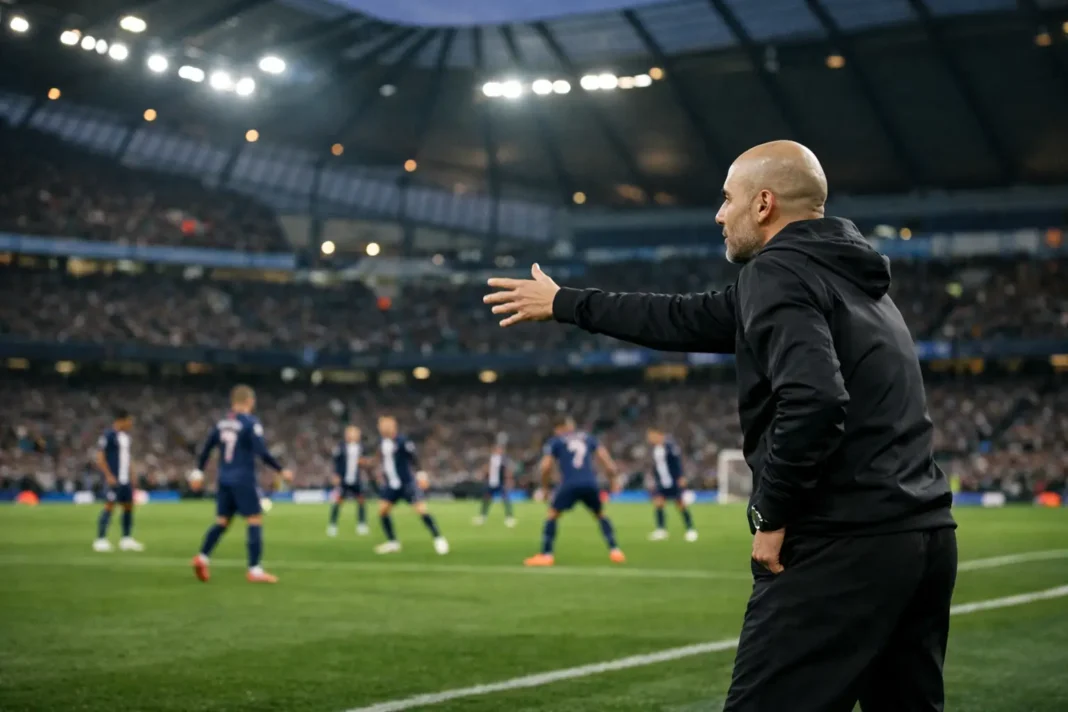

Guardiola’s return to the Etihad Stadium was framed by a match that refused simple narratives. Pep Guardiola led Manchester City into a contest that combined moments of intense organisation with spells of unpredictable, end-to-end action. Paris Saint-Germain produced phases of composure and technical excellence, forcing a game that observers described as both a tactical encounter and a spectacle of chaos.
The match unfolded as a study in contrasts. City sought to impose structure through possession and positional rotation, while PSG repeatedly disrupted rhythms with direct transitions and individual creativity. Defending in compact blocks alternated with frenetic sequences around the penalty areas, testing both teams’ defensive shape and transitional discipline. Goalkeeper interventions, rapid counterattacks and changes in tempo made the game difficult to predict and required constant managerial adjustments.
Beyond the immediate action, the fixture carried wider implications. For Manchester City, the display under Guardiola will be examined for signs of tactical cohesion and squad resilience as the season progresses across domestic and continental competitions. For Paris Saint-Germain, the performance offered evidence of their capacity to combine individual class with collective structure against top-level opposition. Both clubs will assess fitness, rotations and strategic choices as they prepare for the next fixtures in tightly scheduled campaigns.
The encounter also underscored broader trends affecting elite European football: the narrowing margins between leading teams, the premium on in-game management, and the impact of transitions on match outcomes. Supporters and analysts will take particular interest in how the tactical lessons from this match inform each manager’s approach in upcoming weeks, especially in competitions where small margins and fine details often determine longer-term progress.