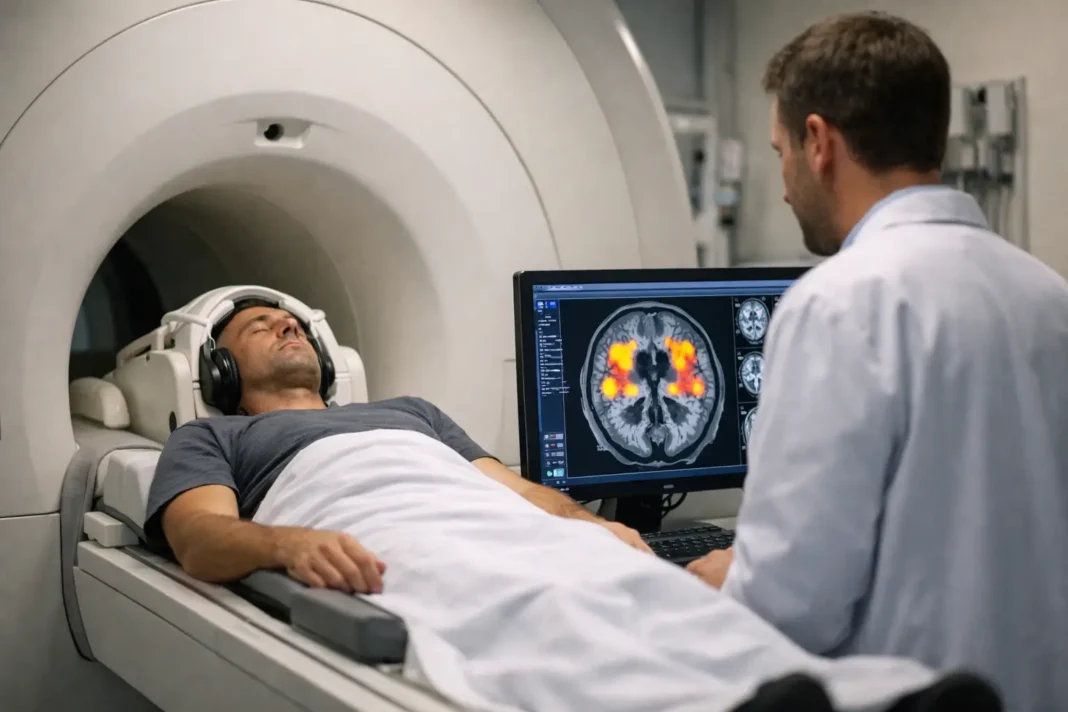

Movement-triggered chronic pain appears to engage a brain system usually associated with self-reflection, according to a new neuroimaging study. Researchers report that brief leg movements that provoked back pain produced increased activity not only in regions that register sensation and movement but also in key nodes of the brain’s default mode network. The findings, published in the British Journal of Anaesthesia, were led by investigators at UC San Diego and challenge expectations drawn from studies of acute pain, where that network typically quiets down.
The team scanned 114 adults with chronic lower back pain using functional MRI. After baseline imaging, each participant underwent a controlled leg raise designed to increase their back pain; scans taken immediately afterward showed an average reported pain increase of 23 percent. As anticipated, the procedure amplified blood flow in somatosensory and motor areas, but it also produced a parallel rise in activity and connectivity within the default mode network. By contrast, a separate painful-heat test reduced activity in parts of that network, highlighting a different neural response to transient, experimentally induced pain.
Participants who described more severe persistent pain displayed stronger coupling between the default mode network and regions that process sensory input from the back, suggesting the flare-ups may become integrated with patients’ self‑representations. Study co-authors Fadel Zeidan and Morgan Gianola noted the unexpected pattern and took steps to verify the results. External commentators welcomed the experimental approach but urged caution: a neuroscientist at Duke University praised the design for overcoming movement-related scanning challenges while also pointing out that the imaging cannot yet determine whether altered network activity is a cause or a consequence of chronic pain and may reflect lingering pain or anxiety after the movement.
The authors say the observations could help reframe interventions, pointing toward therapies that modify how people relate to their pain rather than focusing solely on sensory signals; they are now exploring whether approaches such as mindfulness or cognitive behavioral therapy can influence default mode network activity. While clinical implications remain preliminary, the imaging adds measurable brain-based evidence of patients’ reported flare-ups and may guide future trials targeting the neural networks that link pain and self-experience. This article is for informational purposes and does not constitute medical advice.