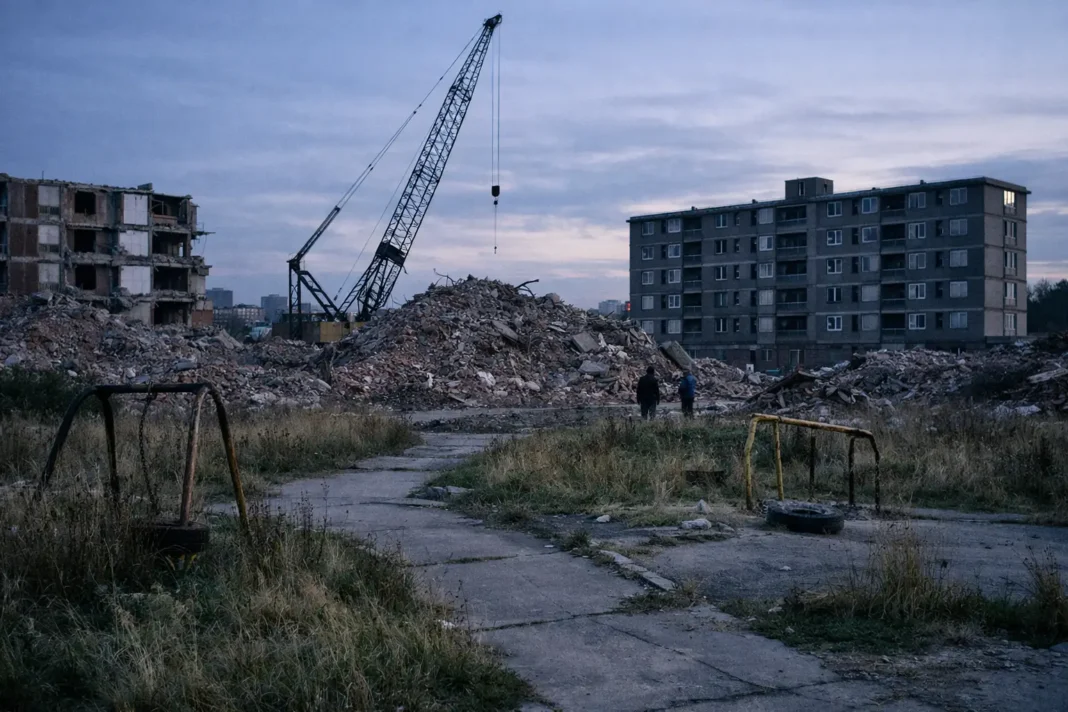

I See Buildings Fall Like Lightning has emerged as a striking adaptation of a spare, unconventional novel, reworking memories of estate demolition into a film that blends humor with urgency. Director Clio Barnard led the transformation from a text notable for its lack of a cinematic hero and limited dialogue into a work that foregrounds the physical and emotional impact of large-scale clearance on young people. The result has attracted attention for how it renders memory, place and the sudden rupture of community life.
The film draws on the childhood recollections of writer Keiran Goddard, who grew up watching tower blocks come down in east Birmingham during the 1990s. Those demolitions — most visibly in Shard End and other postwar council estates — were presented at the time as spectacles of progress: dust-choked scenes that promised new housing and a fresh start. Goddard later moved away to study at Oxford and now lives in London, yet his account emphasizes the lingering ties to the place that shaped his early years and the ambivalence many feel about leaving.
The film places children at the center of that moment of change, showing how the collapse of familiar towers can be both literally and emotionally disorienting. Barnard’s adaptation seeks to keep the novel’s observational restraint while using cinematic tools to suggest movement, noise and unexpected comedy amid upheaval. In doing so it opens a view of regeneration that is not only about replacing buildings but about the human stories displaced by redevelopment.
Beyond its stylistic achievement, the picture has renewed discussion about who benefits from urban renewal and what is lost when communities are physically erased. By turning a personal archive of demolition-day memories into a public narrative, the film invites audiences to consider the longer-term social consequences of such projects and to reflect on the uneven paths of mobility and belonging that follow the wrecking ball.