HomeWorld NewsLebanon hails UNIFIL extension as key to border stability

Lebanon hails UNIFIL extension as key to border stability


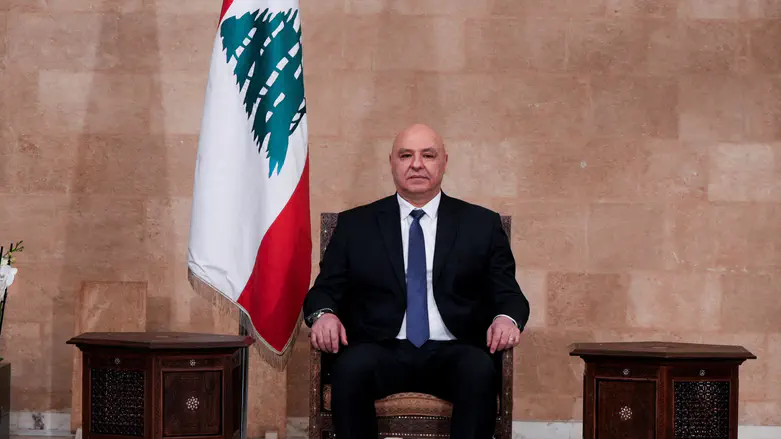
Lebanese President Joseph Aoun on Thursday welcomed the United Nations Security Council’s unanimous decision to extend the mandate of the United Nations Interim Force in Lebanon (UNIFIL) through December 31, 2026, before the force will disband, describing it as the result of broad international consensus aimed at preserving stability in southern Lebanon.

The remarks came during a phone conversation between Aoun and French President Emmanuel Macron, following the Security Council’s adoption of a French-drafted resolution that calls for UNIFIL to conclude its operations by the end of 2026. The resolution also stipulates that an orderly and safe drawdown of personnel is to begin within a year.

According to a statement released by Lebanon’s Presidency and quoted by XinhuaAoun expressed gratitude to Macron for France’s active role at the United Nations and its coordination with other member states, which contributed to the consensus on the extension.

President Aoun hailed the decision as “a significant step forward,” asserting that it would bolster the Lebanese Army’s capacity to fully deploy along Lebanon’s internationally recognized borders.

Prime Minister Nawaf Salam also welcomed the Security Council’s move, thanking all member states for their constructive engagement throughout the negotiation process.

The vote, which took place just days before UNIFIL’s mandate was set to expire on August 31, was passed unanimously by the 15-member council. The resolution marks the final extension of the peacekeeping mission, which has operated in southern Lebanon since 1978.

UNIFIL acts as a buffer between Lebanon and Israel and operates near the border. One of its tasks is to implement Security Council Resolution 1701, which ended the Second Lebanon War in 2006.

That resolution says that Hezbollah must not be allowed to operate in southern Lebanon and the entire area of southern Lebanon must be free of any armed personnel and weapons other than those of the Government of Lebanon.

Israel and the US have long argued that UNIFIL has been a largely ineffective presence. The peacekeepers have repeatedly been accused of turning a blind eye to Hezbollah’s massive military build-up, and their presence has at times been seen as an impediment to Israeli security operations.

In October of 2024, the IDF revealed that approximately 25 rockets and missiles had been launched at Israeli communities and IDF troops from Hezbollah’s terrorist compounds embedded near UNIFIL posts in southern Lebanon, exploiting their proximity to UN forces. One of the attacks resulted in the deaths of two IDF soldiers.

As a result of these attacks, the IDF conducted strikes near UNIFIL posts, making sure to warn the peacekeepers beforehand and requesting that they vacate the posts. Nevertheless, UNIFIL accused Israel of deliberately targeting its peacekeepers.




Source link

Advertisementspot_imgspot_img

Hot this week

Surgeon: Fewer Eye Injury Patients After Solar Eclipse Than in 1999

An eye surgeon says fewer people sought treatment for eclipse-related eye damage than after the UK's 1999 total solar eclipse.

Complaint against Mohammed VI before the ICC: What is known, what remains to be proven

A legal initiative targeting King Mohammed VI and Moroccan...

Edinburgh Fringe Embraces Explicit Comedy as Performers Push Boundaries

At the Edinburgh Fringe a wave of explicit comedy—from Julian Clary to street typists—questions conventions and draws engaged, often startled audiences.

Three Clear Ways AI Is Reshaping Work, Health and Security

AI is transforming labor markets, healthcare delivery and geopolitical dynamics, prompting regulation and new institutional responses worldwide.

How Honeybees Balance Their Larvae’s Diet: A Hidden Nutritional Strategy

Research shows honeybees detect nutrient imbalances in pollen and process it into well-balanced provisions for their larvae.

IBM unveils modular ultracold systems to scale fault‑tolerant quantum computing

IBM unveils modular ultracold cryogenic modules and superconducting links to connect quantum chips, aiming for fault‑tolerant machines by 2029.

A 17-year-old carer on missed milestones and hidden labour of youth care

A teenager's account highlights how unpaid caregiving in youth affects schooling, social life and future prospects.

Trump Warns of Severe Economic Penalties for Countries Aiding Iran

Donald Trump warned of 'tremendous economic consequences' for any country aiding Iran after a 60-day ceasefire expired, escalating diplomatic stakes.

Israel launches criminal probe after soldiers fired on car that carried child

Israeli military confirms soldiers fired at a vehicle carrying five-year-old Hind Rajab; a criminal investigation has been opened after her death with six relatives.

Heat Politics: Reform’s Message Forces a Choice Between Immediate Comfort and Long-Term Costs

Reform UK's deputy leader urged acceptance of recent heat, prompting debate on policy priorities amid wildfires, crop damage and emergency strain.

Root’s comeback as captain sparks clinical England bowling at Headingley

Joe Root's second stint as Test captain begins as England dismiss Pakistan for 171, led by five-wicket hauls from Robinson and Tongue.

Edinburgh Fringe Embraces Explicit Comedy as Performers Push Boundaries

At the Edinburgh Fringe a wave of explicit comedy—from Julian Clary to street typists—questions conventions and draws engaged, often startled audiences.

How Honeybees Balance Their Larvae’s Diet: A Hidden Nutritional Strategy

Research shows honeybees detect nutrient imbalances in pollen and process it into well-balanced provisions for their larvae.
Advertisementspot_img

Related Articles