

London, New York, Tokyo, and Dubai; the world’s leading cities no longer merely manage themselves, they shape reality. They streamline processes, make data-driven decisions, and shift from reactive management to proactive leadership that identifies challenges in advance and addresses them before they escalate.
In recent years, Israeli cities, led by local government authorities, have also undergone a transformation in the way they operate, make decisions, and provide services to residents. Local authorities are the citizen’s first point of contact. Whether during ordinary times or national emergencies, they serve as the bridge between national decisions and the actual delivery of services to residents in a continuous and accessible manner.
To meet this responsibility, local government must adopt new approaches and constantly reassess its methods of operation. The challenges facing municipalities are substantial: rapid population growth, rising operational costs, a severe shortage of skilled professionals, and growing public demand for faster, more efficient, and more transparent services. The solution cannot rely solely on increasing budgets. It must be built on creating new growth engines, improving systemic efficiency, and achieving a significant leap in organizational performance.
The path forward lies in innovation, smart management, and the integration of data and advanced technologies. Today, local government is leading the development of smart cities in Israel based on the understanding that a smart city is, first and foremost, a strong and resilient city. Urban management worldwide is rapidly shifting from traditional governance based on experience and estimates to management driven by real-time data.
A “smart city” is not merely a collection of cameras, sensors, or technological systems. It is a comprehensive urban operating system that enables precise real-time decision-making, connectivity between systems, and far more efficient resource management. In this sense, smart cities are not simply a technological project, they are a managerial revolution.
The most important distinction is between reactive and proactive management. Reactive management responds only after a problem occurs. Proactive management identifies trends in advance, analyzes data in real time, and acts before an issue becomes a crisis.
This difference defines both the quality of service provided to residents and the resilience of the city as a whole. Cities that operate efficiently on a daily basis are also better equipped to function under crisis conditions.
With this understanding, we have invested unprecedented resources in recent years to lead a technological revolution in local government.
In the city of Modiin Maccabim Reut, we established an urban innovation center that serves both as a pilot program and as an operational model for other municipalities. As part of this initiative, an advanced municipal communications infrastructure was deployed alongside a range of remotely operated smart systems. These included high-quality security cameras to enhance personal safety, energy-efficient smart lighting, environmental monitoring sensors, real-time traffic management systems to reduce congestion, and automated irrigation systems that significantly conserve water resources.
All of these systems feed real-time information into an advanced municipal command center that provides city leadership with a complete, accurate, and dynamic picture of the situation. This approach is intended to serve as the foundation for a new national standard in smart urban management through the development of a shared platform and practical models for all local authorities.
One example of such a platform is the partnership between the Federation of Local Authorities in Israel and Salesforce, through which we launched MuniForce, an artificial intelligence-based platform for municipal information management. The system enables the transition to data-driven governance. It gives municipalities the ability to analyze information in real time, anticipate infrastructure failures before they occur, and manage budgets with greater precision. Beyond that, it creates a unified managerial language among different municipalities, significantly strengthening coordination, particularly in times of crisis.
Alongside the data revolution, we are also working to fundamentally transform the resident service experience. Through the MuniBox initiative, developed in partnership with PayBox and Cal- Israel’s leading social payments app and credit card company – all municipal payments have been unified within a single secure digital wallet. This move simplifies the relationship between residents and local authorities, reduces bureaucracy, and enables accessible, fast, and transparent municipal services directly from a mobile phone.
Beyond the municipal aspect, this is a move of national importance. Local government is a central pillar of Israel’s national resilience. The ability of municipalities to operate independently, in a coordinated and data-driven manner, directly affects the country’s overall ability to confront complex challenges.
Strengthening local authorities is therefore not merely a municipal objective, it is a top strategic interest of the State of Israel.
Alongside the ongoing rollout of smart municipal management systems and the shift toward data-driven operations and knowledge sharing between municipalities, an annual forum also showcases these innovations on a broad scale.
The MuniExpo Local Government Conference, which includes the largest municipal innovation exhibition in the Middle East, will take place on June 23–24 at Expo Tel Aviv. The exhibition will showcase cutting-edge innovation in key fields including security, data, education, and infrastructure, bringing together ideas and solutions that are shaping the future of local government.
The world is moving toward technology-driven urban management, and Israel’s local government is not merely part of the trend, it is leading it.
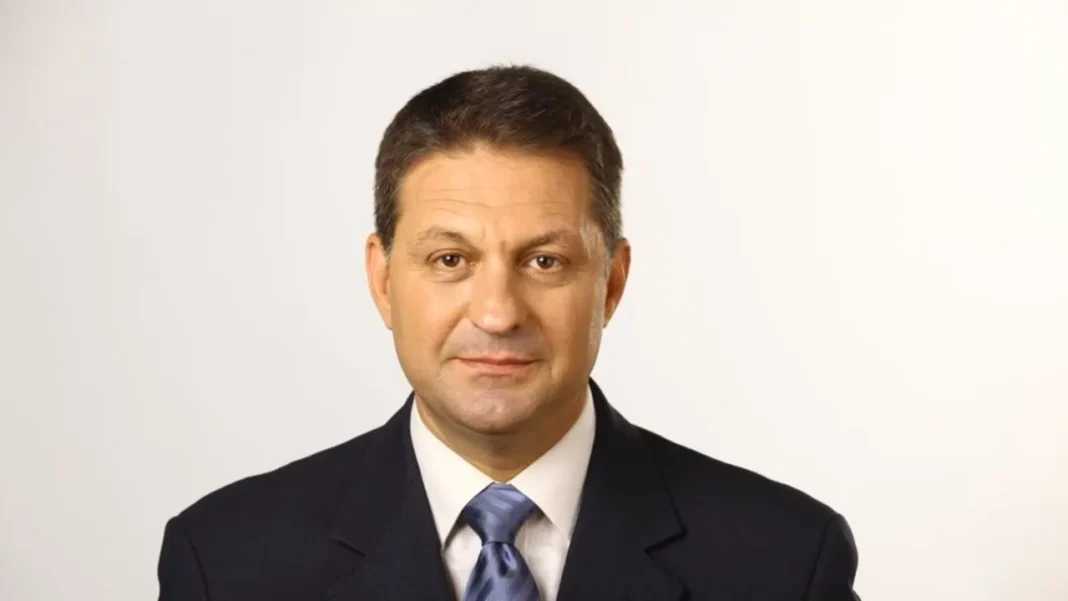
Haim Bibas is Chairman of the Federation of Local Authorities in Israel and Mayor of Modi’in Maccabim Reut
Source:
www.jpost.com



