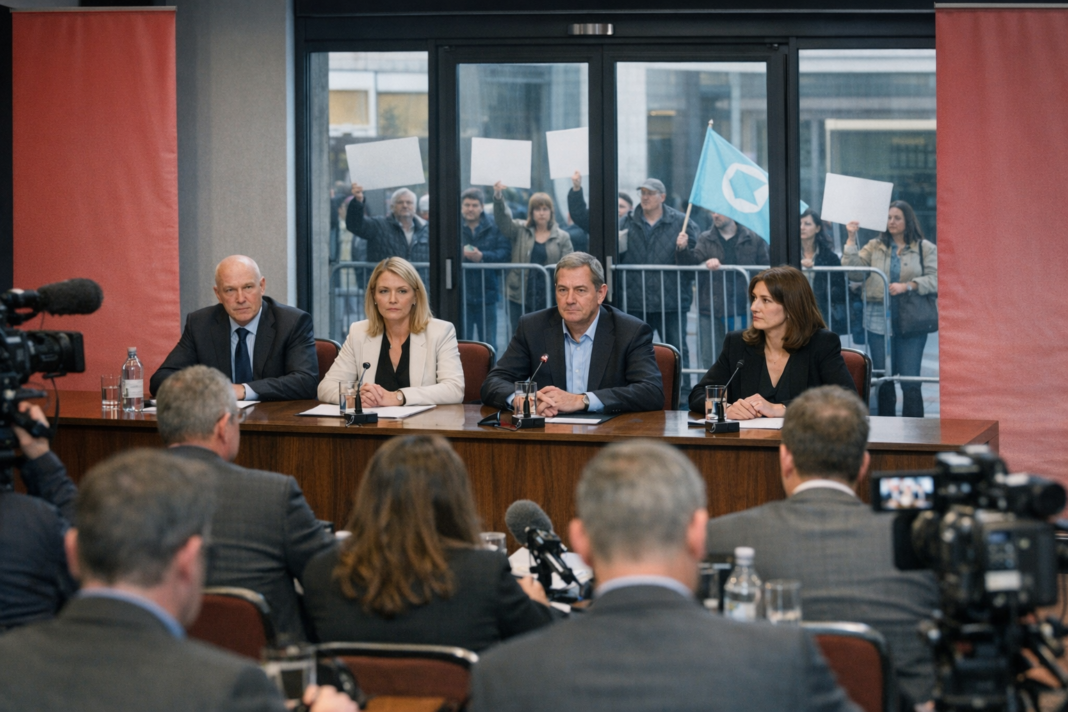

Labour’s Liverpool conference opened against a backdrop of a more fractured British political scene, with the party presenting the slogan “Hope Again” as it seeks to consolidate support. The gathering brought together senior figures and activists who are attempting to translate campaign messages into a coherent programme while responding to local protests and national debates that have tested voter loyalties.
Beyond the conference hall, Reform UK continues to register as a persistent force on the political map, maintaining visibility despite internal and external scrutiny. At the same time, a small Norfolk community has signalled its intention to stage a symbolic challenge to central government asylum placements, with residents in Barnham planning a protest vote over proposals to accommodate displaced people locally. These developments underline the uneven pressure points across the country where national policy meets local politics.
The current configuration of multiple competitive parties and active local movements has tangible consequences for governance. Fragmentation can complicate majorities at national level, elevate the influence of smaller parties in marginal seats, and push issues such as migration and community housing higher up the agenda. Local authorities and central government now face practical questions about coordination and communication when placements of asylum seekers intersect with community concerns, highlighting the administrative challenges as much as the political ones.
For the Labour leadership, the task on display in Liverpool is twofold: to sharpen policy responses that address immediate local disruptions and to offer a stable narrative capable of appealing across diverse constituencies. How the party balances national priorities with local sensitivities will affect its ability to manage a political environment where protest actions, emergent parties and shifting voter alignments increasingly shape public debate and policymaking.