HomeCultureHow Theatre Horror Makes Audiences Fear What They Cannot See

How Theatre Horror Makes Audiences Fear What They Cannot See

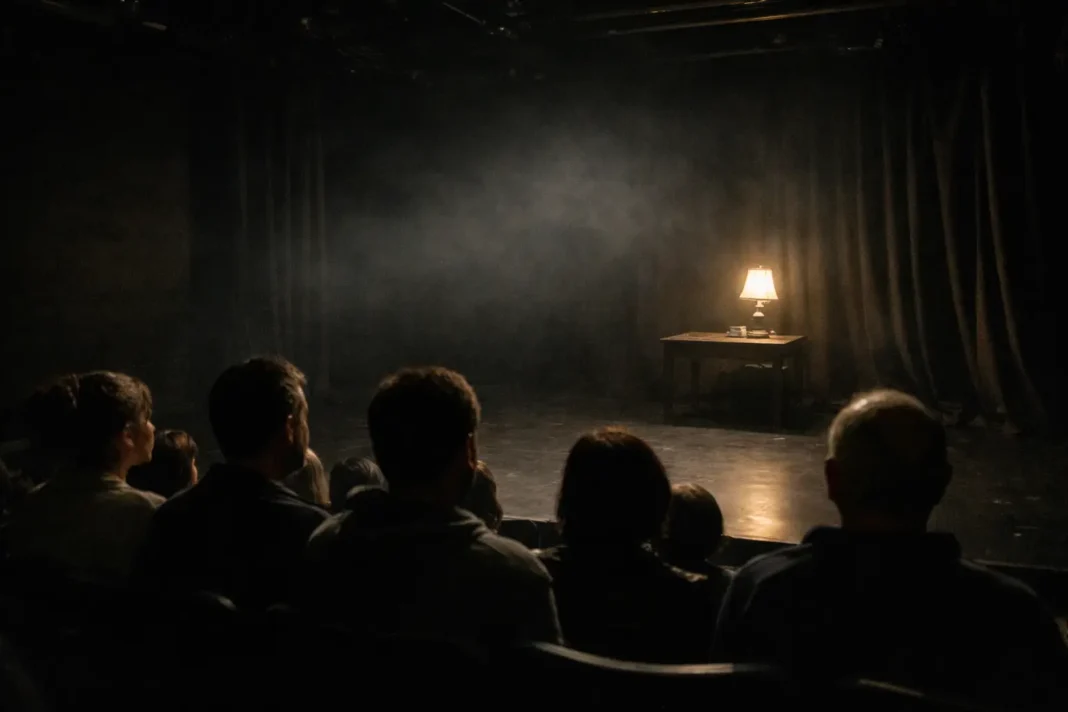
Fear in the theatre is having a notably visible season, even when its most effective weapon is what remains unseen. Productions such as Blackout, the stage version of Paranormal Activity and the enduringly popular 2:22: A Ghost Story have placed horror firmly inside the live performance calendar. Their appeal rests on a paradox that cinema cannot reproduce in the same way: the audience knows it is sharing a room with the threat, the trick and the victims, yet cannot always locate where the danger will appear.

For writer and director Sam Beech, that principle has roots in a real late-night experience. While locking up a wedding venue at around 1am, his car sensor began reacting as though something was moving around the vehicle. Each time he checked, nothing was there. The incident lasted long enough for the absence itself to become unsettling, and Beech has described how the experience changed his relationship with driving in darkness. It later fed into Blackout, a production touring the United Kingdom until 27 February, where silence, shadow and uncertainty are central to the design of fear.

The memory also resonated because Beech had seen Andy Nyman’s Ghost Stories several times, and the echo between stage fiction and a lonely car park gave the event a theatrical afterlife. That connection illustrates why theatre horror often depends less on spectacle than on suggestion. A door, a corridor, an empty space or an interrupted sound can become more disturbing than a visible monster, because the audience completes the image for itself. The genre’s craft lies in managing attention: delaying revelation, controlling darkness and making spectators aware of their own anticipation.

Chris Fisher, the illusions designer behind Paranormal Activity, has framed the technique through the familiar “Jaws effect”: fear intensifies when the audience senses the presence of a threat before seeing it. The production is running at London’s Ambassador’s Theatre until 27 February and is also touring the UK. In a live setting, such effects require precise coordination between lighting, sound, set movement and performance. A badly timed reveal can release tension too early; a well-judged pause can make a room of spectators hold its breath.

The current appetite for stage horror shows how live performance can compete with screen-based fear by using its own limits as strengths. The impossibility of cutting away, the visibility of the stage and the shared reactions of strangers all become part of the experience. These productions do not need to show everything to make audiences afraid. They rely on the oldest theatrical contract: the crowd agrees to believe, and the stage decides how long to keep the darkness alive.


Advertisementspot_imgspot_img

Hot this week

Study Finds Autistic Children’s Brains Process Faces in Unexpected Ways

New research suggests face-processing differences in autistic children may emerge earlier than previously understood.

Patrick Stewart, the stage actor who carried Shakespeare into pop culture

Patrick Stewart, who died aged 86, leaves a career shaped by Shakespeare, the RSC, Star Trek, X-Men and a rare command of stagecraft.

Forgotten Neutrino Revives a Central Question About Why the Universe Exists

Scientists suggest a long-overlooked neutrino may help explain why matter survived after the Big Bang and left gravitational-wave traces.

Washington Clears Sale of 500 Patriot Interceptors to Ukraine

U.S. approval for 500 Patriot interceptors strengthens Ukraine’s missile defense against Russian ballistic attacks.

Spacewalk Advances Major Power Upgrade for the International Space Station

Astronauts installed a new ISS solar array during a 7-hour spacewalk, moving NASA closer to a 30% power increase.

Study Recasts Supernovas’ Role in Ending the Cosmic Dark Age

A Nature Astronomy study suggests newborn stars, not supernova winds, let ionizing light escape during the universe’s reionization.

Healey Faces Scrutiny Over Minimum Wage Pledge for Younger Workers

Healey’s remarks raise doubts over whether younger workers will receive the same minimum wage before the next election.

German Cost-of-Living Protests Turn Violent as Shops Are Looted

Shops were looted during German cost-of-living protests, with Frankfurt police reporting violent riots and unrest in several major cities.

Chelsea deepen Manchester United concerns with Stamford Bridge win

Chelsea defeated Manchester United 2-0 at Stamford Bridge after Lisandro Martinez was sent off, increasing pressure on Michael Carrick.

Celebrity Traitors Finale Draws 11.2 Million as Winners Finally Speak Freely

Celebrity Traitors ended its second series with 11.2 million live viewers, leaving its winners relieved that the result is finally public.

From Marley to Grime, the Cultural Map of Black Britain

A Black History Month panel maps the music, thinkers and cultural movements that shaped generations of Black Britons.

Emery Signals Work Ahead as Aston Villa Face Barcelona and Manchester United Tests

Unai Emery says Aston Villa still have work to do before high-profile fixtures against Barcelona and Manchester United.

Forgotten Neutrino Revives a Central Question About Why the Universe Exists

Scientists suggest a long-overlooked neutrino may help explain why matter survived after the Big Bang and left gravitational-wave traces.
Advertisementspot_img

Related Articles
