
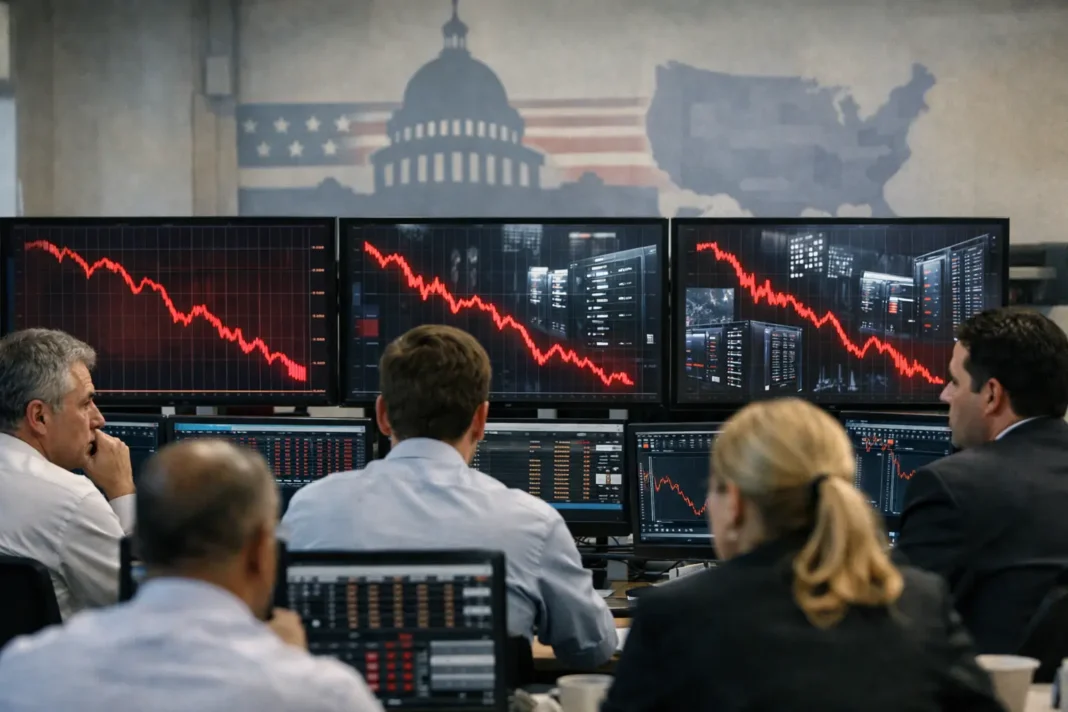

Global technology shares came under pressure as investors reassessed the pace of the artificial intelligence boom in the shadow of the U.S. midterm elections. The sell-off reflected concern that a changing political environment in the United States could bring closer scrutiny of the infrastructure behind AI, particularly the construction of large-scale data centres needed to train and run advanced systems.
The reaction highlights how deeply AI expectations have become embedded in market valuations. Over recent periods, technology companies tied to chips, cloud computing, power-intensive computing facilities and AI services have benefited from strong investor demand. Any sign that expansion could face slower approvals, stricter rules or tougher public oversight can therefore weigh on technology stocks well beyond the companies directly involved in building data centres.
U.S. Congress remains central to the policy backdrop because midterm results can reshape the balance of power, committee priorities and the tone of oversight hearings. While election uncertainty does not automatically translate into new rules, investors are sensitive to signals that AI-related infrastructure could become a more prominent political issue. Data centre projects can raise questions about energy supply, land use, water consumption and local permitting, all of which may attract attention from federal, state and municipal authorities.
The market weakness also reflects a broader test for the AI investment narrative. The sector has been supported by expectations of sustained spending on computing capacity, software integration and cloud services. If the path to building new facilities becomes more complex, the timeline for converting AI demand into revenue may be questioned. That risk matters for companies whose valuations depend not only on current earnings but also on confidence in rapid future adoption.
Regulatory institutions such as the U.S. Securities and Exchange Commission may also remain relevant to investor behaviour as markets evaluate corporate disclosures around AI spending, risks and growth assumptions. For now, the decline in global tech shares shows that political uncertainty and infrastructure constraints are becoming part of the financial debate over AI, alongside innovation, competition and demand.





