
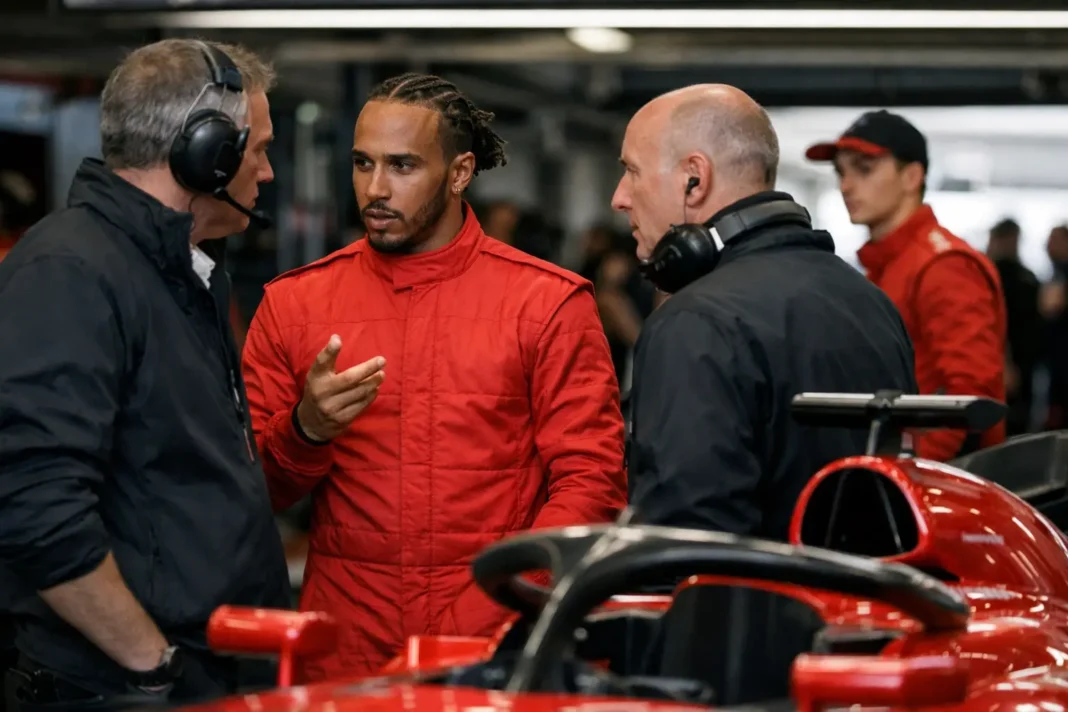

Damon Hill has urged Ferrari to make a clear competitive choice between its drivers, arguing that Lewis Hamilton should be prioritised ahead of Charles Leclerc if the Italian team wants to maximise its chances of winning the next drivers’ championship. The former Formula 1 world champion described Hamilton as an extraordinary driver and framed Ferrari’s decision as a central factor in any future title challenge.
Hill’s position places the focus on one of the most sensitive questions inside any top F1 team: how long can two high-profile drivers be treated on equal terms when a championship opportunity begins to take shape? In modern Grand Prix racing, support is not limited to public backing. It can influence race strategy, development priorities, pit-wall decisions and the way a team manages points across a full season.
Hamilton’s arrival at Ferrari has already made the partnership with Leclerc one of the most closely watched dynamics on the grid. Hamilton brings the record of a seven-time world champion, while Leclerc is an established Ferrari race winner and a central figure in the team’s recent identity. Hill’s argument is not that Leclerc lacks quality, but that Ferrari may need a single focal point if it is to convert potential into a drivers’ title campaign.
The debate matters because Ferrari remains judged, more than most teams, by championships rather than isolated results. In the official Formula 1 championship structure, even small strategic compromises can carry a heavy cost over a season. A team running two competitive drivers can gain strength in the constructors’ standings, but the drivers’ crown often rewards clarity, consistency and rapid decision-making when pressure rises.
Ferrari has not indicated a formal hierarchy between Hamilton and Leclerc, and Hill’s comments add pressure rather than policy. His intervention nevertheless underlines the scale of expectation surrounding the team’s next campaign. For Ferrari, the challenge will be to combine technical progress with careful internal management, while ensuring that the partnership between two major drivers becomes an asset rather than a complication in the pursuit of a title.






