
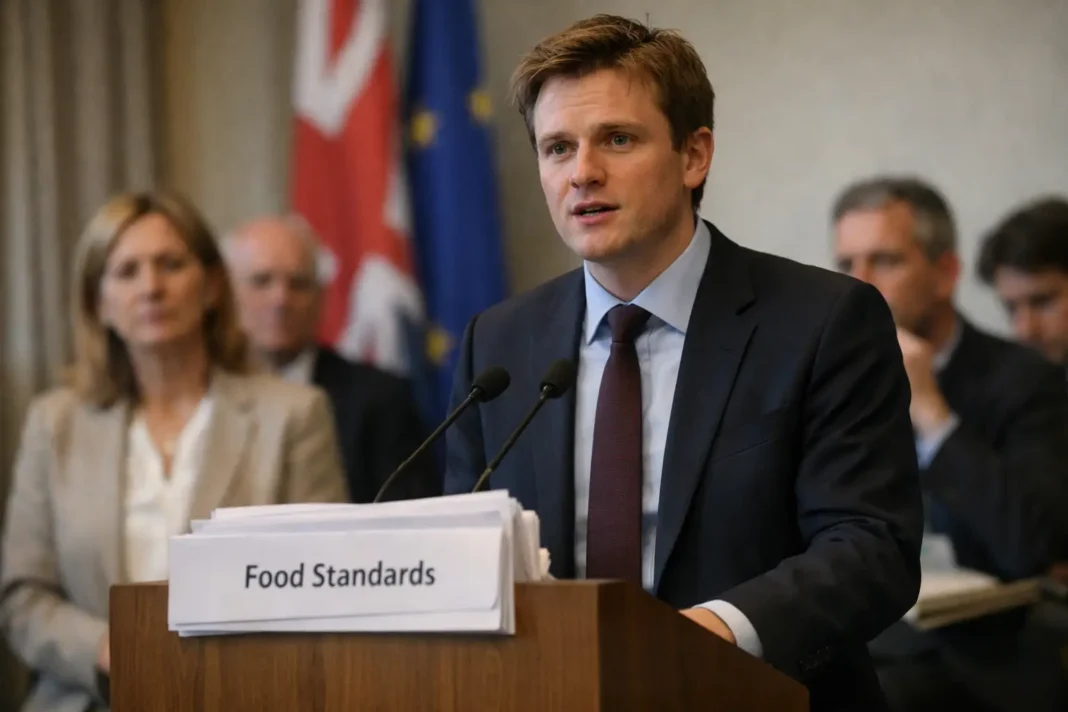

Britain’s Brexit reset with the European Union would give the UK a “voice” in shaping food and agricultural rules, but not a vote on the final decisions, minister Hamish Falconer has argued. The position underlines the political trade-off at the heart of closer regulatory cooperation with Brussels: smoother trade in exchange for accepting a more limited role in setting the standards that would apply.
The issue centres on food rules, an area where differences between the UK and the EU have created checks and paperwork since the end of the Brexit transition period. A new arrangement could reduce friction for businesses moving agricultural and food products across borders, but it would also require Britain to operate more closely alongside EU regulatory systems. Falconer insisted that the UK would retain some influence within that framework, even without formal voting rights.
The distinction matters because EU rules are ultimately made through institutions in which the UK no longer has a seat. Since leaving the bloc, Britain has not participated in EU decision-making, including votes on regulations affecting the single market. Any renewed alignment on food safety would therefore place the government in a sensitive position: it would need to show that cooperation can bring practical gains while answering criticism that the country is accepting rules it cannot directly approve or block.
For firms involved in food exports, the potential significance is clear. Regulatory divergence can mean additional inspections, certificates and delays, particularly for products subject to sanitary and phytosanitary controls. A closer deal between the UK Government and EU institutions could ease some of those barriers if both sides agree on common standards or recognition arrangements. The European Commission remains central to the bloc’s approach to such rules.
The debate also reflects the broader limits of the government’s attempt to reshape post-Brexit relations without reopening the question of EU membership. Ministers are seeking a more stable partnership with Brussels, especially in areas where businesses face practical obstacles. Falconer’s remarks signal that food regulation is likely to become one of the key tests of that approach: Britain may gain channels for consultation, but the final authority over EU rules will remain in Brussels.





