HomeOpinionNigeria’s Health Care Push Hinges on Making More at Home

Nigeria’s Health Care Push Hinges on Making More at Home

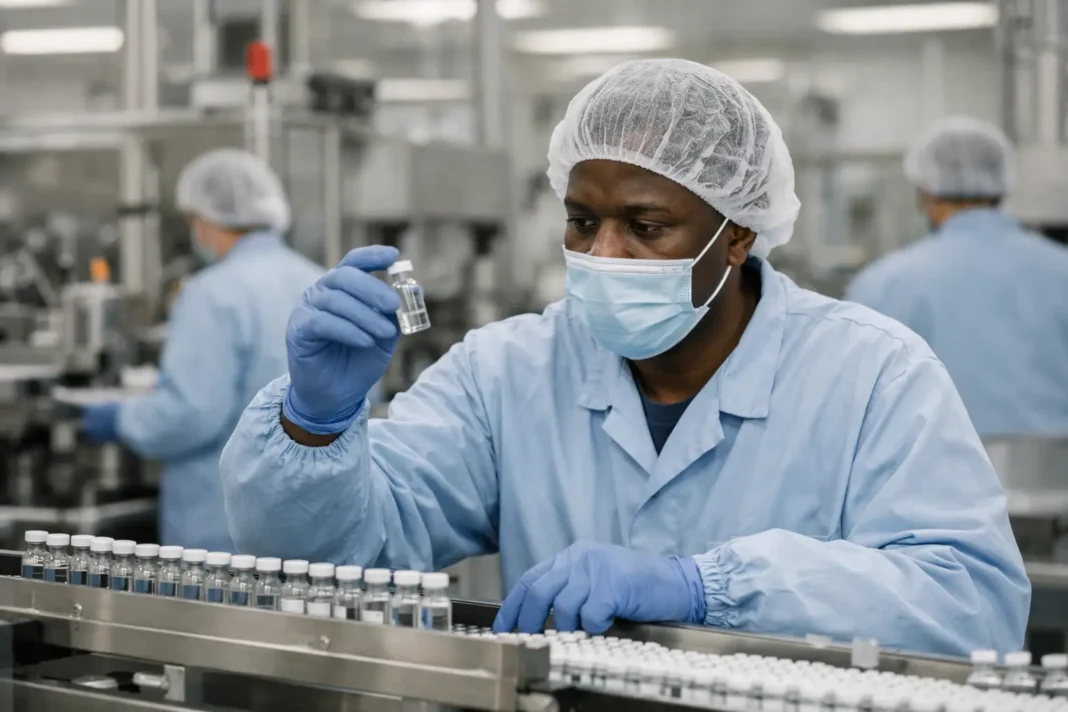
Nigeria’s health system faces a structural vulnerability that reaches from pharmacy counters to hospital wards: a heavy reliance on imported medicines and medical equipment. When essential products are priced in foreign currency or depend on distant suppliers, the cost of treatment can shift quickly for families already under pressure. For hospitals, the same dependence makes planning harder, as access to supplies can be affected by conditions far beyond the control of doctors, patients or local administrators.

The issue is not only commercial. It sits at the centre of Nigeria’s wider health care challenge, where affordability and availability shape whether patients receive timely treatment. Exchange-rate movements can make imported products more expensive even when demand remains unchanged. Global supply chains can also leave hospitals exposed when transport, procurement or international production is disrupted. In that context, expanding domestic capacity is not simply an industrial ambition; it is directly linked to access to care.

Greater local production of medicines and medical equipment could reduce some of that exposure by shortening supply lines and limiting the effect of currency swings on final prices. It could also give health providers a more predictable source of essential goods, supporting more stable purchasing and treatment planning. The relevance of the issue extends beyond major hospitals, because price increases and shortages are often felt most sharply by households and facilities with the least room to absorb them.

For policymakers and health institutions, the priority is therefore broader than replacing imports with domestic output. A credible manufacturing base must support quality, reliability and affordability at the same time. Official health authorities such as Nigeria’s Federal Ministry of Health and Social Welfare operate in a landscape where industrial policy, public health and household finances increasingly overlap. The World Health Organization has long treated access to safe and effective medical products as a central component of health systems, underscoring why supply security matters as much as clinical infrastructure.

Domestic manufacturing will not remove every cost from treatment, nor will it eliminate the need for international trade in specialised products. But Nigeria’s dependence on imported medicines and equipment has made clear that health access is shaped by economic resilience as well as by medical expertise. Building more production capacity at home would give the country a stronger foundation to protect patients from external shocks and to make quality care more reachable for a wider share of the population.


Advertisementspot_imgspot_img

Hot this week

Beardman’s debut five-for leaves England exposed against Australia

ODI debutant Beardman claimed five wickets as Australia put England under pressure in a batting collapse.

France’s School Smartphone Ban Puts Classroom Conditions Under Scrutiny

France’s smartphone ban in schools has reopened debate over students, discipline and the condition of public education.

Van Gerwen raises the bar before Wade test at the Grand Slam

Michael van Gerwen says he must produce his best game to beat James Wade in their Grand Slam of Darts second-round meeting.

Vitamin C Model Points to a Possible Way to Limit Risky Stomach Chemistry

A new model suggests vitamin C after meals could reduce formation of harmful stomach chemicals linked to cancer risk.

England’s Spain Statement Marries Control and Survival

England’s away win in Spain gave Thomas Tuchel his strongest statement yet, mixing an hour of control with a tense final spell.

Voyager 1 Reaches a Light-Day From Earth, Deepening a Mission Beyond the Solar System

Voyager 1 is now one light-day from Earth, extending communications delays as the probe keeps studying interstellar space.

Medical Regulator Faces Scrutiny After Doctor Complaint Summaries Were Sent to Newspaper

The General Medical Council mistakenly sent The Times summaries of complaints alleging antisemitism and Islamophobia against doctors.

Anthropic’s $1.5 Trillion Target Raises the Stakes for AI on Wall Street

Anthropic, founded five years ago, is seeking a valuation of up to $1.5tn ahead of its planned stock market debut.

Google Declines UK Request to Remove Russell Brand Video From YouTube

Google declined a UK request to remove a YouTube video involving Russell Brand after his wife shared his claim of innocence.

Xi’s Diplomatic Opening Carries Influence, Visibility and Risk

Xi Jinping faces a delicate diplomatic test as engagement involving Putin and Trump brings visibility but also sensitive questions.

Bancroft’s Comments Put Cricket’s Sandpaper Scandal Back Under Scrutiny

Cameron Bancroft’s remarks have revived questions about Australia’s 2018 ball-tampering scandal in Cape Town.

Glastonbury 2027 Lines Up Harry Styles, Billie Eilish, Sam Fender and Cher

Harry Styles, Billie Eilish, Sam Fender and Cher are set for Glastonbury 2027, with Cher taking the Sunday legends slot.

Burnham Brings a High-Stakes Brexit Reset to Brussels

Andy Burnham’s Brussels summit with EU leaders opens a new phase in Britain’s post-Brexit debate, with trade and political ties in focus.
Advertisementspot_img

Related Articles
