

The discourse surrounding theft and knife-related assaults in Morocco is no longer merely the reflection of scattered news reports relayed by the media or social media platforms. It has evolved into a daily obsession haunting citizens and raising profound questions about the causes behind the rise of this phenomenon and its repercussions on collective security. What is locally referred to as “krisaj” (or “tcharmil” in popular slang) is no longer confined to isolated neighborhoods or specific cities. Originating in major metropolitan areas such as Casablanca, Salé, and Rabat, it has spread to Fez, Tangier, Kenitra, Safi, Ksar el-Kebir, and Temara, becoming a true national epidemic that surrounds citizens in their streets, alleys, and even inside their businesses.
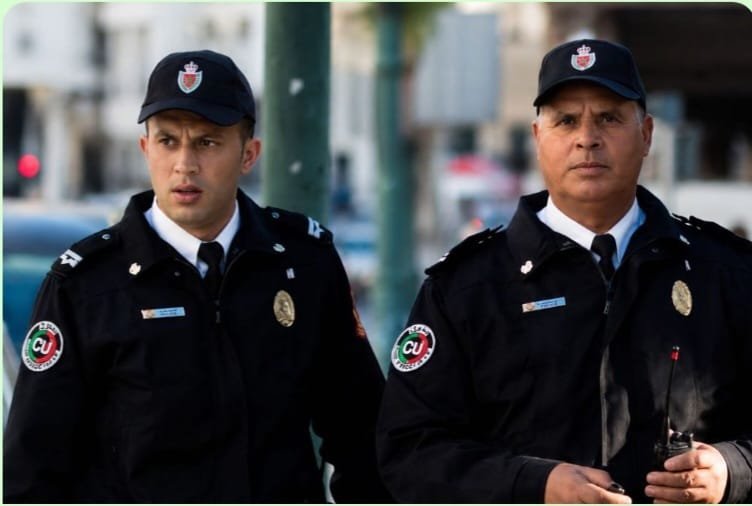
The scale of this phenomenon cannot be measured solely through official statistics, however reassuring they may appear. In its annual report for 2025, the General Directorate of National Security stated that indicators of violent crime had decreased by 10%, representing only 6% of all recorded criminal cases.
Robberies committed under the threat of bladed weapons reportedly dropped by 24%, violent theft by 6%, and burglaries by approximately 12%. The repression rate allegedly reached a record level of 95% regarding overall criminal activity, with the dismantling of 1,112 criminal networks and the arrest of 25,421 individuals involved in violent crimes. Yet these figures fail to dispel the anxiety embedded in the collective consciousness. The paradox is striking: while statistical curves decline, the perception of insecurity skyrockets. A senior security official himself admitted that thefts and assaults existed before, but their documentation through sound and image, combined with their instantaneous dissemination on social media, makes them appear more widespread and constantly increasing.
Surveillance cameras installed in shops and public streets, combined with citizens’ smartphones, have transformed every incident into a national event within seconds. This media amplification, while reflecting an objective reality, generates a state of “collective fear” whose impact far exceeds official statistics. Citizens do not assess their sense of security through abstract figures, but through personal experience and what unfolds before their eyes.
Recent events cruelly feed this anxiety. The assault on Mohamed Najjar, vice-president of the municipal council of Salé, in the medina of Salé in broad daylight by a young delinquent, revealed the fragility of security even within the labyrinths of ancient cities. Accounts differ regarding the attacker’s motives — mental instability according to some, resentment linked to unfulfilled employment promises according to others — but the conclusion remains unanimous: no one is safe, not even an elected official, in the alleys of a thousand-year-old city.
The case of Salma, the schoolgirl whose face was slashed with a razor blade by a fellow student and later threatened again by her aggressor, reveals another face of violence: the violence striking within educational institutions themselves, places where protection should prevail. In Safi, “tcharmils” armed with swords and knives forced security forces to use firearms to neutralize them. In Casablanca, two youths were arrested after posting digital content showing themselves brandishing weapons in front of a police station — a blatant challenge to public authority.
These acts are not random. They are rooted in a deep and multifaceted crisis within Moroccan society. The analysis of Mustapha Saaliti, professor of social psychology at the University of Marrakech, sheds light on one dimension of this reality: the abdication of the family from its role of socialization and education. A child or adolescent who does not receive genuine education within the family becomes vulnerable to aggressive impulses, feels no guilt, and lacks self-restraint because moral conscience is almost absent. This collapse of the family unit is compounded by a crisis in the educational system, where school dropout and academic failure leave entire cohorts of young people without guidance, qualifications, or life projects.
Social sciences researcher Ibtissam Aoufir adds an essential economic dimension: the blockage of opportunities for young people who no longer study — whether because of academic failure or school dropout — and who cannot find decent employment pushes them toward desperate choices. Either they attempt illegal migration abroad, or they turn to theft, even resorting to violence and bladed weapons. This survival logic, in which crime becomes an alternative to structural unemployment and social exclusion, reveals a profound fracture between society’s promises and the lived reality of its youth.
Added to this is the scourge of drugs, particularly hallucinogenic pills and hard narcotics, which deprive addicts of the ability to distinguish right from wrong and transform them into aggressive machines. The current legal framework, however, struggles to constitute an effective barrier. Article 303 of the Moroccan Penal Code provides for imprisonment ranging from one month to one year and a fine of 1,200 to 5,000 dirhams for anyone caught carrying a sharp, pointed, cutting, or strangling instrument under circumstances threatening public safety. These relatively light sanctions contrast sharply with the growing severity of the acts committed.
Article 507, more severe, provides for life imprisonment for armed robbery, but its application remains limited to the gravest cases. Faced with this inadequacy, Justice Minister Abdellatif Ouahbi announced in April 2025 that the new draft Code of Criminal Procedure would toughen penalties related to carrying bladed weapons in public spaces by amending Article 303 bis and broadening the definition of weapons. His remarks reflected growing political awareness:
“We have a police officer whose hand was cut off in Agadir and very young girls whose faces were slashed… There is no justification for a citizen walking in the street carrying a sword, a knife, or any object capable of injuring others. This must stop.”
This determination to strengthen legislation partly responds to pressure from civil society. Moroccan activists launched the “Zero Krisaj” campaign on social media, demanding intensified police patrols, targeted operations against criminal hideouts, and increased state investment in smart surveillance technologies. Yet Idriss Seddraoui, president of the Moroccan League for Citizenship and Human Rights, warns against an overly narrow approach: the issue goes far beyond stricter criminal laws. He calls for a comprehensive vision and a broad societal dialogue bringing together the state, human rights defenders, sociologists, educational and cultural associations, family representatives, and the youth themselves.
According to him, confronting this alarming situation requires an integrated public policy combining legal repression, social prevention, institutional reform, and economic justice in order to address the roots of crime rather than merely chasing its manifestations.
But the phenomenon of “tcharmil” does not stop at Morocco’s borders. It is exported, migrates, and re-establishes itself in European suburbs with disturbing virulence. Many of these young men, pursued by Moroccan justice or simply seeking a place where their crimes might enjoy relative impunity, choose the clandestine path of migration. They leave Morocco through dangerous maritime routes, departing from northern coastal regions around Tangier, Nador, or Al Hoceima to reach Spanish shores. Others cross the land borders of Ceuta and Melilla, sometimes in groups, sometimes alone, often guided by smugglers exploiting their despair.
The Strait of Gibraltar, a narrow passage of only a few kilometers, becomes for them a frontier between two worlds: the one they flee, where violence is increasingly repressed, and the one they covet, where they hope to escape surveillance.
In Spain, particularly in large cities such as Madrid, Barcelona, Valencia, and the suburbs of Andalusia, “tcharmil” finds fertile ground. Networks of youths from Moroccan immigrant backgrounds — some already known to police services in their country of origin — import their methods, codes, and culture of violence. They organize themselves into rival gangs, reproducing patterns of territoriality and predation previously adopted in the working-class neighborhoods of Casablanca or Salé.
Bladed weapons, symbols of their “tcharmil” identity, become their preferred tools: kitchen knives turned into weapons, machetes, and sometimes even traditional swords. Their modus operandi remains unchanged: brutal assaults in public transportation, snatch thefts, extortion of businesses, and above all a deliberate strategy of intimidation through the ostentatious display of weapons.
Social media once again acts as an amplifier: videos of fights, verbal threats, and provocations directed at Spanish police reproduce the same defiance toward authority seen in Morocco.
Spanish justice, confronted with this imported criminality, struggles to find an adequate response. Young “tcharmils” often benefit from their status as minors or undocumented foreigners to avoid exemplary punishment. The Spanish penal system, strongly focused on rehabilitation for minors, clashes with the endemic recidivism of these profiles. Some arrested for violent robbery or knife assaults are quickly released due to the lack of detention space or complex administrative procedures related to deportation. Others disappear into bureaucratic labyrinths, moving from one city to another, from one identity to another, exploiting gaps in coordination between national and local police forces.
Police stations in working-class neighborhoods of Madrid or Barcelona regularly denounce this de facto impunity, where the same individual can be arrested multiple times within months without ever being effectively removed from the streets.
This exportation of “tcharmil” reveals an even more alarming dimension: the transnationalization of Moroccan juvenile delinquency. These are no longer simply migrants seeking a better future crossing the Mediterranean, but offenders fleeing an environment that has become too repressive for them, seeking in Europe a space of relative permissiveness.
They rely on networks of compatriots already established abroad — cousins, former neighbors — who provide initial accommodation, contacts, and sometimes even weapons. The Moroccan diaspora, overwhelmingly hardworking and integrated, thus finds itself trapped between community solidarity and rejection of behaviors that tarnish the image of the entire community. Mosques, cultural associations, and sports clubs become spaces of informal surveillance where elders attempt to identify troubled youths before they spiral further into criminality.
Analyzing this migratory criminal phenomenon forces us to rethink traditional categories. These youths are neither political refugees nor economic migrants in the classical sense. They are fugitives from the violence they themselves created, defectors from a repressive system they helped fuel. Their clandestine departure is not an escape toward hope, but an escape from justice.
And yet, once in Spain, they recreate the same conditions of violence, the same predatory relationships, and the same gang hierarchies. “Tcharmil” thus becomes a circular phenomenon: born in Morocco’s deprived neighborhoods, exported to Spanish suburbs, and potentially returning in the form of transnational criminal networks, trafficking routes, and recruitment pipelines for organized crime.
Moroccan and Spanish police forces, aware of this challenge, have strengthened cooperation, exchanging intelligence on dangerous profiles and coordinating joint operations. Yet borders remain porous, and the sea too vast for total surveillance.
This transnational dimension of “tcharmil” reinforces the urgency of a comprehensive response. Morocco can no longer content itself with repression within its own territory while hoping the problem will solve itself. The exportation of its juvenile violence to Europe constitutes a diplomatic setback and a stain on its reputation as a privileged partner in migration management.
Spain, for its part, must recognize that it faces a form of imported criminality that does not fit traditional models of suburban delinquency. Purely repressive approaches on both sides of the Strait have proven insufficient. Stronger European coordination is needed, along with rapid information-sharing mechanisms, but above all preventive policies addressing root causes before youths descend into criminality.
Because the “tcharmil” boarding a makeshift boat for Spain is the same one who, only months earlier, terrorized a neighborhood in Casablanca. He is the product of the same failures — familial, educational, economic, and identity-related. Migration merely displaces the problem, expands it, and makes it more complex.
The young man brandishing a knife in the streets of Madrid remains the reflection of a society that failed to protect, guide, and integrate him. Only the mirror has moved — and the cracks spread a little farther away.
Isaac Hammouch is a Belgian-Moroccan journalist and writer. Author of several books and opinion pieces, he focuses on societal issues, governance, and the transformations shaping the contemporary world.







