
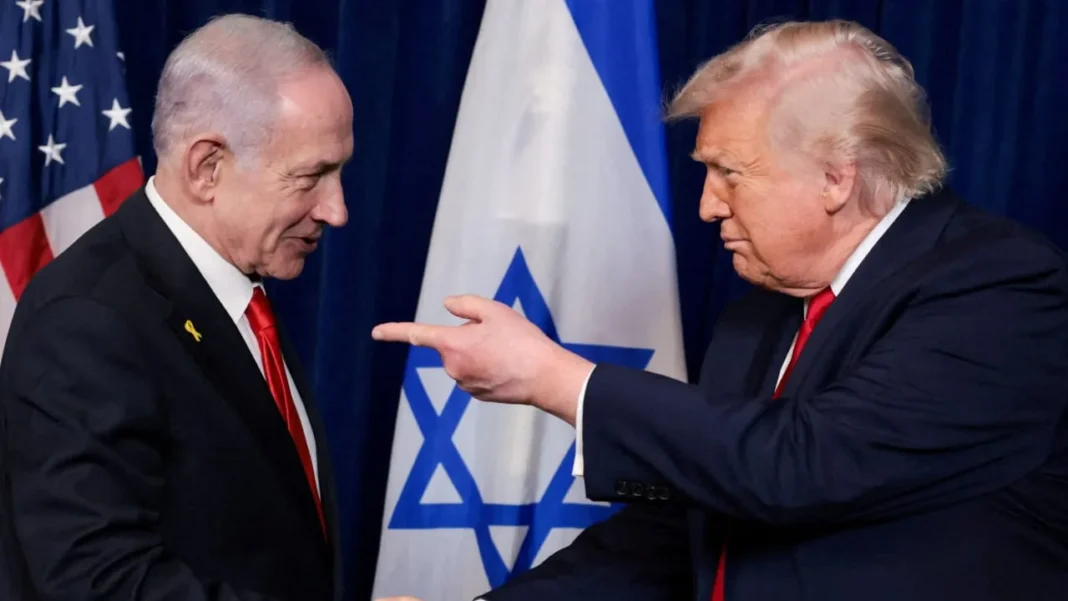

Israel must deepen its alliance with the United States while making clear that responsibility for Israeli security rests with Jerusalem alone.
The US-Israel relationship is one of the most important strategic partnerships in modern history. American support has helped Israel militarily, diplomatically, technologically, and economically. It has strengthened deterrence, improved defenses, and given the Jewish state backing in hostile forums.
That alliance should be protected.
At the same time, Israel cannot confuse friendship with a security guarantee. The US is Israel’s closest ally, but American presidents are elected to serve American interests. Israeli prime ministers are elected to serve Israeli interests. Often, those interests overlap. Sometimes they diverge.
This matters now because Washington pursues regional diplomacy that affects Israel’s security. Israel should listen, coordinate, argue when necessary, and preserve the alliance. It should also remember that no foreign capital, however friendly, can be expected to carry the burden of Israel’s survival.
Israel’s policy since 1948
Israel’s founding generation understood this.
David Ben-Gurion spent years confronting the limits of international sympathy. He knew declarations of support could disappear when hard decisions arrived. He believed Israel’s fate would depend on its own strength, moral clarity, and willingness to act. His view was shaped by Jewish history and by the bitter lesson that Jews who depend on others for protection may be abandoned at the decisive hour.
That thinking became part of Israel’s national security doctrine.
Israel would seek allies, welcome support, and build friendships. It would also preserve the ability to act alone when survival was at stake.
Menachem Begin gave that doctrine its clearest expression in 1981, when he ordered the destruction of Iraq’s Osirak nuclear reactor despite international opposition. The principle that followed became known as the Begin Doctrine: Israel would not allow an enemy committed to its destruction to acquire the means to carry it out.
The same logic guided Israel’s 2007 strike on Syria’s al-Kibar facility, which Israel later acknowledged and which the International Atomic Energy Agency assessed was very likely a nuclear reactor.
In both cases, Israeli leaders understood that outside approval was valuable, but national survival could not wait for consensus.
That lesson is urgent again.
The challenge facing Israel is larger than any single agreement or diplomatic track. Iran remains the central regional threat. Its proxies continue to surround Israel. Hezbollah, Hamas, the Houthis, and other Iranian-backed forces have shown that declarations, understandings, and ceasefires do not erase hostile intent.
Persue diplomacy when it serves national interests
Diplomacy can buy time. It can reduce pressure. It can create openings. It cannot replace Israeli power.
Israel should pursue diplomacy where it serves national interests. Peace with Egypt and Jordan changed Israel’s strategic environment. The Abraham Accords opened new regional possibilities. Close coordination with Washington has served both countries.
The question is how Israel enters that coordination.
Israel is strongest when it comes to Washington as a capable partner with independent options. It is weaker when it appears unable to act without American approval, resupply, or political cover.
Israel should be honest about its current dependence. Its air force relies heavily on American platforms. Its missile-defense systems benefit from American funding and cooperation. Its wartime munitions and supply chains remain tied to US decisions. That dependence has real consequences.
Reducing it should become a national priority.
Israel needs greater domestic production of munitions, stronger stockpiles, deeper air-defense capacity, wider cyber and intelligence capabilities, and a defense industry able to sustain long wars. It also needs economic resilience and diplomatic reach, because military independence cannot exist without national resilience.
This is an argument for seriousness inside Israel.
Every Israeli government should ask what happens when Washington is distracted, hesitant, divided, or pursuing a deal that Jerusalem sees as dangerous. Every defense budget should be tested against that question. Every procurement decision should consider whether it increases Israeli freedom of action or narrows it.
The US will remain Israel’s most important ally. That relationship must continue to flourish. Israel should work with Washington, consult with Washington, and strengthen every channel of cooperation.
But the lesson, from Ben-Gurion to Begin, remains clear: Allies are essential, and responsibility for Israel’s security belongs to Israel alone.
That principle should guide doctrine, budgets, procurement, diplomacy, and national debate. It is the price of sovereignty.
Source:
www.jpost.com



