
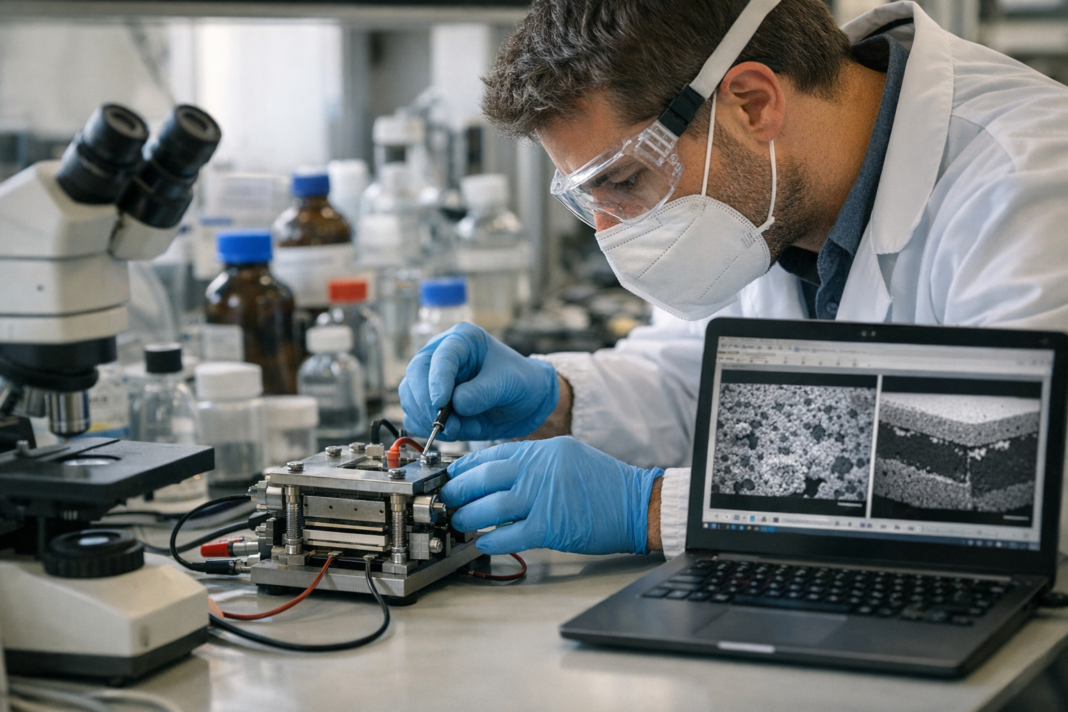

New research reveals that silver nanocatalysts can shift the location of their most active reactions depending on the operating mode of a solid oxide cell. When the cell functions to produce electricity, the catalytic activity concentrates in one region of the nanoparticles; when the same cell operates in electrolysis mode to produce hydrogen, the dominant reaction sites relocate. Scientists describe this behavior as an internal switching mechanism within the nanocatalyst that responds to the device’s direction of energy conversion.
Solid oxide cells are versatile electrochemical devices that can operate reversibly as fuel cells or electrolyzers. The newly observed switching in silver-based catalysts indicates that the catalysts’ surface or interface chemistry adapts to the differing electrochemical environments in the two modes. The report identifies a clear correlation between the cell’s operational direction and the spatial distribution of catalytic reactions on silver nanoparticles, providing a mechanistic insight into how nanoscale catalysts behave under changing electrochemical conditions.
Researchers and engineers say the finding has practical implications for device and catalyst design. By understanding and controlling the switchable behavior of silver nanocatalysts, it may be possible to design electrodes that are optimized for both efficient power generation and more energy-efficient hydrogen production. In particular, tailoring nanoparticle composition, morphology or support interactions to favor the appropriate reaction sites in each mode could improve overall system efficiency in reversible solid oxide systems.
Green hydrogen production and clean power generation are central to many decarbonization strategies, and advances in catalyst science contribute to reducing energy losses and material costs. The discovery of an intrinsic switching mechanism in silver catalysts adds to the body of knowledge on nanoscale electrocatalysis and suggests targeted experiments to translate the effect into practical electrode architectures. Further work will be required to quantify performance gains in operating devices and to assess long-term stability before commercial applications can be realized.






