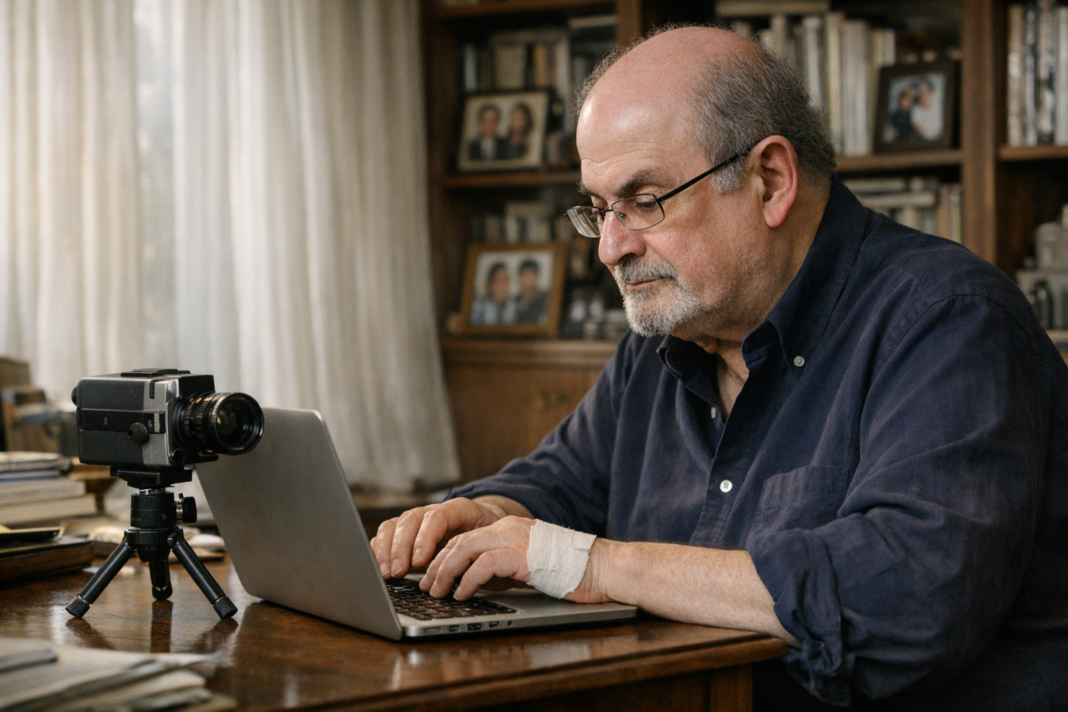

Brutal attack and recovery lie at the centre of a new documentary that pieces together the aftermath of the August 2022 assault on Salman Rushdie. The film draws on intimate materials shot by his wife, Rachel Eliza Griffiths, who began recording a visual diary at his bedside as he underwent treatment and the early stages of convalescence. The footage offers a close, chronological view of the physical and medical challenges Rushdie confronted after being stabbed while on stage.
The video diary emerged after a frantic day in which family and friends rushed to the author’s hospital bedside. In the immediate hours and days that followed, Griffiths documented clinical updates and private moments, creating a contemporaneous record that contrasts with media images of the attack. Those home‑shot clips form a central element of the director’s approach, presenting recovery as a process lived at close range rather than solely a public event.
Alex Gibney, the filmmaker behind the project, incorporated this material into a broader portrait that explores both the physical toll and the longer arc of the writer’s life. The project reportedly draws structural and stylistic inspiration from the work of Dennis Potter, seeking to blend personal testimony with reflective narrative devices. By situating the diary footage alongside archival and interview material, the film aims to map the immediate consequences of the attack onto the wider context of Rushdie’s career and public controversies.
The resulting film provides an unvarnished record of recovery and the central role played by close family and caregivers during that period. For viewers and observers, the compilation of first‑hand images and reflections offers new source material to understand the aftermath of the attack and the ongoing recovery journey. As a documentary artefact, the work preserves contemporaneous testimony that may influence how the episode is remembered and discussed in the years ahead.