
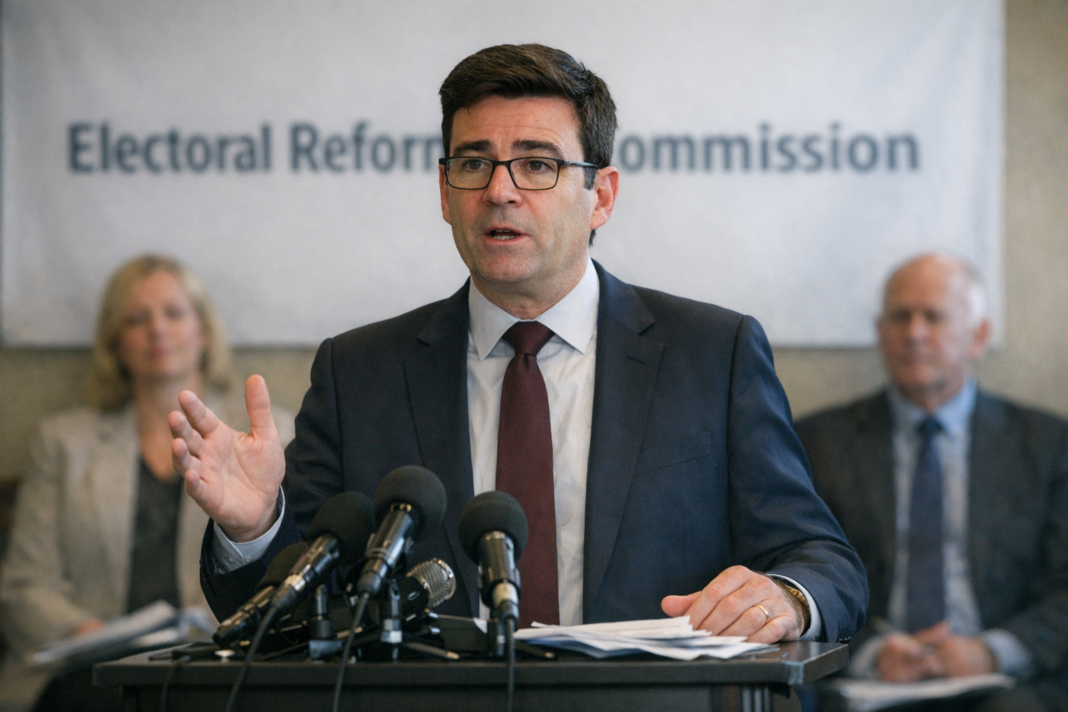

Andy Burnham’s push for change captured attention at the recent party conference when the Labour leader announced a commission to examine electoral reform. The announcement followed an emotionally charged speech in which Mr Burnham also referred to his late father, a moment that drew a strong response from delegates. The commission represents a concrete step towards a debate long discussed in political circles about how votes translate into power in the United Kingdom.
Mr Burnham has framed his support for proportional representation on practical experience. He pointed to his time as mayor of Greater Manchester, elected under a supplementary vote mechanism, as formative in shaping his view that ballot systems can shift political conversations toward problem-solving. That personal account underpins his argument that alternative systems might reconnect parties with voters’ priorities and dampen adversarial campaigning.
The proposal carries clear strategic implications for Labour. A move to proportional allocation of seats would make single-party majorities less automatic and increase the likelihood of coalition or minority administrations. During conference exchanges Mr Burnham asked whether the political settlement in which a party with under 30% of the vote can assume office remains tenable, setting out a question that goes to the heart of representative legitimacy and electoral mandate.
Establishing a commission signals a willingness to place a contentious institutional question at the centre of party politics. If the review leads to firm proposals, the debate will extend beyond party activists to voters, parliament and other political actors. The discussion will test how concerns about fairness and governability are balanced, and whether a major party will accept changes that could alter its conventional route to power. For now, the commission opens a period of assessment and public argument over whether Britain’s electoral arrangements should be reshaped for a different political era.






