
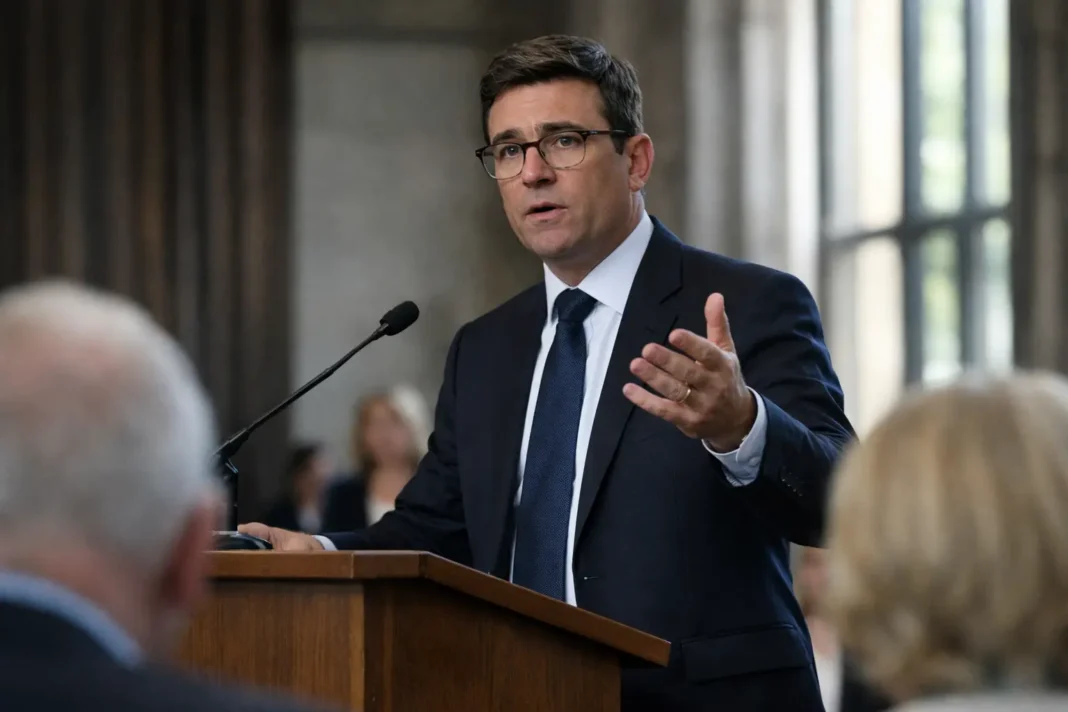

Andy Burnham’s speech has redirected public attention toward the pensions triple lock and the broader question of how the state supports older citizens. Delivered at a major party conference, the intervention reached beyond usual political audiences and reframed a technical policy issue as an electoral and social concern. That rare moment of resonance shows how a single speech can alter the terms of public debate, making previously academic trade-offs part of daily conversation about priorities and public spending.
The so-called triple lock ties increases in state entitlements to wage growth or inflation and has long been treated as politically sensitive. A number of economists and national editorials have urged reconsideration of the mechanism to avoid long-term fiscal pressure, and The Times has been among voices arguing for reform. Yet changing an established pension commitment carries clear electoral risks, which helps explain why successive governments have been reluctant to open the issue without a persuasive public case and a clear plan for managing transitional costs.
Beyond pensions, attention is also turning to the practical task of overhauling social care and related services so they are sustainable and fair. The increased visibility generated by Andy Burnham may create political space for proposals, but converting short-term shifts in opinion into durable policy requires more than rhetoric. Lawmakers will need detailed funding models, implementation roadmaps and coordination between central government and local services, while setting out protections for those most dependent on current arrangements.
For policymakers the immediate implication is operational as well as political: proposals will face scrutiny on technical grounds and on whether they can be sold to voters. Rebuilding complex systems demands clear milestones, transparent costings and a narrative that explains who gains, who contributes and how risks are managed. The coming months will test whether the momentum from a single speech can be sustained into legislative proposals and budget decisions that address both the future solvency of pension commitments and the long‑standing challenges in social care.






