
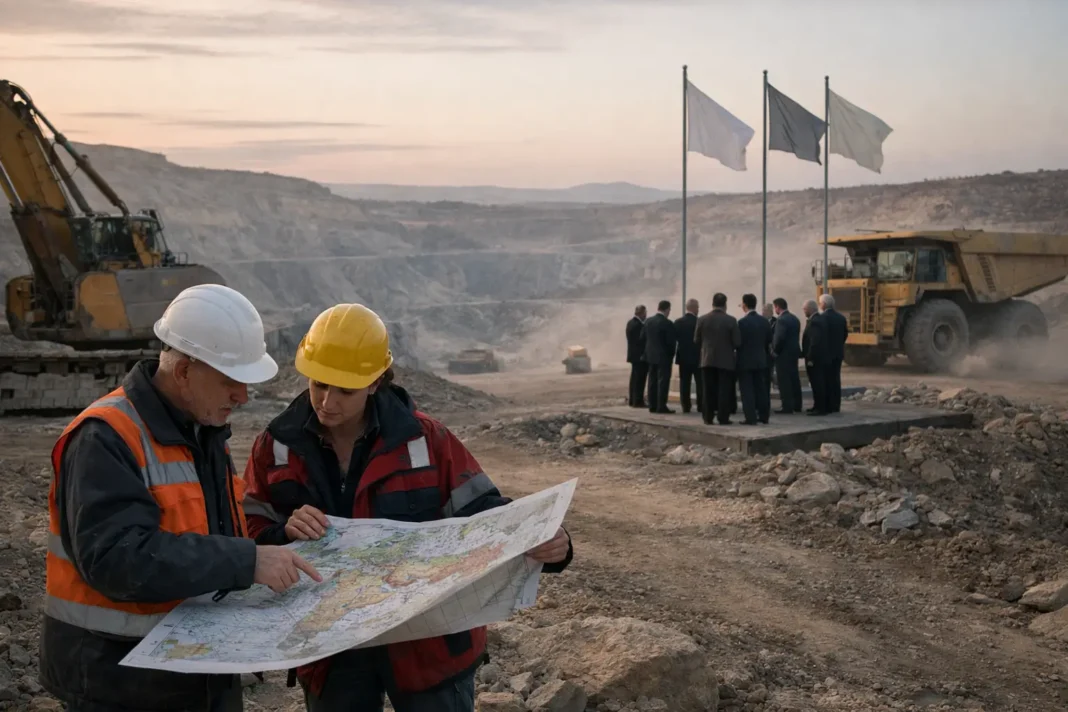

The race for critical minerals is no longer only a question of geology, engineering or commodity prices. It has become a central arena of economic statecraft, with the U.S. Department of Energy and China’s State Council both treating mineral supply chains as strategic assets. For countries that hold deposits, this competition brings capital and bargaining power, but also sharper political risks.
Resource-rich governments are being asked to accommodate foreign investors while answering domestic demands over jobs, taxation, infrastructure and environmental protection. The pressure is especially acute because critical minerals sit at the intersection of energy transition, industrial policy and national security. Host states may welcome new financing, but they cannot ignore the perception that extraction benefits foreign buyers more than local communities. That perception can quickly reshape the terms of a project.
For mining groups, access to deposits is only the first hurdle. Companies also need what the industry often calls a social licence to operate: durable acceptance from communities affected by extraction, transport and processing. Without it, even projects backed by powerful overseas partners can become vulnerable. Governments in producing countries have strong incentives to distance themselves from operators if public opinion turns against a mine, particularly when disputes involve land use, water, pollution, labour practices or revenue sharing.
The geopolitical value of minerals therefore does not eliminate local politics; it intensifies them. External powers may seek secure supplies and maximum returns, but host countries must weigh those interests against public expectations and sovereignty concerns. This balance can influence permitting, contract terms and the broader investment climate. In that environment, trust becomes a strategic asset alongside ore quality, logistics and processing capacity.
The emerging mining order is consequently less predictable than a simple contest between Washington and Beijing. The United States and China can bring demand, financing and diplomatic weight, but producing countries retain agency. The companies most likely to endure will be those able to align commercial goals with credible local benefits, transparent engagement and respect for national priorities. In the new geopolitics of mining, the decisive frontier is as much political as mineral.






