
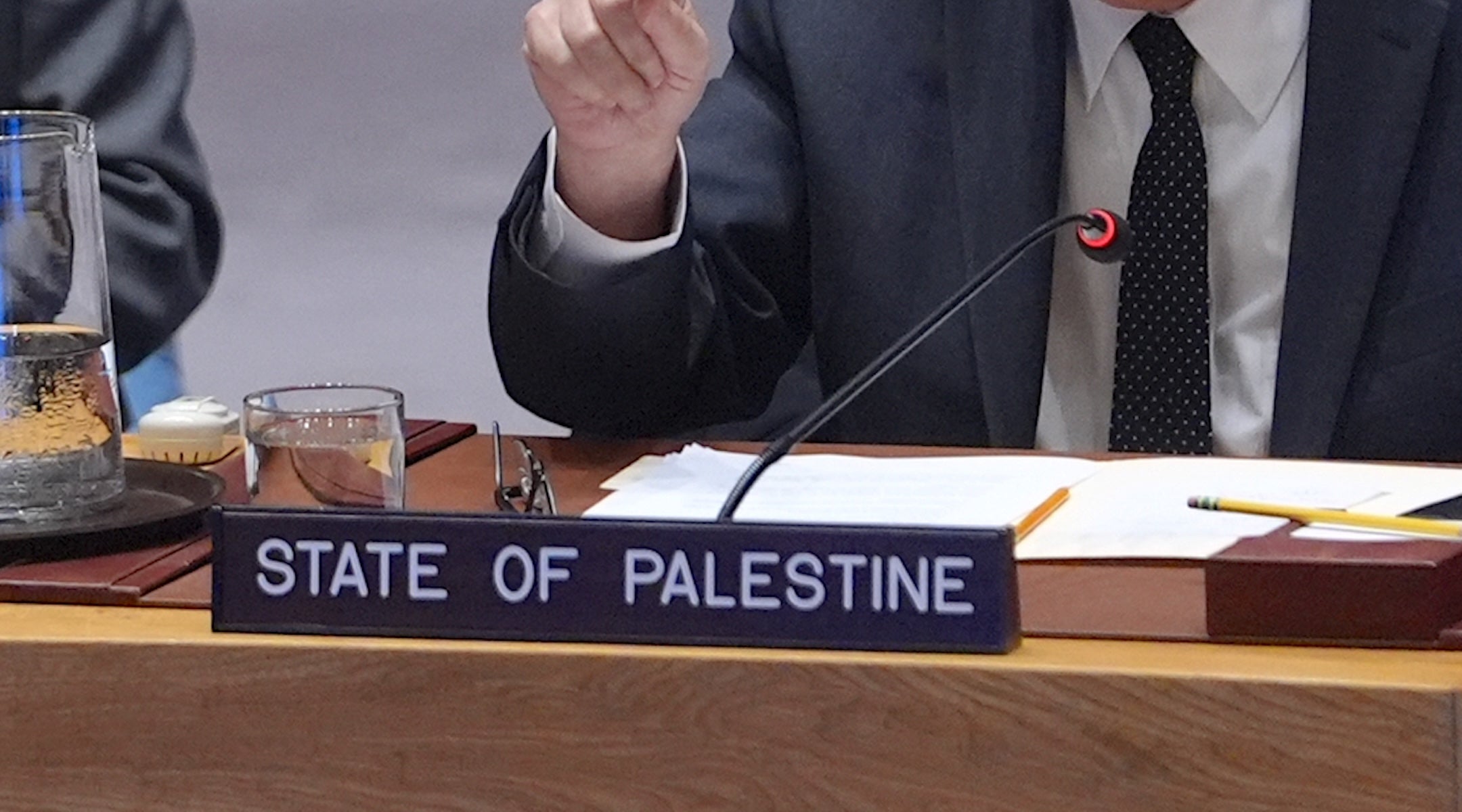

In recent weeks, a growing number of traditionally pro-Israel states have decided to recognize a Palestinian state. These decisions have invited criticism and opposition from the government of Israel and many of its Zionist supporters. This criticism is rooted in a narrative that views a Palestinian state as a “reward” to the Oct. 7 attackers, and which characterizes Palestinian statehood as a punitive measure against Israel for continuing to pursue the war.
It is reasonable for supporters of Israel to be concerned about unilateral actions to define a Palestinian state on Israel’s borders. Palestinian governance is characterized by intense polarization among warring factions which include eliminationist terror groups, and it is undermined by grotesque levels of corruption. Movement toward independent statehood brings the risk of regional terror actors infiltrating such a state and gaining the ability to strike Israel with impunity from next door.
It is also reasonable to argue that we should notice how history changes, and to not continue to wheel out the shibboleths of the past if they are outdated. For many, the very phrase “two-state solution” describes the wishful thinking of the pre-second intifada, pre-Oct. 7 past.
But it is a worse failure of moral imagination and political opportunity to reflexively oppose Palestinian statehood, especially since movement towards positive change for Israelis and Palestinians is the dream for Zionism — not its nightmare.
The aspiration for two states for two people has been a mainstream Zionist idea for decades, stemming from the same commitment that Jews hold to self-determination for the Jewish people that should be extended to the Palestinian people as well. Advocating for two states inherently affirms the legitimacy of Israeli statehood, and in fact many of the countries now advancing the idea of Palestinian statehood do so following decades of support for the State of Israel and a commitment to continue that support.
Hamas and other Palestinian terror groups thrive on opposition to two states and the normalization of the State of Israel within the community of nations, and especially as peacemaking efforts fail. When Israel expands its war against the Palestinian people, and not just Hamas, it undercuts the fundamental legitimacy of its war claims and plays into Hamas’s strategy. It also undercuts and further weakens the already weak Palestinian Authority in the West Bank, which is currently the only viable alternative to Hamas.
Moreover, the claim that Palestinian statehood inherently endangers Israel ignores the fact that the status quo endangers Israelis and the Palestinians. Right now, the absence of a realistic Zionist ambition for a peaceful future empowers the extremists of Hamas and the empowered extremists in the Israeli government, who unfairly claim the brand of Zionism of their own and do damage to its credibility as a noble movement every day.
A better way forward is for supporters of Israel to embrace — with caveats, and in partnership with the many Israelis and Palestinians who are working to change the status quo — the process of building towards Palestinian statehood by encouraging it to take root under a set of conditions that are in Israel’s long-term interest. These conditions include that it should remain demilitarized and there should be security coordination with the State of Israel. The state should be led by those who have renounced terrorism and have recognized the State of Israel. The state should be committed to disarming Hamas and other terror groups, a stance supported this summer by the Arab League.
Such a Palestinian state, living alongside Israel in peace and security, does not “reward’ Hamas for Oct. 7. Instead, it definitively repudiates everything that Hamas stands for.
The current government of Israel views any version of a Palestinian state as a threat to Israel but has failed to create a viable alternative vision. Its pre-war policies, which included containing (while sustaining) Hamas leadership in Gaza and dividing Palestinian leadership against itself, also failed to protect the Israeli people. As such, it is well within the purview of Zionist ideals for supporters of Israel to think past the limitations of the present – including its government – and to advocate for a better future for all the Jews and Palestinians permanently intertwined between the river and the sea. We cannot build towards a better future unless we dream about it, talk about, and coax it into the world.
The State of Israel should advance this process now, rather than continue to push off peacemaking for some utopian future that will never arrive. Those of us in the Diaspora need to seed this conversation in our communities, to support efforts by those in Israel working patriotically towards peacemaking, and to spend time building the kinds of relationships that will help the State of Israel pursue a process that could be less laden with risk with the benefit of our support.
Most of all, we must not become fatalists. Fatalism about the perpetuation of this conflict is the best guarantee that the conflict will continue and worsen. Zionism always dreamed of unanticipated possibilities for the Jewish future and the Zionists who succeeded at building the State of Israel always took practical steps to realize their dreams. That version of Zionism is now on the defensive against those in power who believe in a hopeless status quo. Just as the attacks on Oct. 7 justified the necessity of war, there is a moral mandate now for visionary peacemaking.
This is a moment once again for Zionism to become a movement of moral imagination with practical commitments to Israel’s safety and security, the dignity and freedom deserved by Jews and Palestinians alike, and the dream of peace between the Jewish State and all its neighbors.
Keep Jewish Stories in Focus.
JTA has documented Jewish history in real-time for over a century. Keep our journalism strong by joining us in supporting independent, award-winning reporting.
is co-president of the Shalom Hartman Institute.
The views and opinions expressed in this article are those of the author and do not necessarily reflect the views of JTA or its parent company, 70 Faces Media.




