
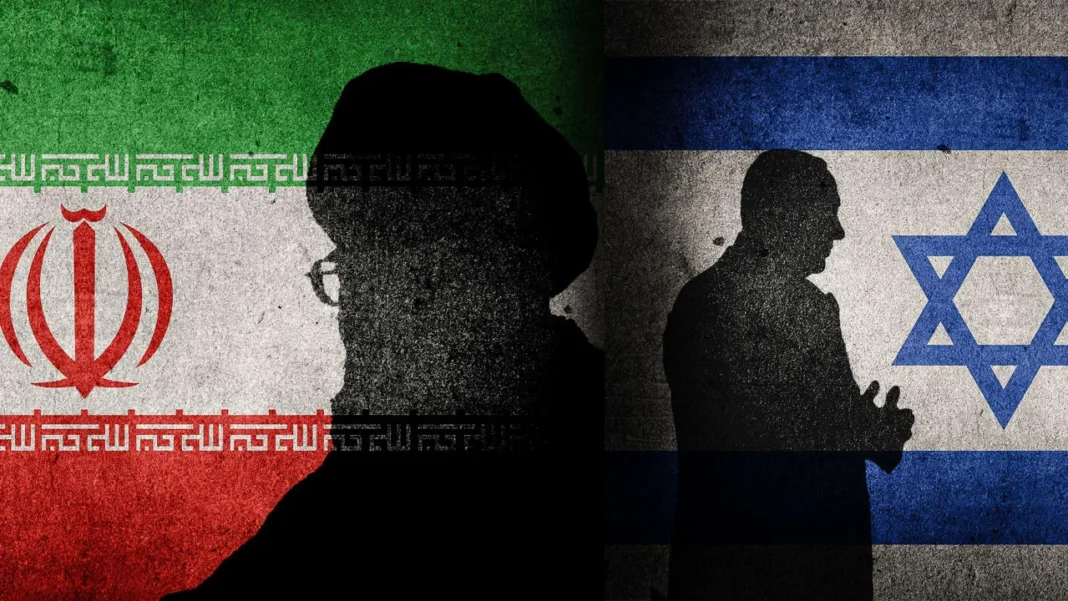

Since its founding in 1948, Israel has survived not merely through military hardware or geographic fortune, but through the strategic logic of deterrence.
Surrounded by hostile neighbors and lacking the strategic depth that larger nations take for granted, Israel learned early that its security depended not just on its capacity to inflict punishment, but on its enemies’ belief that it would.
That perception – cultivated through decades of swift, disproportionate, and credible responses to provocation – has been the invisible shield behind every peace agreement Israel has ever signed, every normalization deal it has ever struck, and every war it has managed to avoid.
Deterrence is not a supplement to Israeli national security. It is its foundation.
That foundation is now cracking – and the pressure is coming not only from Tehran, but from Washington.
The events of the past 24 hours have exposed a dangerous misalignment between American diplomatic imperatives and Israeli strategic realities.
Netanyahu defies Trump’s request to hold back
When Hezbollah fired rockets at civilian communities in northern Israel, Prime Minister Benjamin Netanyahu ordered strikes on what Israel identified as a Hezbollah headquarters in the southern suburbs of Beirut – defying President Donald Trump’s explicit request to hold back as negotiations with Iran proceeded.
Tehran then escalated, launching waves of ballistic missiles at northern Israel. Trump again urged restraint. Israel again responded, targeting Iranian petrochemical infrastructure and air-defense systems in what it called a large-scale strike.
Now, with Iran declaring it has delivered its “painful response” and signaling a pause contingent on no further Israeli action in Lebanon, Washington appears to believe a fragile equilibrium has been restored.
It has not. What has happened is far more consequential than a ceasefire interruption.
Iran’s missile barrage was not an act of desperation. It was a carefully calibrated read of the strategic environment. Tehran has watched Washington pressure Jerusalem to stand down repeatedly in recent weeks – tense phone calls, public rebukes, demands to spare Beirut – and drawn the obvious conclusion: American restraint is now a variable Israel must factor into its own cost-benefit calculus.
Iran is not simply defending Hezbollah. It is racing to reshape the deterrence architecture of the entire Middle East before a potential nuclear deal closes the window. Every missile fired is a data point. Every Israeli hesitation is a lesson learned.
Deterrence, at its core, is about an adversary’s perception of your cost-benefit calculation. It is not about what you are capable of doing – it is about what your enemy believes you will do, and at what cost to themselves.
For decades, Israel’s enemies understood that the cost of attacking Israeli civilians was swift, severe, and unconditional retaliation.
That perception was the deterrent. If Israel now fails to respond with sufficient force – or worse, is seen to be subordinating its security decisions to the preferences of an American president navigating midterm elections and oil prices – Iran’s updated perception will be devastating: that the costs of complying with Washington outweigh the benefits of maintaining Israeli deterrence. That is an extraordinarily dangerous recalibration.
There is a path back, but it requires strategic clarity that the current moment seems to be discouraging. Iran has declared it is done launching missiles at Israel – provided no further strikes are directed at Hezbollah.
That condition should be read for what it is: an attempt to codify Israeli restraint as the price of regional calm. Jerusalem cannot accept that framing.
The only credible response to an adversary that has just tested your red lines with ballistic missiles is to demonstrate, unambiguously, that the cost of that test was higher than Iran calculated.
That means increasing – not decreasing – the depth and intensity of operations against Hezbollah in southern Lebanon, Beirut, and the Bekaa Valley.
This is not a call for escalation for its own sake. It is a recognition of what deterrence requires. The logic is not punitive; it is perceptual. Israel must restore the enemy’s belief that aggression carries consequences that no American diplomatic intervention can neutralize.
Trump’s instincts on Iran have, in other contexts, been sound. His maximum pressure campaign rattled Tehran economically in ways that years of multilateral diplomacy could not.
But pressure works only when the adversary believes the pressuring party is unified and resolute. When Iran looks at Washington and Jerusalem today, it does not see unity. It sees an opening. And it is moving through that opening with purpose.
Israel’s deterrence has been purchased across 77 years at an extraordinary price – in wars fought, soldiers lost, and a nation perpetually mobilized for its own survival. It cannot be traded away at the negotiating table in exchange for a deal that may not hold and a ceasefire that already isn’t. Jerusalem has every right, and every strategic obligation, to act accordingly.
The writer holds a PhD in International Relations Theory from Northeastern University.
Source:
www.jpost.com



