HomeEconomyIsrael electric corporation chairman supports competition, electricity prices among lowest globally

Israel electric corporation chairman supports competition, electricity prices among lowest globally

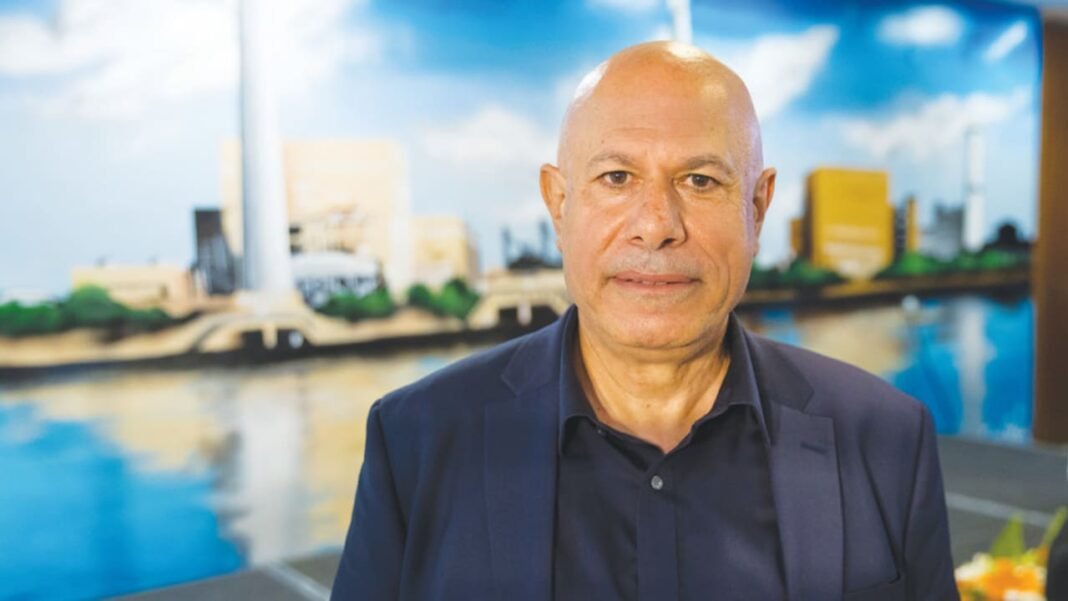
“We support competition that challenges us and forces us to improve ourselves. We have become more efficient, we have improved, we have reduced manpower, and we know how to become significantly more efficient than our competitors,” says Doron Arbely, Chairman of the Israel Electric Corporation, in a special interview with “Maariv Weekend.”

According to him, “I am not looking only at the country’s energy security, but also at the consumer’s pocket. I want to ensure that competition has truly affected the consumer’s pocket. The very fact that the Israel Electric Corporation is involved in generation means that electricity prices paid by consumers, including you and me, are much lower.”

“Unlike private producers, the Israel Electric Corporation does not look only at the bottom line, but also at the situation of the consumer and energy security. Private producers are afraid of the Israel Electric Corporation. I ask why, and no one can provide an answer. If they want real competition, I say come. Let’s see who is better, who is less efficient, who is not good. Please, we are waiting.”

In response to the question of why, then, there is a need to raise electricity tariffs, Arbely replies that “electricity prices in Israel are among the lowest in the world. We are simply demanding that we be paid what we are entitled to by law. We are competing with our hands tied.” The Chairman of the Israel Electric Corporation added that “our work plans for the coming years are at an advanced stage. We are investing NIS 7–8 billion per year in preparing for the future electricity sector, including building power stations. The total investment volume by 2030 will amount to NIS 50 billion.”

According to him, “the money for investments will come from the company’s ongoing activity and from capital raises abroad and in Israel. This year we raised NIS 500 million abroad, and in Israel we raised about NIS 1 billion. Investors in Israel and around the world believe in us and in our ability to repay debt, and this is reflected in our credit rating, which remained stable during the war.”

In response to a question about his recommendations as a former head of the Tax Authority regarding tax policy, Arbely emphasized that “the handling of indirect and direct compensation was at the center of the Tax Authority’s activity and required significant manpower. The Authority is doing sacred work, but at the same time it is necessary to deepen tax collection from the public. It has many legal cases in dispute, and it is advisable to resolve them.”

“It is forbidden to impose additional taxes, even if the deficit grows, but rather to create certainty so that there will be more investment. Additional taxes suffocate the public and economic activity. I recommend, if possible, lowering VAT. It cannot be that every other day there is new regulation, because in the end businesses will flee and banks will not want to finance them.”


Source:

www.jpost.com

Advertisementspot_imgspot_img

Hot this week

Trump Warns of Severe Economic Penalties for Countries Aiding Iran

Donald Trump warned of 'tremendous economic consequences' for any country aiding Iran after a 60-day ceasefire expired, escalating diplomatic stakes.

Age and Walking: How the Body Trades Efficiency for Stability

Research shows older adults stiffen the ankle to gain stability, reducing stride length and increasing fatigue; targeted exercises may help preserve mobility.

Root’s comeback as captain sparks clinical England bowling at Headingley

Joe Root's second stint as Test captain begins as England dismiss Pakistan for 171, led by five-wicket hauls from Robinson and Tongue.

How Social Media and Algorithms Are Rewiring Public Understanding of Health

A new book examines how platforms, influencers and algorithms reshape health information, widen gaps in care and complicate trust in medicine.

Three Clear Ways AI Is Reshaping Work, Health and Security

AI is transforming labor markets, healthcare delivery and geopolitical dynamics, prompting regulation and new institutional responses worldwide.

IBM unveils modular ultracold systems to scale fault‑tolerant quantum computing

IBM unveils modular ultracold cryogenic modules and superconducting links to connect quantum chips, aiming for fault‑tolerant machines by 2029.

A 17-year-old carer on missed milestones and hidden labour of youth care

A teenager's account highlights how unpaid caregiving in youth affects schooling, social life and future prospects.

Trump Warns of Severe Economic Penalties for Countries Aiding Iran

Donald Trump warned of 'tremendous economic consequences' for any country aiding Iran after a 60-day ceasefire expired, escalating diplomatic stakes.

Israel launches criminal probe after soldiers fired on car that carried child

Israeli military confirms soldiers fired at a vehicle carrying five-year-old Hind Rajab; a criminal investigation has been opened after her death with six relatives.

Heat Politics: Reform’s Message Forces a Choice Between Immediate Comfort and Long-Term Costs

Reform UK's deputy leader urged acceptance of recent heat, prompting debate on policy priorities amid wildfires, crop damage and emergency strain.

Root’s comeback as captain sparks clinical England bowling at Headingley

Joe Root's second stint as Test captain begins as England dismiss Pakistan for 171, led by five-wicket hauls from Robinson and Tongue.

Edinburgh Fringe Embraces Explicit Comedy as Performers Push Boundaries

At the Edinburgh Fringe a wave of explicit comedy—from Julian Clary to street typists—questions conventions and draws engaged, often startled audiences.

How Honeybees Balance Their Larvae’s Diet: A Hidden Nutritional Strategy

Research shows honeybees detect nutrient imbalances in pollen and process it into well-balanced provisions for their larvae.
Advertisementspot_img

Related Articles

