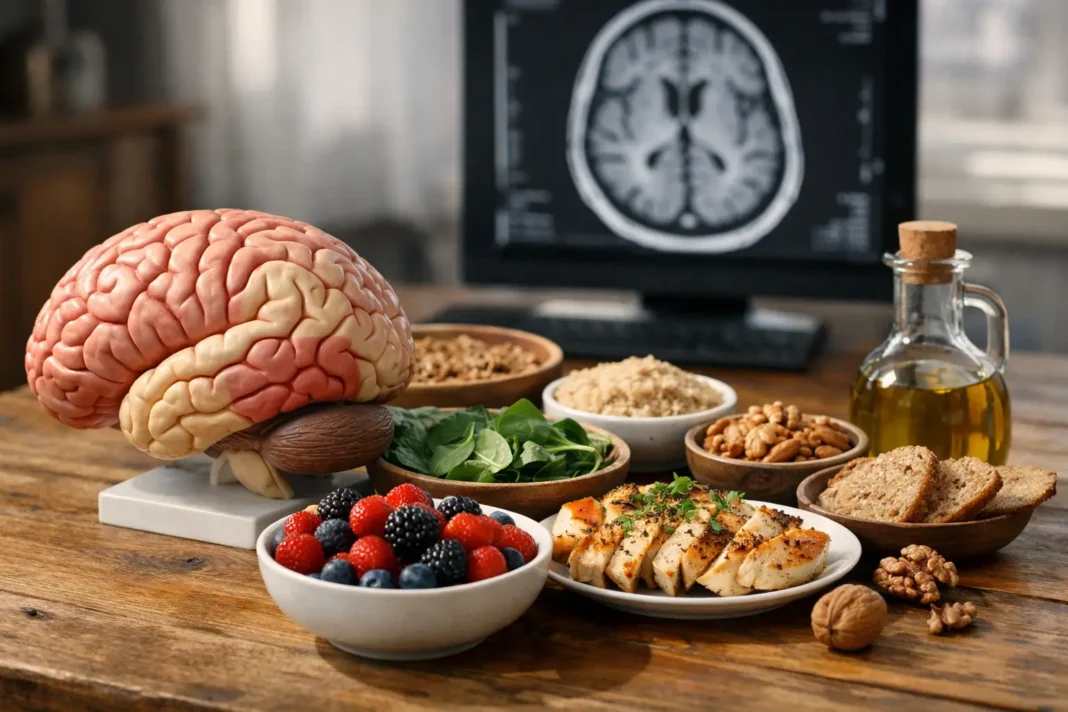

MIND diet adherence was associated with slower reductions in brain volume and lower loss of grey matter over time, with the largest differences equating to about 2.5 years of delayed brain aging. The finding comes from an analysis that compared participants’ eating patterns with imaging measures of brain tissue collected over a follow-up period. The results point to measurable links between habitual diet quality and structural changes in the aging brain.
The pattern of results highlighted particular food groups. Higher consumption of berries and poultry correlated with more favourable brain-tissue measures, while frequent intake of sweets and fried fast foods was tied to greater tissue loss. Overall adherence to the MIND dietary pattern — which prioritises plant-based foods and limits certain processed and high-sugar items — showed the strongest association with preserved grey matter and slower shrinkage trajectories.
From a public-health perspective, a difference on the order of 2.5 years in structural brain ageing is potentially meaningful because small shifts in population risk can affect the number of people who develop cognitive impairment. The MIND pattern combines elements intended to support vascular and neurologic health through diet quality rather than single nutrient supplementation. These observations add to a growing body of work that links healthier eating patterns to markers of brain health measured with neuroimaging.
Important caveats remain: the analysis describes an association and does not prove that changing diet will alter the pace of brain ageing. Further work will be needed to replicate the findings in diverse populations, explore underlying biological mechanisms, and test whether deliberate dietary changes produce comparable benefits. For clinicians and individuals, the results support dietary quality as one factor among many that may influence brain health over the life course.