
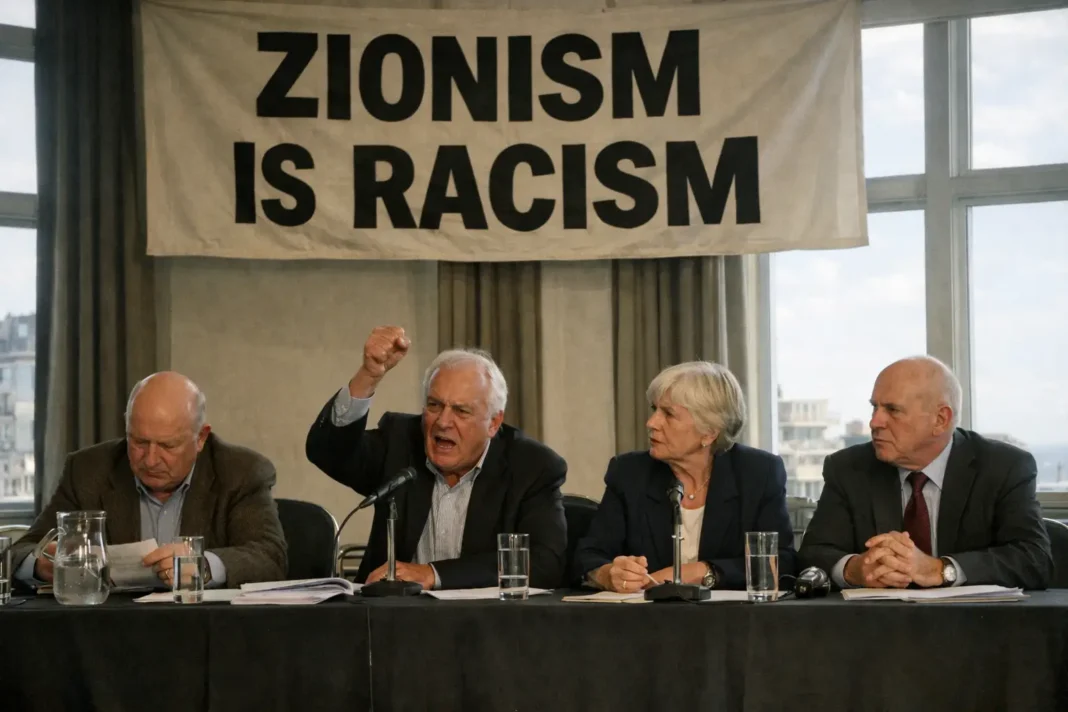

Polanski has been barred from entering Israel after a political party’s conference in Brighton approved a motion declaring Zionism to be “a form of racism”. The measure, debated and voted on at the gathering, immediately became a flashpoint: the entry restriction on Roman Polanski followed the vote and has been presented by officials as connected to the motion’s passage. The development has attracted attention both within the UK and internationally.
The motion’s approval produced visible divisions among senior figures at the top of the party during the Brighton conference. Delegates and leading office-holders were reported to disagree over the language and the political implications of the motion, and the outcome has prompted scrutiny of how the party manages contentious international and ethical questions in its internal processes. The vote revealed fault lines over the party’s stance on a sensitive and polarising subject.
Israeli authorities announced the ban on the director’s entry; public details about the precise legal basis and the duration of the restriction have not been fully disclosed. The announcement links a national immigration decision to a political development in another country, with immediate consequences for travel and any planned cultural engagements involving the filmmaker. Officials on both sides have so far provided limited public comment beyond the initial notices.
The sequence of events — a contentious party motion followed by a national travel ban — underscores the wider ramifications that internal party debates can have beyond party membership. The motion and the resulting prohibition have become subjects of public debate and of concern among those tracking relations between political movements and international partners. As party representatives grapple with internal disagreement at the Brighton conference, observers will continue to watch for further clarification from both the party and Israeli authorities on how the situation will be addressed going forward.





