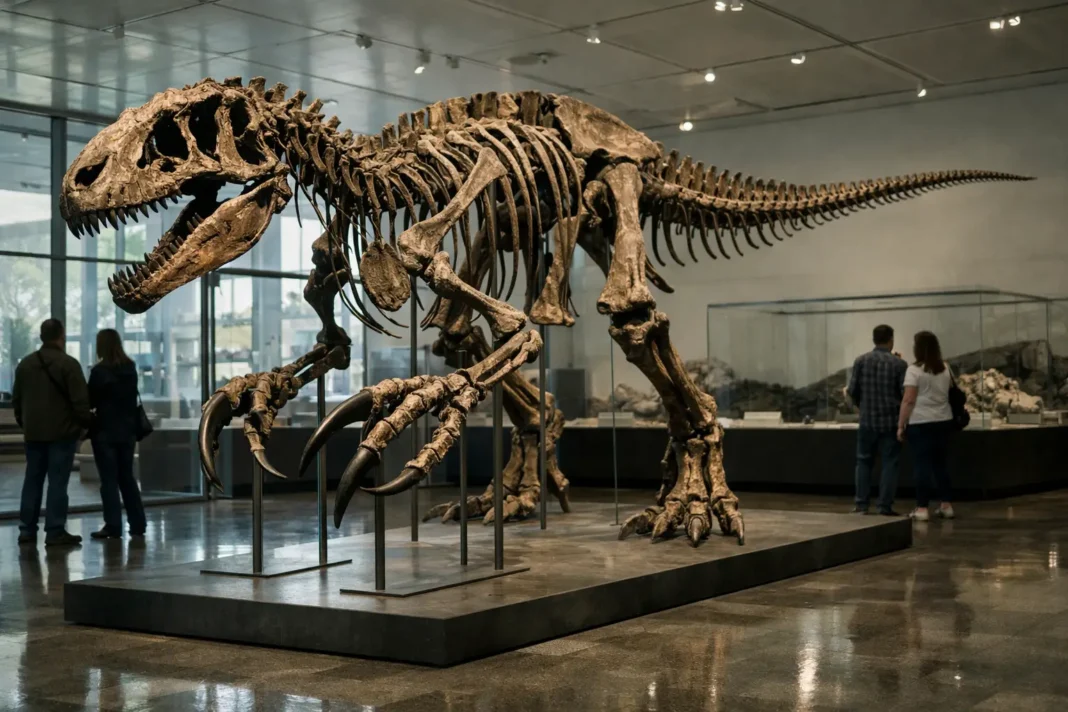

Forgotten for nearly a century in a museum collection, a 120-million-year-old fossil has been identified as a previously unrecognized predator that expands the known range of megaraptoran theropods. The specimen, roughly the size of a modern tiger, preserves exceptionally large manual claws that distinguish it from other theropods of comparable body size and provide the first clear evidence of this group in Europe.
The discovery closes an important geographic gap in the fossil record and supplies new anatomical data for a group long considered enigmatic by specialists. Researchers studying the specimen say its combination of gracile limbs, elongated hand bones and oversized claws offers a snapshot of an intermediate stage in the evolutionary sequence that ultimately produced much larger, apex predators. That developmental context helps explain how members of this lineage could attain exceptional size in later periods.
Attention has focused on the animal’s predatory toolkit: the claws appear adapted for slashing or gripping, a contrast with the crushing bite associated with large tyrannosaurids. Scientists observe that the morphology implies a different hunting strategy among contemporaneous carnivores and suggests it would have been an effective predator of sizeable prey. The find invites a broader reassessment of how varied predatory niches were partitioned among Cretaceous dinosaurs.
Beyond its scientific implications, the specimen highlights the value of museum collections as reservoirs of overlooked data. Reexamination of archived material led to the recognition of regional megaraptoran presence and will likely prompt further searches for related remains. Continued study of the fossil—through comparative anatomy and, where possible, advanced imaging—promises to refine timelines of body-plan shifts within the group and to clarify their role in Cretaceous ecosystems.