
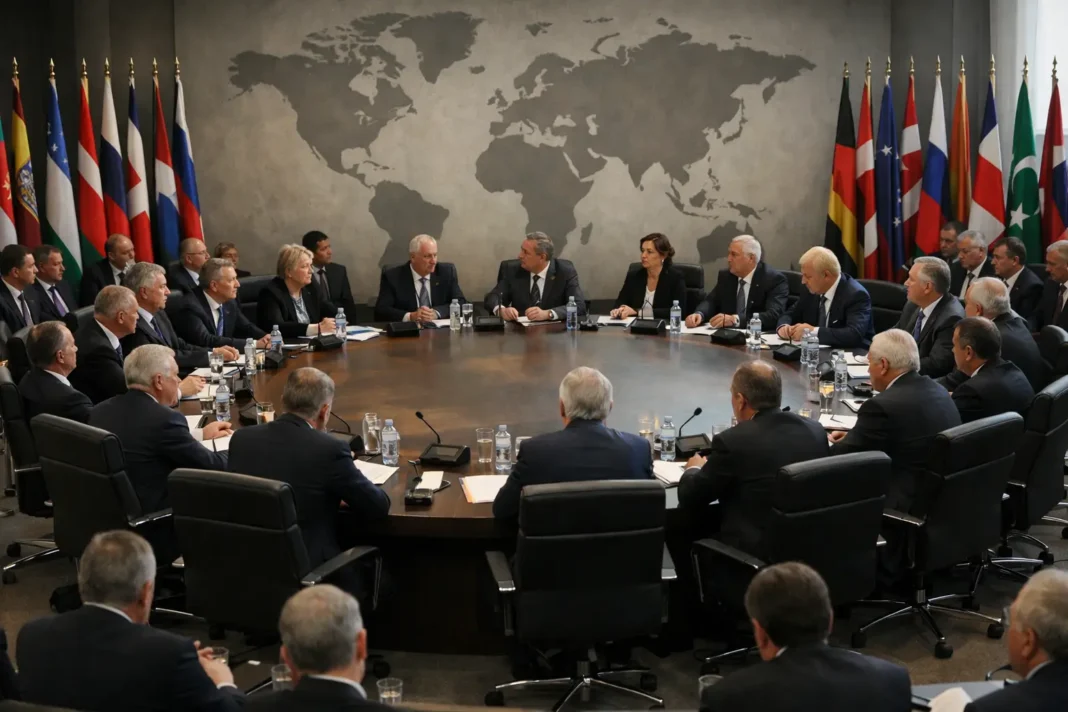

A new political map is taking shape around the concentration of private wealth and public authority. An estimate identifying about 64 heads of state or government as oligarchs points to a shift that is no longer confined to isolated regimes or transitional economies. These leaders govern countries that together represent roughly 60% of global GDP, placing the issue at the center of geopolitics and the global economy.
The term oligarch is often used loosely, but its political significance lies in the fusion of economic command, institutional influence and executive power. When those who control major assets also occupy the highest offices of the state, the boundary between public interest and private advantage becomes harder to define. The scale indicated by the current estimate suggests that oligarchic rule is not simply a domestic governance question; it affects how states negotiate, regulate markets and participate in international institutions.
This concentration of authority matters because the governments involved account for a dominant share of economic output, a measure tracked globally by institutions such as the World Bank. Decisions taken by such leaders influence trade policy, energy choices, industrial strategy, financial regulation and the conditions under which foreign investment operates. In that context, oligarchic leadership can shape not only national political systems but also the rules and expectations that structure cross-border economic relations.
The issue also reframes debates about democracy, accountability and state capacity. Elections, courts and parliaments can formally remain in place while political competition is constrained by unequal access to money, media and administrative power. For citizens, the practical question is whether institutions can scrutinize decisions made by leaders whose personal economic standing may be deeply intertwined with policy outcomes. For international partners, the question is how to engage governments where strategic, commercial and political interests are concentrated in the same hands.
The central question is therefore no longer whether oligarchs can reach the summit of power. The available estimate indicates that many already have, and that they govern a majority share of the world economy. What now requires closer attention is the type of order being built: one in which sovereignty, wealth and influence are increasingly held together, and where the traditional distinction between national leadership and private power is under sustained pressure.






