
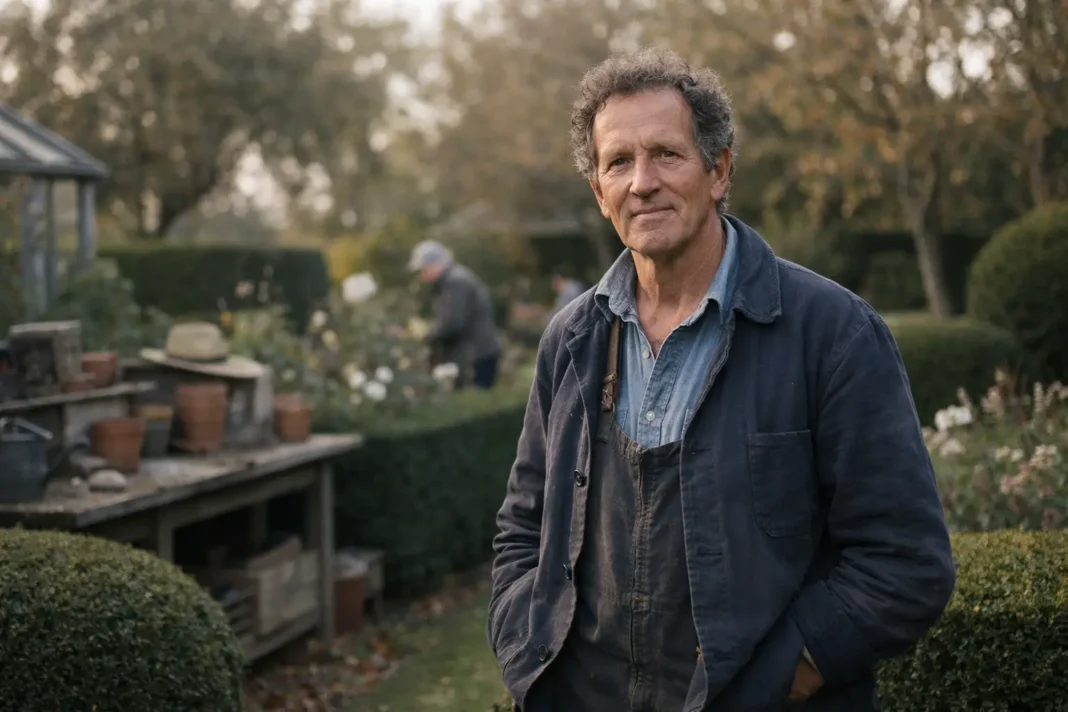

Monty Don’s farewell from Gardeners’ World marks the end of one of British television’s most recognisable gardening partnerships. The presenter and head gardener signed off from Longmeadow, the garden closely associated with his time on the long-running BBC series, on Friday. His departure closes a chapter that has lasted two decades and has made both his style of presentation and the Longmeadow setting familiar to viewers of television and horticulture programming.
Longmeadow has been central to the way Monty Don communicated gardening on screen. Rather than appearing only as a backdrop, it became the working space through which seasonal tasks, planting choices and the rhythms of the gardening year were shown to audiences. The sign-off therefore carries significance beyond a change of presenter or location. For many viewers, the garden was part of the programme’s identity and helped give the series a consistent, practical tone over many years.
Gardeners’ World occupies a distinctive place in the gardening landscape because it combines instruction, observation and continuity. Its format depends on trust built over time, and Monty Don became one of the figures most closely linked with that relationship. His work on the programme coincided with a period in which gardening television remained a regular part of public-service broadcasting, appealing both to experienced gardeners and to viewers looking for accessible advice. The end of his Longmeadow era is therefore also a moment of transition for a programme whose appeal has long rested on familiarity.
The BBC series continues to be one of the best-known gardening programmes on British screens, and any change involving its leading presenter naturally draws attention from its audience. The confirmed facts are limited but clear: Monty Don has delivered his final sign-off from Longmeadow after around twenty years with the programme. What follows will shape how Gardeners’ World maintains continuity while moving away from a setting and presenter-viewer dynamic that became closely identified with its recent history.






