
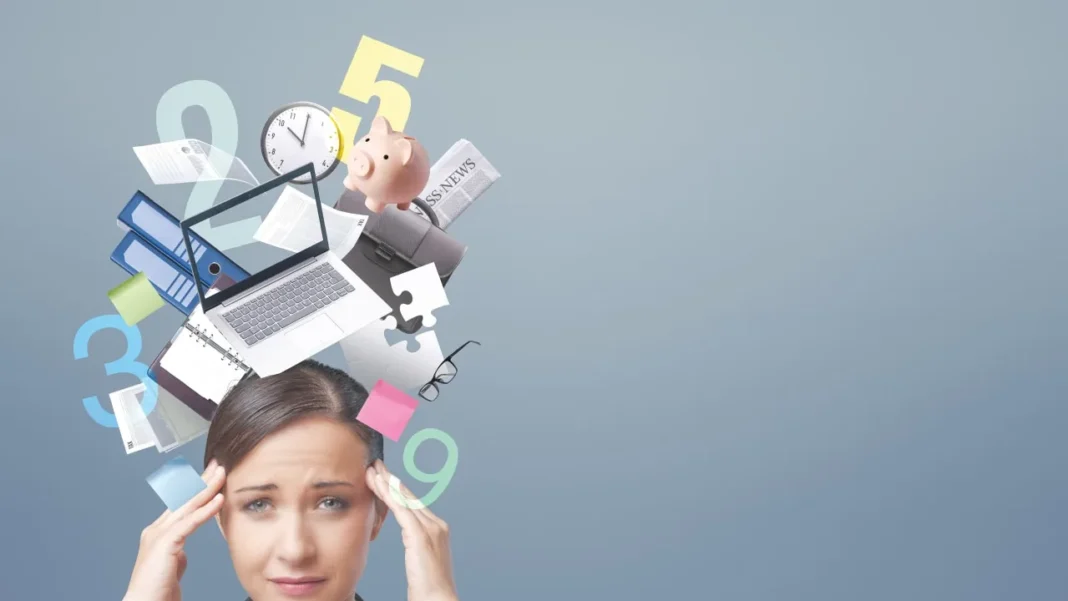

“Dana,” a 42-year-old mother of three young children, sat across from me and tried to describe something she couldn’t quite name. “I’m functioning,” she said. “But I’m not myself. I can’t make simple decisions. I forget things. My brain feels stuck.” She wasn’t depressed. She wasn’t anxious. She was profoundly overloaded.
For months, she had been carrying her children’s emotional needs, her husband’s reserve duty of more than 100 days, her own demanding job, and the constant background noise of alerts and national uncertainty.
On the outside, she was still going through the motions of daily life, showing up for every responsibility. But internally, she felt constantly unfocused, exhausted, and deeply disconnected from herself. This wasn’t the post-viral brain fog of an illness; this was the direct result of a nervous system under attack.
Dana’s complaints are a textbook example of Continuous Traumatic Stress (CTS). When a threat remains ongoing with no clear “post-trauma” period, the brain stays locked in a high-arousal state. This actively compromises the prefrontal cortex, leading to forgetfulness, distractibility, emotional volatility, and a general feeling of being mentally disconnected.
Data from the Myers-JDC-Brookdale Institute Israel national longitudinal survey (2024) confirms the scale of this reality, finding that roughly 19% of the public has experienced significant functional impairment directly due to the prolonged war. This is not a personal failure; it is a predictable, physiological response to collective, long-term stress.
When seniors fear the worst
“Yitzhak,” an 82-year-old grandfather living alone, came to me recently with a troubling question: “Do you think this is the beginning of Alzheimer’s?” He had been misplacing items, forgetting names, and losing track of conversations – lapses that terrified him.
But as we spoke, it became clear that Yitzhak was carrying the heavy emotional weight of his grandson’s combat duty, overwhelmed with the daily news and fears about the future. Yitzhak’s lapses were not early dementia (a fact his family doctor confirmed before referring him to me); rather, they were the physical effects of prolonged, constant worry.
Studies in the Journal of Alzheimer’s Disease (Sindi et al., 2017) show that stress-related cognitive changes can closely resemble early dementia, especially in older adults. When the nervous system is overloaded, even healthy brains, and particularly aging ones, struggle to keep information, recall names, and maintain focus.
I reassured Yitzhak that while his fears were deeply understandable, his mind was not failing him; rather, his nervous system was showing the natural, temporary strain of carrying a heavy emotional burden.
From the bottom up: healing through the body
At first, Dana tried Cognitive-Behavioral Therapy (CBT) to help identify and reframe the thoughts making her feel anxious. But she found that trying to “think differently” couldn’t release the physical tension locking up her body. Her stomach remained knotted, she began suffering from migraines, and she found herself growing short-tempered with her children.
Her brain was simply too overwhelmed for “top-down” cognitive tools. In other words, instead of changing her thoughts, she needed to physically calm her nervous system, “bottom-up.”
So, I changed direction in my work with Dana and spoke to her about somatic regulation. This clinical approach posits that physical activity rather than conscious thinking calms the nervous system. When the body finally calms, cortisol levels drop, allowing the prefrontal cortex to come back on and restore cognitive clarity.
Dana returned to swimming, a practice she had abandoned years earlier. In the water, her mind finally quieted. The rhythmic movement calmed her nervous system, while the physical pressure of the water reduced her body’s physiological alertness. She also returned to Israeli dancing, a passion from her youth.
Yitzhak found similar relief by joining a neighborhood Tai Chi beginners’ class. Its slow, deliberate movements acted as a powerful grounding technique, masterfully redirecting his attention away from the persistent news cycle and directing it into physical balance, posture, and deep, restorative breathing.
Furthermore, joining a class with other seniors was powerfully helpful. Research has shown that individuals who maintain social connections show significantly less cognitive decline than those navigating stress in isolation (Psychiatry Research 2019). When isolated, older individuals are far more vulnerable to accelerated cognitive decline and severe functional impairment under the weight of chronic wartime stress.
The people of Israel are not losing their inherent abilities. They are living through extraordinary, unprecedented circumstances, and their brains are responding exactly as human brains are wired to respond under prolonged threat.
The road forward demands that we trade self-criticism for self-compassion. Our minds are not failing us; they are doing their best to protect us. By taking small, consistent, body-based steps, we can gently guide our nervous systems back to a state of safety. And, we can move toward finding the path back to ourselves.
The writer is a psychotherapist with over 40 years of experience helping individuals, couples, and families cope with stress, trauma, and the emotional impact of crisis and war. Many of his clients are olim. He sees clients in his Ra’anana clinic and online. drmikegropper@gmail.com
Source:
www.jpost.com



