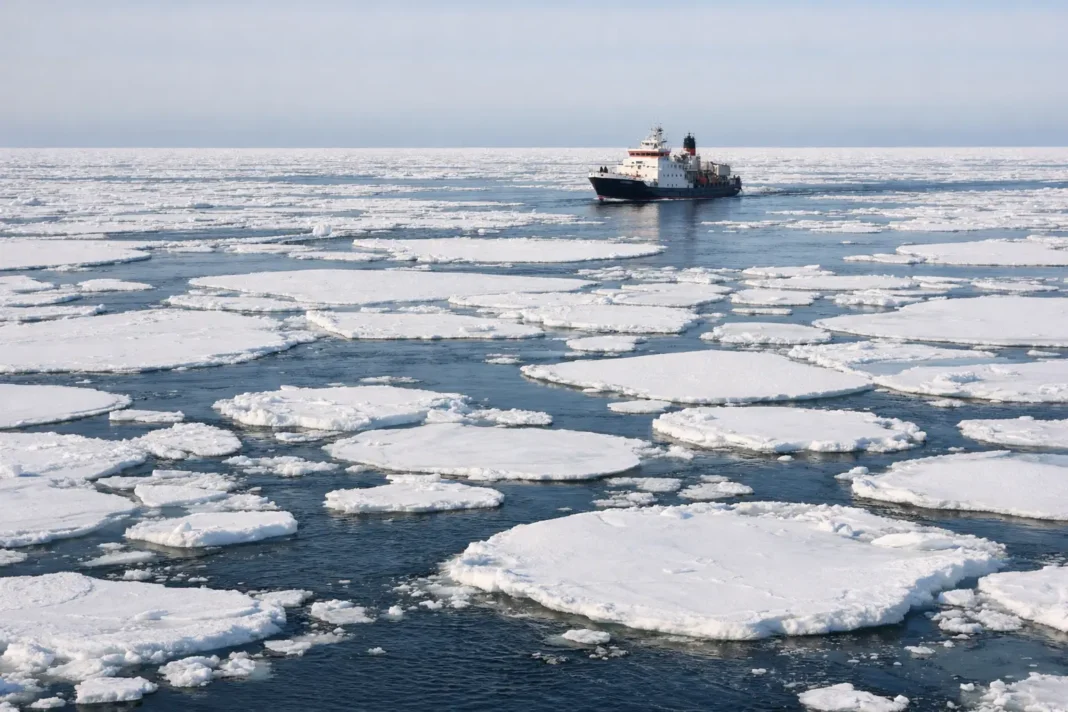

Arctic sea ice in 2026 has recorded another concerning reduction, with satellite measurements indicating that the remaining cover is becoming thinner and composed of younger ice. Observations point to a consistent contraction during both winter and summer months, a shift that researchers say increases the ice pack’s vulnerability to seasonal melt.
Data gathered from space-borne sensors and long-term monitoring programs reveal a decline in the proportion of older, multi-year ice that traditionally endures seasonal thaw. Analysts note that this younger, thinner ice is more prone to breakup and melt during warm periods. The National Snow and Ice Data Center and other polar research groups have emphasized that these structural changes alter how the Arctic responds to heat and storms.
Although recent summers have not always matched the record losses seen in earlier years, the trend of diminishing resilience persists. Scientists warn the evolving character of the ice—less extensive in winter and more fragile in summer—raises the prospect of nearly ice-free conditions in summer months before 2050. This projection has been highlighted in assessments by climate research bodies and aligns with broader findings on global warming and polar amplification.
The ramifications extend beyond the polar region. Changes in sea ice influence marine ecosystems, local communities, and economic activities in northern waters, and can modify atmospheric and oceanic patterns at lower latitudes. Policymakers and institutions engaged in Arctic planning are increasingly relying on continued satellite monitoring and modelling to assess risks and inform maritime, environmental and infrastructure decisions.
Ongoing observations and improved modelling remain central to understanding how quickly the Arctic will change in the coming decades. The 2026 indicators underscore the importance of sustained monitoring by scientific agencies and international collaborations, and they contribute to the evidence base used in discussions about mitigation and adaptation related to climate change and Arctic policy.