
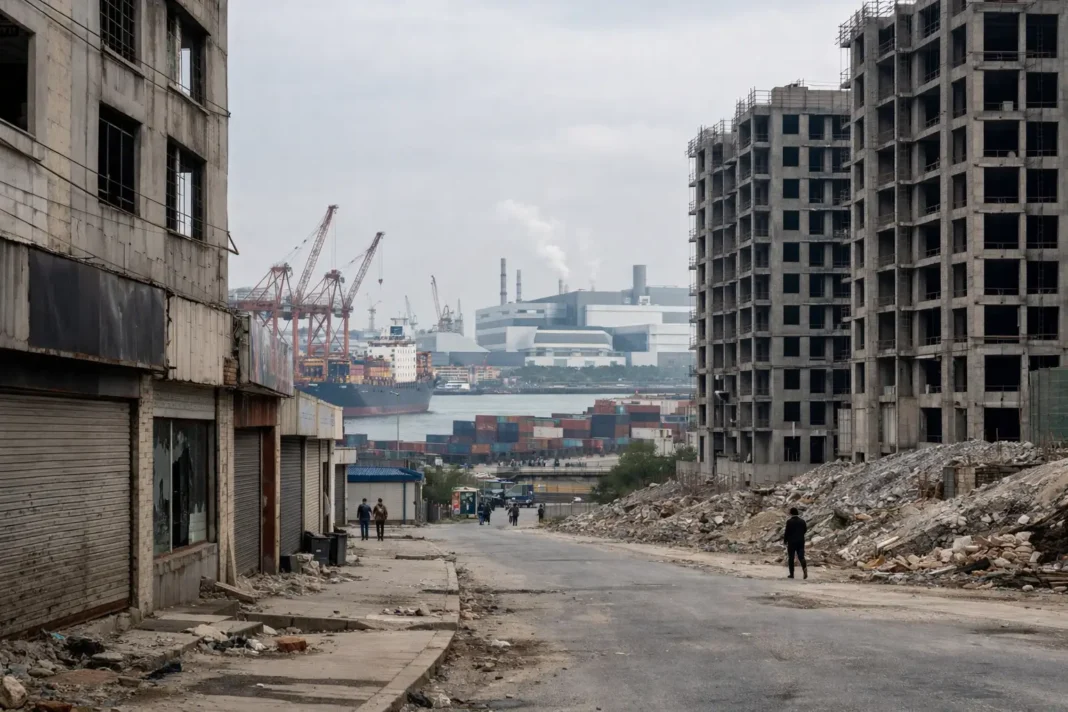

China’s economic split has become one of the central questions facing global markets and policymakers. The country remains a major force in manufacturing, technology and exports, yet its domestic picture is far less uniform. A weakened real estate sector, subdued household consumption and deep regional gaps sit alongside industries that continue to compete internationally. This contrast makes the outlook for China harder to read than a single growth narrative would suggest.
The property downturn matters because real estate has long been closely tied to household wealth, local finances and confidence. When that sector loses momentum, the effects can reach beyond construction and housing sales, weighing on spending decisions and business expectations. Weak consumption adds another layer of vulnerability. An economy that depends heavily on production and external demand can still expand, but a cautious consumer base limits the depth of the domestic market and raises questions about the balance of future growth.
Regional disparities sharpen the divide. China’s most advanced urban and coastal areas remain better placed to benefit from technology, logistics and export industries, while less-developed regions face a more difficult path to higher incomes. The result is not a simple story of decline, but an economy with very different realities operating at the same time. Official economic indicators published by the National Bureau of Statistics of China are closely watched because they help investors and governments assess how these separate pressures are evolving.
At the same time, China’s strengths remain substantial. Competitive export sectors and dynamic technology businesses continue to support the country’s international relevance. These areas help explain why China can remain a global powerhouse even while parts of its population continue to live with limited resources. The coexistence of advanced industrial capacity and widespread poverty creates a development model that is powerful but uneven, and one that does not fit neatly into conventional categories of rich or poor economies.
Political stability is a key condition for this balance to endure. If stability is maintained, China may continue to project economic influence abroad despite unresolved weaknesses at home. For foreign companies, governments and financial institutions, the practical consequence is clear: engagement with China requires attention to both sides of the economy. Its export and technology engines cannot be assessed separately from weaker consumption, property stress and regional inequality. The country’s global role remains significant, but its internal imbalances will shape how that power is sustained.






