
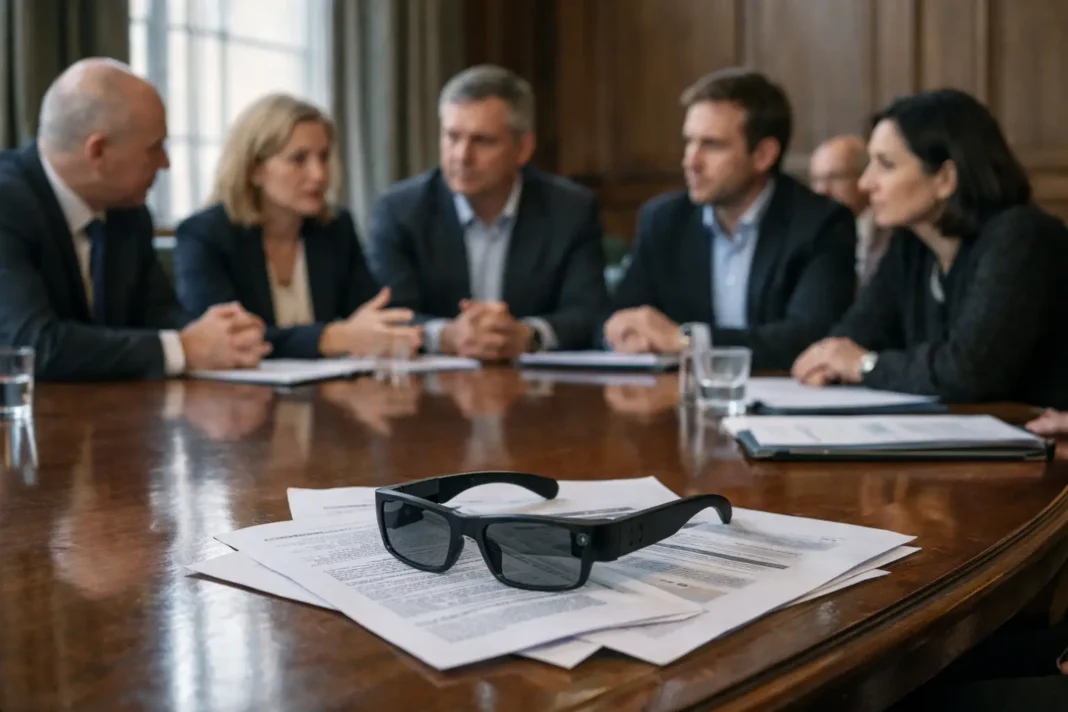

Camera-enabled smart glasses have moved from a niche technology debate into the centre of a wider discussion about personal safety, consent and control in public spaces. UK ministers have signalled that the government is examining concerns over eyewear capable of recording video discreetly, after reports that the devices have been used by men to film or harass women without meaningful consent.
The concern is not that wearable cameras exist, but that they can make recording feel invisible to the person being filmed. Some models include a small light intended to show when recording is active, yet such indicators can be difficult to notice in ordinary settings. The issue has been raised in Parliament in the context of UK Parliament discussions on violence against women and girls, placing the technology within an existing policy area rather than treating it as a purely consumer-electronics matter.
For campaigners and policymakers, the debate reflects a broader question about how law and regulation respond when everyday devices blur the line between public observation and targeted intrusion. Smartphones already allow rapid recording and distribution, but glasses add a different risk: they can capture footage while appearing to be ordinary accessories. That distinction matters in gyms, workplaces, bars, streets and other spaces where people may not realise they are being recorded. It also raises practical questions over enforcement, product design and the responsibilities of companies selling connected devices in the United Kingdom.
The possible action on smart glasses sits alongside a growing political focus on small but tangible irritants that shape public confidence in shared spaces. Debates around e-bikes, loud headphones on public transport and fly-tipping have gained visibility because they affect how safe, orderly and respected people feel in daily life. While these subjects differ in scale and legal complexity, they share a common thread: the balance between individual convenience and the rights of others to move through public places without intimidation, nuisance or loss of control.
No final measure has been announced, and any response would need to distinguish legitimate uses of wearable technology from abusive behaviour. Still, the attention now being given to smart glasses shows how privacy policy is no longer confined to data centres, apps or online platforms. It is increasingly about what happens face to face, in ordinary moments, when technology changes who has power over an image, a conversation or a public encounter. The political test will be whether rules can protect privacy and technology users alike without leaving people exposed to covert filming and harassment.






