
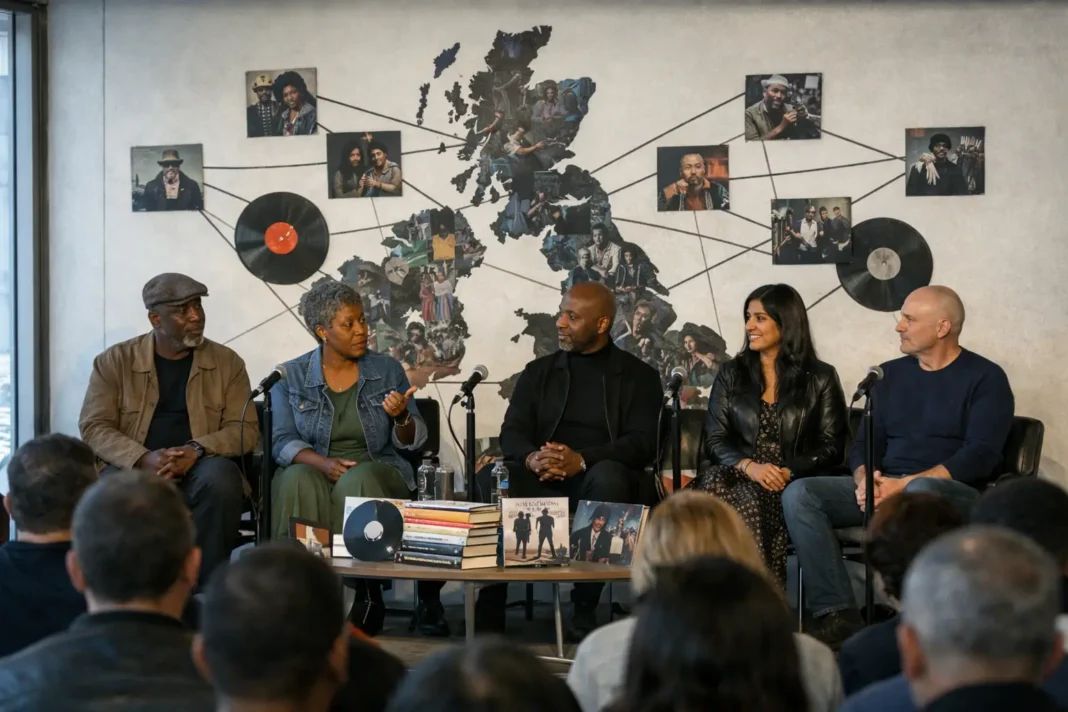

Black British memory is being traced through music, books, sport and public life as Black History Month turns attention to the cultural forces that have shaped identity across generations. A panel spanning arts, culture and sport has placed figures and movements such as Massive Attack, Bob Marley, bell hooks and grime at the centre of a wider conversation about influence, belonging and inheritance.
The range of references matters because it resists a narrow reading of Black Britons and their histories. Marley’s global reggae legacy, the Bristol sound associated with Massive Attack, the critical writing of bell hooks and the homegrown urgency of grime each point to different routes by which culture travels. Some influences arrived through family, migration and diaspora memory; others were formed in British cities, clubs, classrooms and youth scenes.
For many Black Britons, cultural education has often happened outside formal institutions. Records, photographs, live performance, television, independent publishing and community spaces have carried stories that were not always centred in national narratives. That context helps explain why music and popular culture remain such powerful references during Black History Month. They function not only as entertainment but also as archives of language, protest, style and everyday experience.
The inclusion of bell hooks broadens the discussion beyond sound. Her work on race, gender, love and power has influenced readers far beyond academia, offering vocabulary for experiences that can otherwise remain fragmented or private. Placed alongside artists and genres, her presence shows how intellectual traditions and popular forms can operate together. Both can shape political imagination, personal confidence and the ways communities describe themselves to a wider society.
The conversation also reflects a generational shift in British cultural visibility. Grime, once rooted in local pirate radio and urban youth networks, has become part of the country’s mainstream cultural vocabulary. Yet its importance remains tied to the communities that formed it. In that sense, the panel’s choices underline a central point of culture: history is not preserved only in monuments and textbooks, but also in rhythms, reading lists, accents and shared memory.






